


Torah Mantles Explained: History, Purpose, Materials & How to Choose One

Introduction
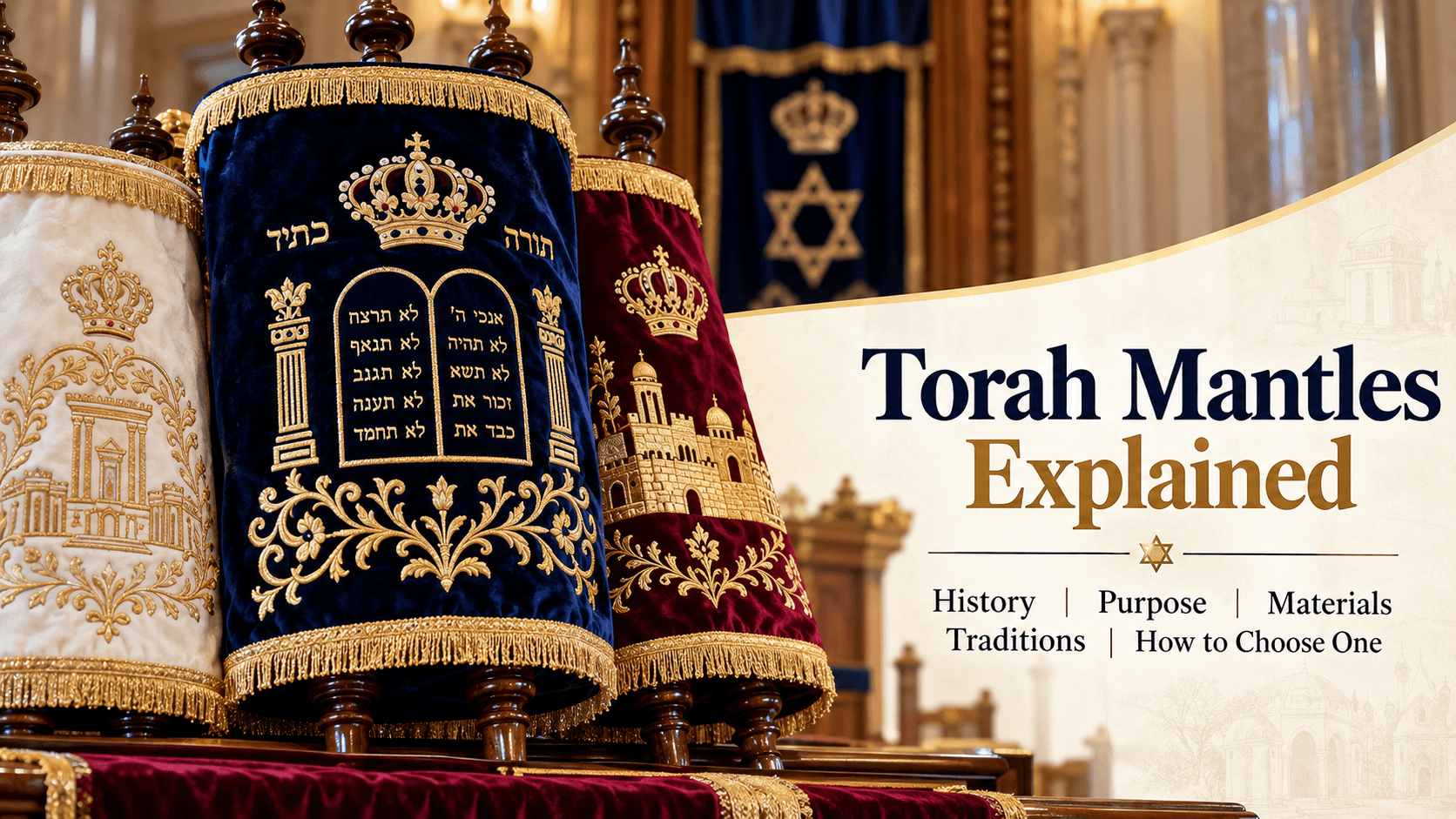
Torah Mantles Explained begins with understanding that a Torah mantle is much more than a decorative covering. In Ashkenazic communities, the mantle forms an important part of how a Sefer Torah is protected, presented, and treated with kavod haTorah.
A Torah scroll is handled with particular care because of its sanctity. The parchment itself should not ordinarily be touched directly, and the scroll is traditionally dressed with various coverings and ornaments when it is returned to the Aron Kodesh or carried for public reading. In Ashkenazic communities, the cloth mantle is one of the most recognizable elements of this traditional presentation.
For a synagogue purchasing a new mantle, replacing a worn covering, or commissioning a special mantle for a Torah dedication, it is useful to understand the differences between traditional, embroidered, modern, and High Holiday Torah mantles. The right choice should reflect the congregation’s minhag, the physical dimensions of the Sefer Torah, and the level of craftsmanship desired.
What Is a Torah Mantle?
A Torah mantle, commonly associated with the Hebrew term me’il, is a textile covering used primarily in Ashkenazic communities to cover a Sefer Torah when it is stored and transported within the synagogue.
Unlike the Torah scroll itself, the mantle is not part of the scroll’s parchment or writing. Its purpose is connected with protection, presentation, and honor.
The traditional mantle is generally constructed so that it covers the body of the rolled Torah while accommodating the Atzei Chayim, the wooden rollers attached to the scroll. The front of the mantle is often the most visibly decorated portion, making embroidery, woven designs, appliqué, or other ornamentation possible.
In synagogue practice, the mantle is commonly seen together with other Torah ornaments such as the Rimonim, Torah Crown, Torah Breastplate, and Torah Pointer. These objects collectively create the familiar ceremonial appearance of a dressed Torah.
Why Does a Sefer Torah Have a Mantle?
The Torah mantle serves several purposes.
Protection of the Scroll
A Sefer Torah is a handwritten parchment scroll produced according to detailed traditional requirements. Its parchment, ink, stitching, and writing must be protected from unnecessary handling and environmental exposure.
The mantle provides a physical layer between the scroll and the surrounding environment. It also helps prevent direct contact with the parchment during ordinary handling.
Jewish sources emphasize the importance of treating a Sefer Torah with exceptional care and respect. The traditional practice of covering the Torah is therefore part of a broader culture of kavod haTorah rather than merely an aesthetic custom.
Honor and Dignity
The Torah is treated with the dignity accorded to a sacred object. Elaborate Torah coverings developed within Jewish communities as part of this tradition of honoring the Sefer Torah.
In Ashkenazic communities, the cloth mantle became the principal external covering of the Torah scroll. Sephardic communities generally developed a different tradition in which the scroll is housed inside a rigid Torah case rather than a cloth mantle.
This distinction is important when choosing a mantle: Torah mantle terminology and design should always be understood in the context of the community’s established tradition.
Torah Mantles in Ashkenazic and Sephardic Traditions
One of the most important distinctions is between the Ashkenazic and Sephardic forms of Torah housing.
Ashkenazic Torah Mantles
In the Ashkenazic tradition, the Sefer Torah is generally mounted on two Atzei Chayim and covered with a textile mantle. The mantle is commonly made from velvet or another substantial textile and may feature elaborate embroidery, inscriptions, symbols, or decorative borders.
A breastplate and crown or Rimonim may be added over the mantle depending on the synagogue’s tradition.
Sephardic Torah Cases
In many Sephardic communities, the Sefer Torah is housed within a rigid case, commonly called a tik, rather than a cloth mantle. The case keeps the Torah upright and forms part of a different method of handling and reading the scroll.
Therefore, a Torah mantle should not simply be viewed as a universal Torah accessory. It belongs to a particular tradition of Torah presentation, and synagogue purchases should respect the congregation’s minhag.
What Are Torah Mantles Made From?
Traditional Torah mantles are commonly associated with rich textiles such as velvet, although different communities and makers have used a variety of fabrics and construction techniques.
The choice of material affects:
- Appearance
- Weight
- Durability
- Embroidery quality
- Ease of handling
- Long-term preservation
- Compatibility with existing Torah ornaments
A well-constructed mantle should hang properly around the Torah without placing unnecessary strain on the scroll or its components.
The quality of the textile is only one consideration. The construction, lining, embroidery, seams, openings, and overall fit are equally important when evaluating a mantle for synagogue use.
Hand-Embroidered Torah Mantles
Hand embroidery has a long association with elaborate Jewish ceremonial textiles.
A hand-embroidered mantle can incorporate Hebrew inscriptions, Jewish motifs, floral designs, geometric ornamentation, or synagogue-specific details. Some mantles are commissioned to commemorate a person, family, donor, rabbi, synagogue anniversary, or Torah dedication.
When commissioning an embroidered mantle, the text deserves particular attention. Hebrew names, dates, verses, and dedications should be reviewed carefully before production.
For a synagogue, the mantle should also be designed around the actual Torah and its accompanying ornaments rather than selected solely for visual appearance.
Hand Embroidered Torah Mantles
Traditional, Modern, and High Holiday Torah Mantles
Torah mantles can generally be grouped according to their design and intended use.
Traditional Torah Mantles
Traditional mantles tend to use established Jewish decorative language, including rich fabrics, classical embroidery, Hebrew inscriptions, and familiar synagogue motifs.
They are especially appropriate for congregations seeking continuity with an established Ashkenazic synagogue aesthetic.
Modern Torah Mantles
Modern mantles may use simplified patterns, contemporary colors, cleaner embroidery, or less traditional visual compositions.
A modern design does not necessarily mean abandoning the dignity associated with a Sefer Torah. The key consideration is whether the design remains appropriate for the sacred setting and the congregation’s traditions.
High Holiday Torah Mantles
Many synagogues maintain special Torah mantles for Rosh Hashanah and Yom Kippur. White is particularly associated with the High Holiday atmosphere in many Ashkenazic communities, although customs and designs vary.
A dedicated High Holiday mantle can distinguish the Yamim Noraim services from the ordinary synagogue calendar while preserving the same fundamental respect for the Sefer Torah.
Choosing the Right Torah Mantle
Selecting a Torah mantle requires more than choosing a color or embroidery pattern.
1. Confirm the Torah’s Dimensions
The mantle must be appropriate for the physical dimensions of the Sefer Torah. Measurements should be confirmed before ordering, particularly if the mantle is being custom-made.
2. Consider the Atzei Chayim
The openings and construction of the mantle must accommodate the Torah’s wooden rollers correctly.
A mantle that does not fit the Atzei Chayim properly can be difficult to handle and may not sit as intended.
3. Follow Your Synagogue’s Minhag
Consider whether your community traditionally uses:
- Traditional mantles
- Embroidered mantles
- Dedicated High Holiday mantles
- Modern designs
- Specific colors or inscriptions
Where a synagogue follows an established minhag, maintaining continuity can be more meaningful than selecting a design simply because it is fashionable.
4. Coordinate With Torah Ornaments
The mantle should work harmoniously with the synagogue’s existing Rimonim, Torah Crown, Breastplate, and Yad.
A heavily embroidered mantle paired with elaborate silver ornaments creates a very different visual presentation from a restrained mantle with simple ornaments.
5. Consider the Intended Use
A synagogue may require several mantles for different occasions.
For example, it may maintain:
- An everyday mantle
- A special Shabbat mantle
- A High Holiday mantle
- A dedication mantle
- A mantle commemorating a community member or family
The intended use should influence the design and construction.
Caring for a Torah Mantle
A Torah mantle should be treated respectfully because it is associated directly with a Sefer Torah.
Avoid unnecessary exposure to moisture, excessive sunlight, dust, and unsuitable storage conditions. Embroidered surfaces should not be aggressively scrubbed or cleaned with ordinary household chemicals.
If a mantle becomes stained, damaged, or structurally compromised, consult someone experienced with sacred textiles before attempting restoration.
Importantly, worn Torah coverings should not simply be discarded as ordinary fabric. Jewish law treats coverings and other objects used with sacred items with particular care, and sources discuss the genizah treatment of worn sacred accessories.
Torah Mantles and Kavod HaTorah
The concept behind a Torah mantle is ultimately kavod haTorah—honoring the Torah.
The Sefer Torah is not merely a historic manuscript or decorative synagogue object. It is a sacred scroll written according to an established tradition and used for public Torah reading.
The mantle therefore functions within a larger system of respect: the Torah is stored in the Aron Kodesh, carried with care, read publicly, protected from direct handling, and dressed with appropriate coverings and ornaments.
This is why the selection of a Torah mantle deserves thoughtful consideration.
A synagogue does not need to choose the most elaborate design available. It should choose a mantle that is appropriate to its tradition, physically suitable for its Sefer Torah, and consistent with the dignity of the community’s Torah service.
Torah Mantles at SeferTorah.Net
SeferTorah.Net offers a dedicated selection of Torah Mantles for synagogues and communities seeking appropriate coverings for Ashkenazic-style Torah scrolls.
Our collection includes Hand Embroidered Torah Mantles, High Holiday Mantles, Modern Mantles, and Traditional Mantles, allowing communities to select according to their synagogue’s style, occasion, and tradition.
When choosing a mantle, we recommend considering the Torah’s measurements, the Atzei Chayim, existing Torah ornaments, intended use, and the congregation’s minhag.
For communities commissioning a mantle for a Torah dedication, synagogue project, or special occasion, selecting the correct style and dimensions before ordering can help ensure that the finished mantle serves both practical and ceremonial purposes.
Frequently Asked Questions
What is a Torah mantle?
A Torah mantle is a cloth covering used primarily in Ashkenazic communities to cover a Sefer Torah when it is stored and carried. It protects the scroll and contributes to the dignity with which the Torah is treated.
What does “Torah Mantles Explained” mean?
“Torah Mantles Explained” refers to understanding the purpose, traditions, materials, styles, and practical considerations associated with Torah mantles, particularly within Ashkenazic synagogue practice.
What is another name for a Torah mantle?
The Hebrew term me’il is commonly used for a Torah mantle or garment. The exact terminology can vary depending on community and context.
Do all Jewish communities use Torah mantles?
No. Ashkenazic communities traditionally use cloth mantles, while many Sephardic communities house their Torah scrolls inside rigid cases known as tikim.
What material is traditionally used for Torah mantles?
Velvet and other substantial textiles are commonly used. The appropriate material depends on the design, construction, synagogue tradition, and intended use.
What is a High Holiday Torah mantle?
A High Holiday mantle is a special Torah covering reserved for Rosh Hashanah, Yom Kippur, or other significant occasions according to the synagogue’s custom. White designs are particularly common in many Ashkenazic communities.
Can a Torah mantle be personalized?
Yes. Many Torah mantles are commissioned with Hebrew inscriptions, dedications, names, dates, or synagogue-specific designs. The inscription should be carefully reviewed before production.
How do I know what size Torah mantle I need?
The mantle should be selected according to the dimensions of the Sefer Torah and its Atzei Chayim. Accurate measurements should be obtained before ordering, especially for a custom mantle.
Can an old Torah mantle be thrown away?
Sacred Torah coverings may have a status requiring respectful treatment when they are worn out. Rather than disposing of an old mantle as ordinary fabric, consult a qualified rabbi regarding the appropriate procedure for your community.
What is the difference between traditional and modern Torah mantles?
Traditional mantles generally follow established decorative forms, fabrics, and embroidery styles. Modern mantles may use more contemporary patterns and design elements while still serving the same fundamental purpose of covering and honoring the Torah.
Should a Torah mantle match the Torah ornaments?
It does not necessarily have to match exactly, but coordination with the existing Rimonim, crown, breastplate, and other Torah ornaments can create a unified and dignified presentation.
Conclusion
A Torah mantle is both functional and symbolic. It protects the Sefer Torah while participating in the traditional way Jewish communities express kavod haTorah.
When selecting a mantle, the most important considerations are not simply color or appearance. The mantle should fit the Torah correctly, accommodate its Atzei Chayim, respect the synagogue’s minhag, complement its existing ornaments, and be appropriate for the intended occasion.
Whether a congregation is looking for a traditional covering, a hand-embroidered dedication mantle, a special High Holiday design, or a contemporary option, understanding the role and tradition of the Torah mantle makes it easier to make an informed choice.