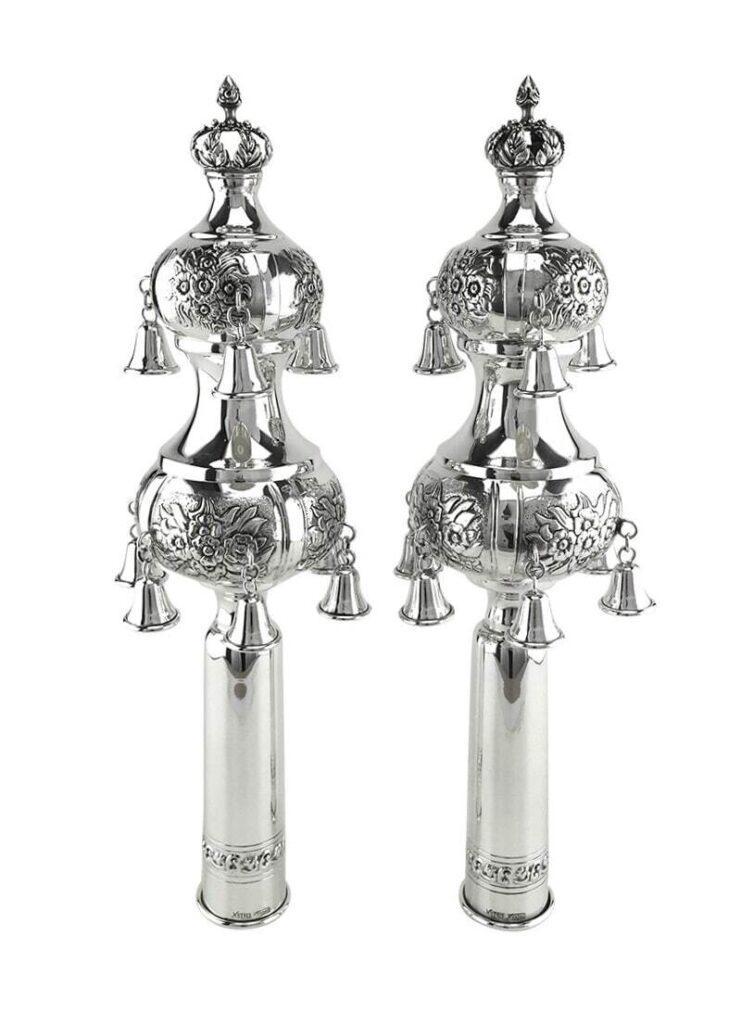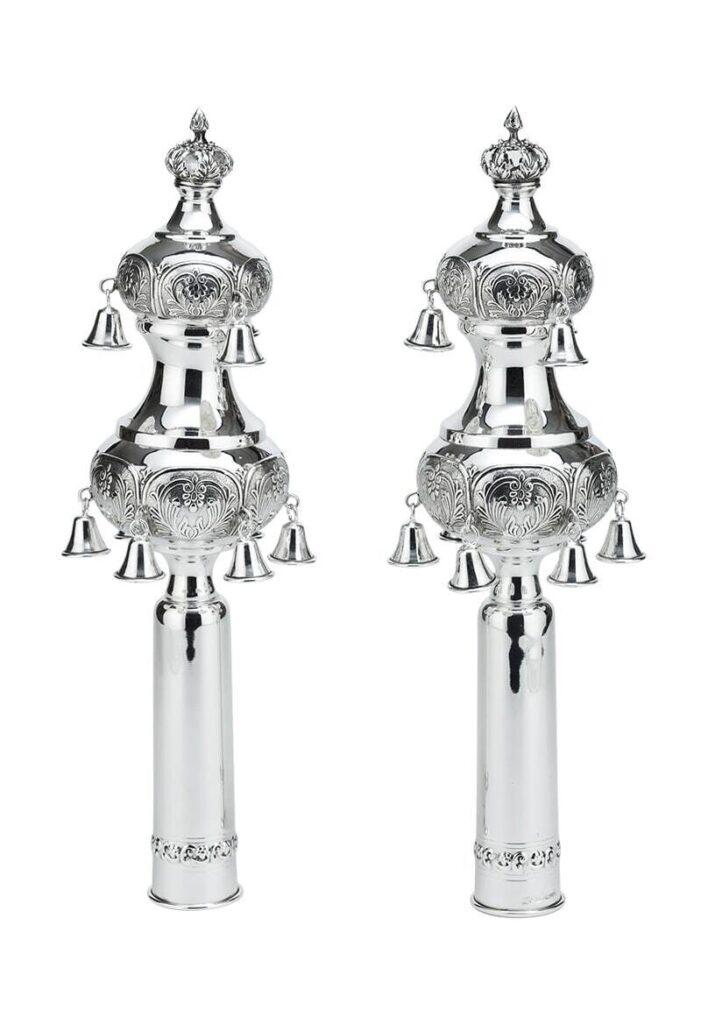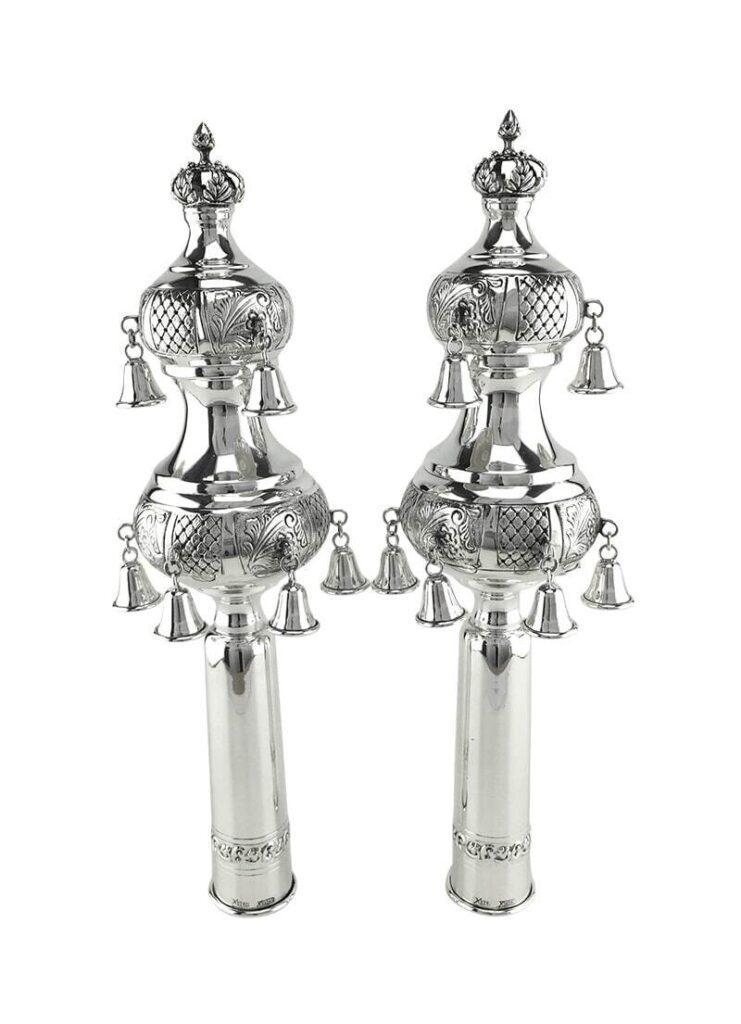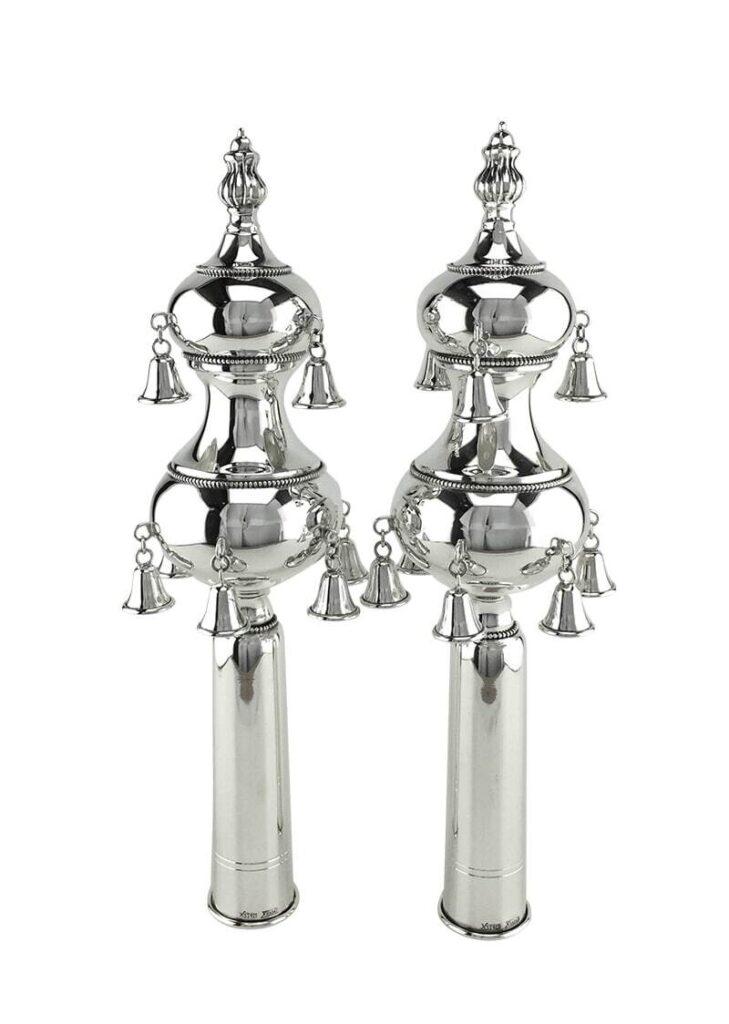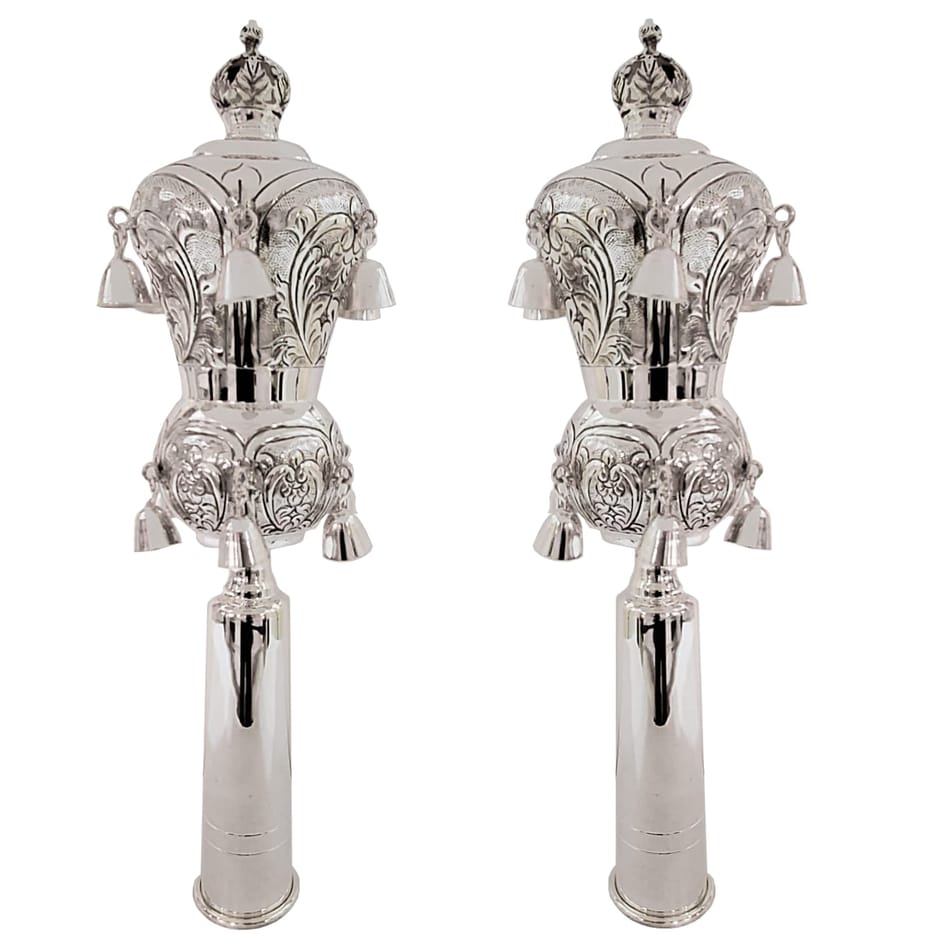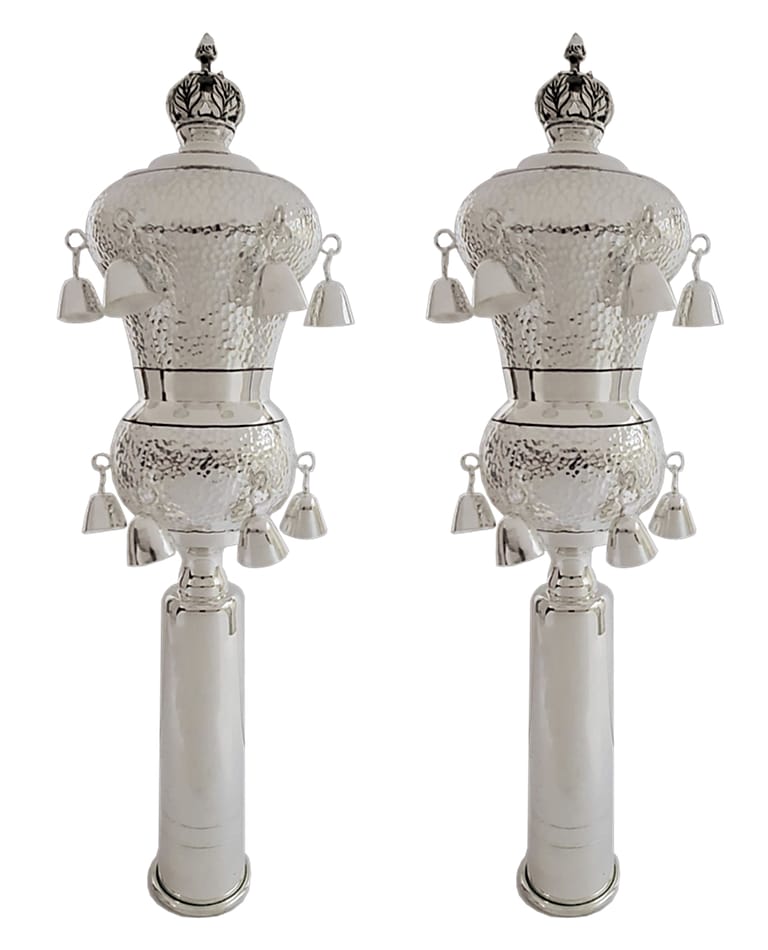
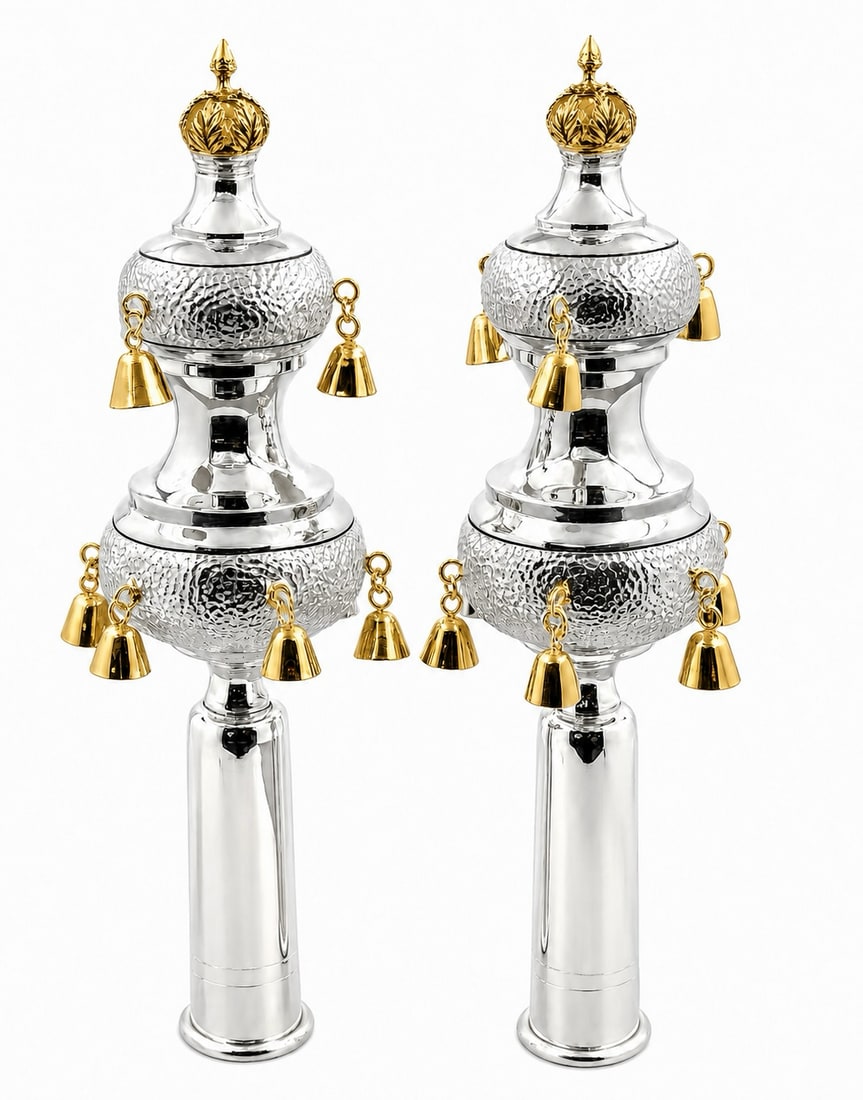
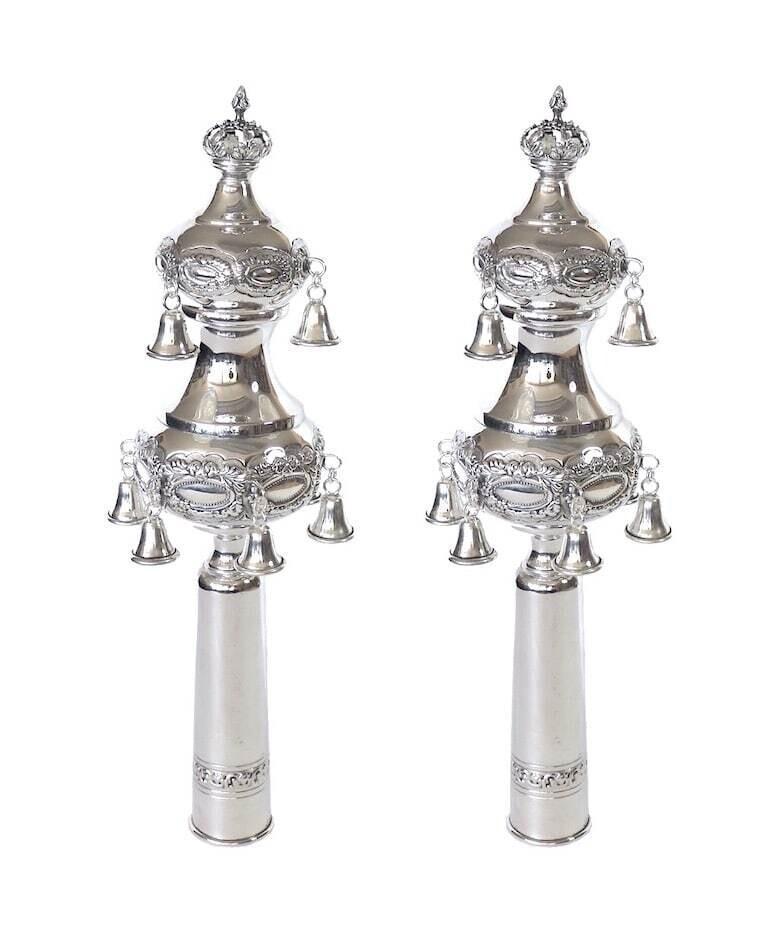
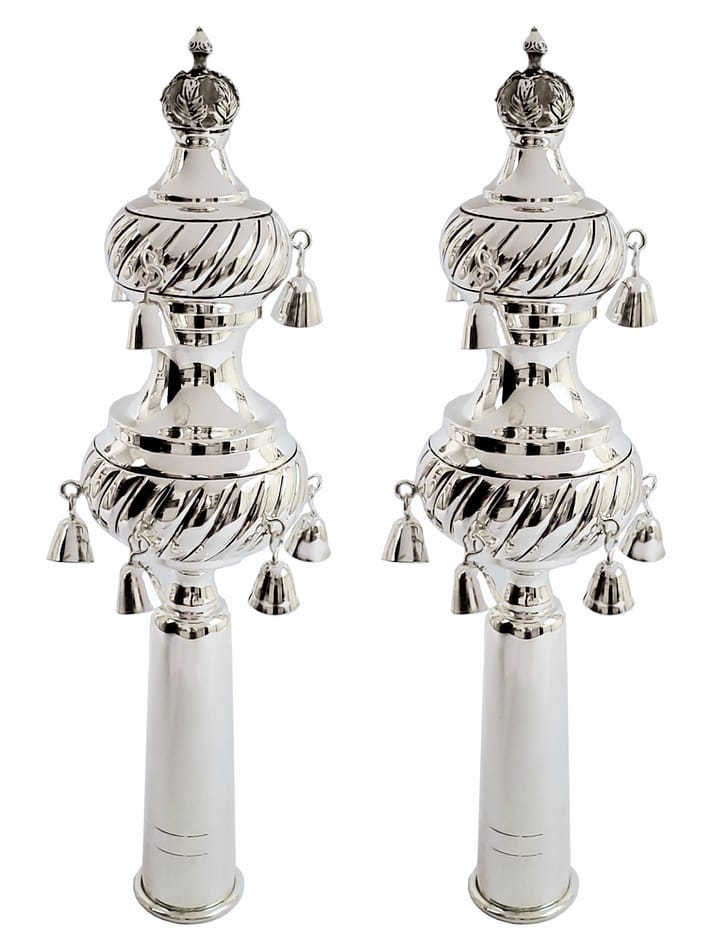
Rimonim

The Crowning Ornament of the Sefer Torah

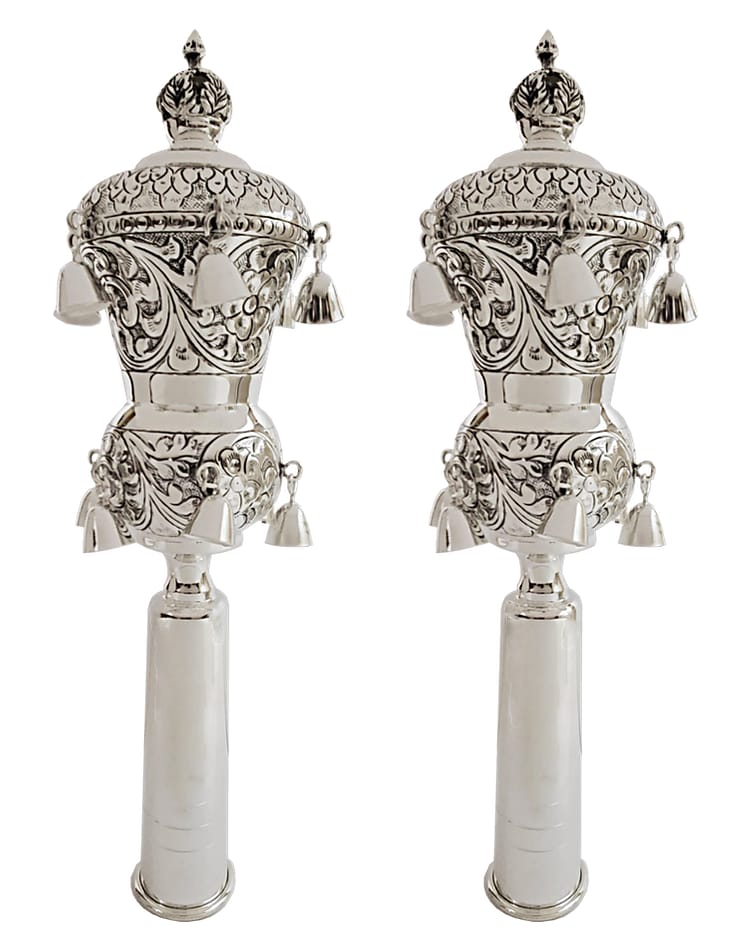
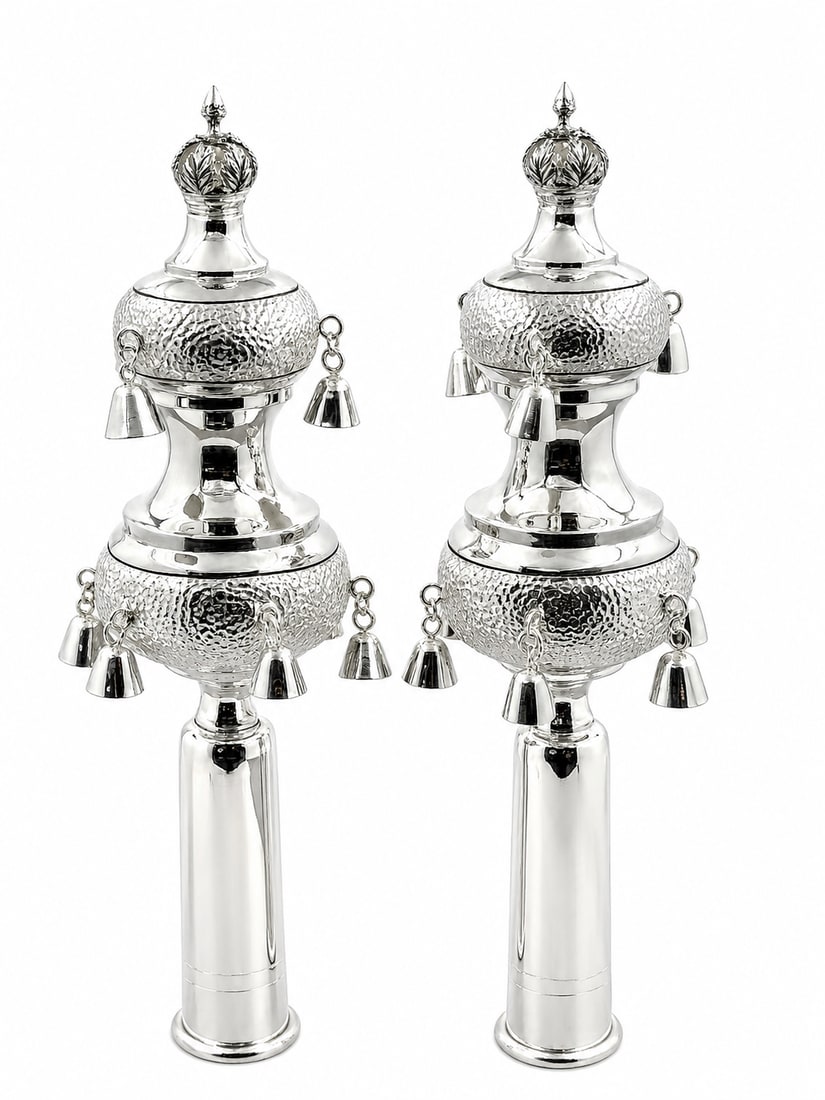
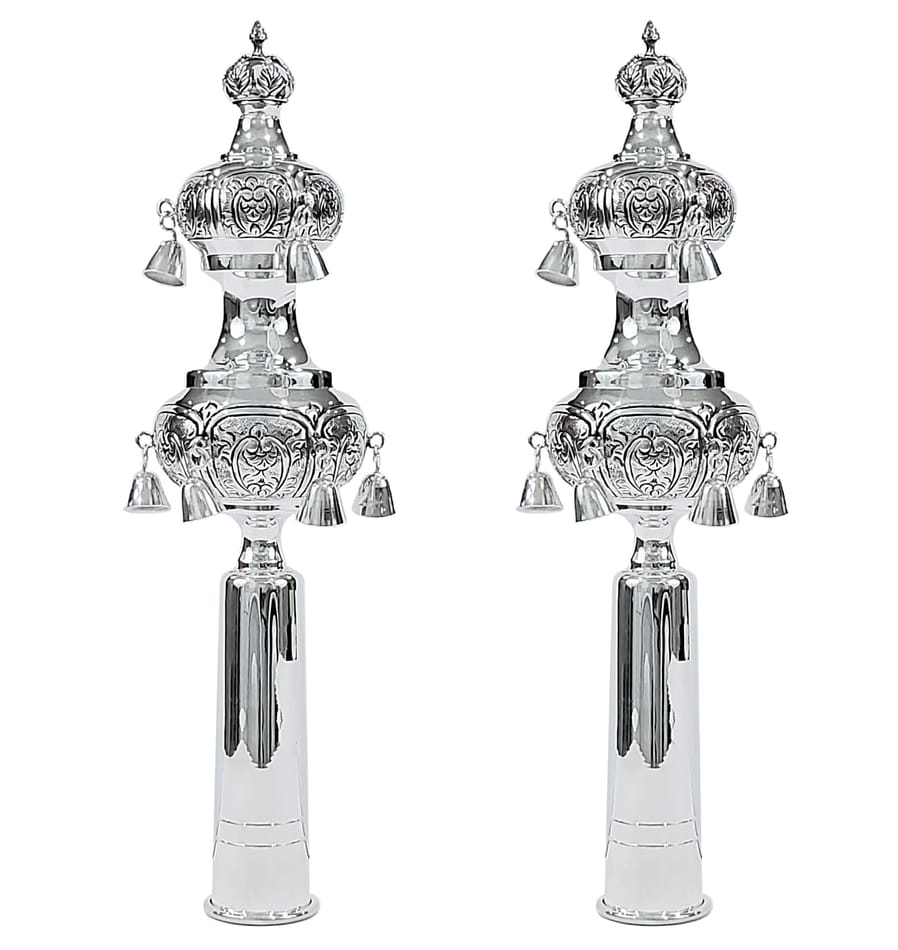
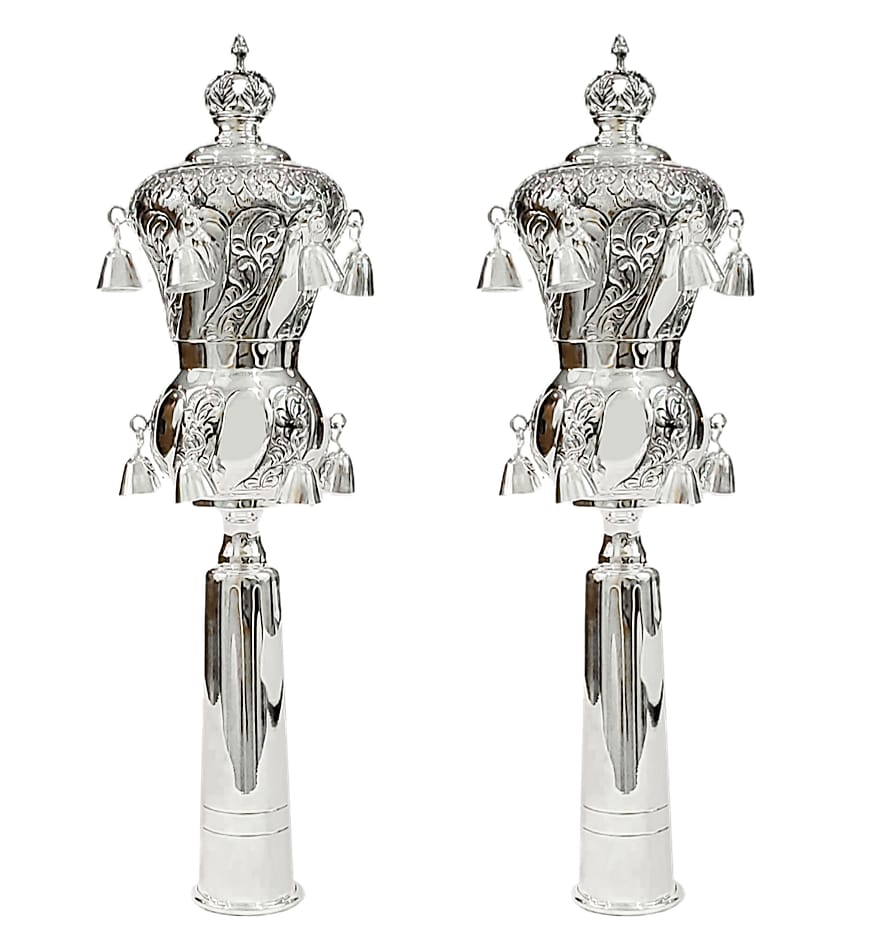
Rimonim occupy a distinguished place among the ornaments that adorn a Sefer Torah. Mounted upon the Atzei Chaim (Torah rollers), these finials are far more than decorative embellishments; they represent kavod haTorah—the honor due to the Torah itself—and embody the principle of hidur mitzvah, beautifying a sacred commandment through exceptional craftsmanship and reverence.

For generations, synagogues and Jewish communities throughout the various Ashkenazic, Sephardic, and Hasidic traditions have adorned their Torah Scrolls with finely crafted Rimonim that reflect both communal heritage and enduring devotion. Whether fashioned in sterling silver, gold, or a combination of precious metals, these ornaments serve as visible expressions of respect for the Torah during reading, procession, and ceremonial occasions.

Traditional Designs and Distinguished Craftsmanship

The Rimonim collection includes a broad range of artistic traditions, from Hand Hammered, Chased Swirl, Spiral Silver, and Oval Motif designs to refined Gate Design, Imperium Gates, Diagonal Flourish, and Damascene Sterling styles. Each interpretation reflects generations of silversmithing expertise while preserving the timeless symbolism associated with Torah ornaments.

Many communities select designs that complement their existing Torah mantle, breastplate (Choshen), and Yad, creating a harmonious presentation that enhances the dignity of the Sefer Torah during public worship and communal celebrations.

Selecting Rimonim for Your Torah Scroll

Choosing Rimonim involves more than aesthetic preference. Congregations often consider weight, balance, craftsmanship, historical style, and compatibility with their Atzei Chaim before making a decision. Sterling silver remains the traditional choice for many synagogues because of its durability and ability to develop a distinguished patina over decades of respectful use, while gold-accented designs convey exceptional elegance for Torahs dedicated in memory or celebration.

When acquiring new Torah ornaments, consultation with experienced Judaica specialists ensures that the selected Rimonim complement both the dimensions of the Torah and the customs of the community they will serve.

A Lasting Expression of Hidur Mitzvah

Throughout Jewish history, communities have invested in Torah ornaments that honor both the sanctity of the Sefer Torah and the generations entrusted with its care. Fine Rimonim are often commissioned for synagogue dedications, memorial donations, and significant communal milestones, becoming treasured heirlooms passed from one generation to the next.

Whether your preference is a classic hand-hammered finish, an intricate sterling silver gate motif, or a contemporary spiral design, thoughtfully chosen Rimonim contribute to the beauty, dignity, and enduring legacy of Torah life.

Frequently Asked Questions

What are Rimonim on a Torah Scroll?

Rimonim are ornamental finials placed on the Atzei Chaim of a Sefer Torah. They symbolize honor for the Torah and are an established expression of hidur mitzvah, beautifying the performance of a sacred commandment.

Are Rimonim used by different Jewish traditions?

Yes. Ashkenazic, Sephardic, and many Hasidic communities incorporate Rimonim into their Torah ornamentation, although artistic styles and decorative preferences may differ according to local minhag.

Why are sterling silver Rimonim so widely used?

Sterling silver combines durability with timeless elegance, making it well suited for synagogue use while preserving its beauty through generations of careful maintenance and ceremonial use. Today, due to the high cost of silver, many synagogues have transitioned to the use of more affordable high quality sterling dipped rimonim.

How should a synagogue choose Rimonim?

Factors typically include cost, compatibility with the Torah's Atzei Chaim, overall balance, craftsmanship, existing Torah ornaments, communal tradition, and the intended purpose of the dedication or donation.

Are hand-hammered and chased designs purely decorative?

While these motifs enhance visual beauty, they also reflect centuries of Jewish silversmithing tradition, allowing congregations to express reverence for the Torah through exceptional artistry.

Can Rimonim be commissioned for a Torah dedication?

Yes. Many congregations and families select new Rimonim for Torah dedications, synagogue anniversaries, memorial projects or family commemorations, making them meaningful and enduring expressions of communal devotion.