



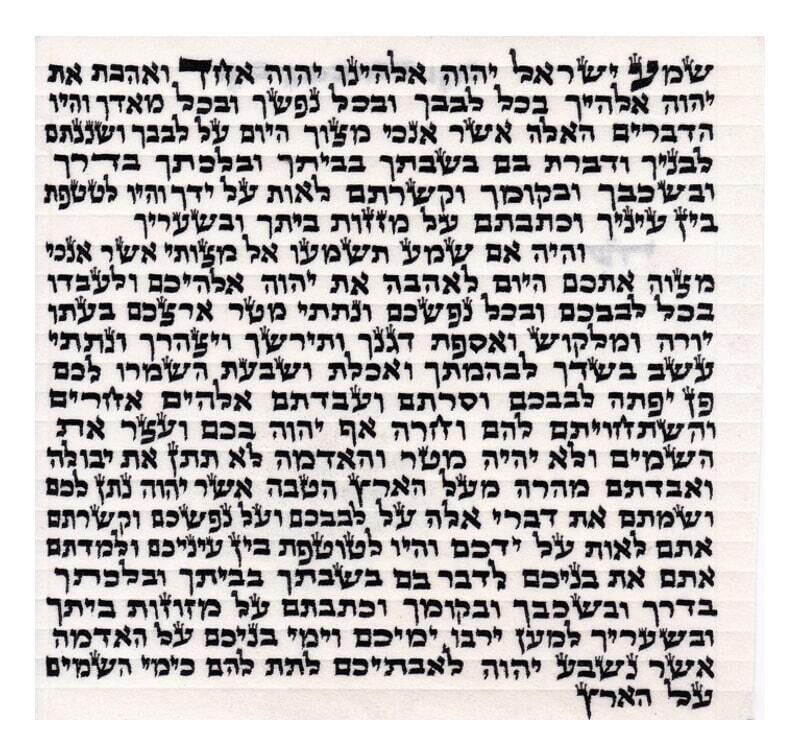
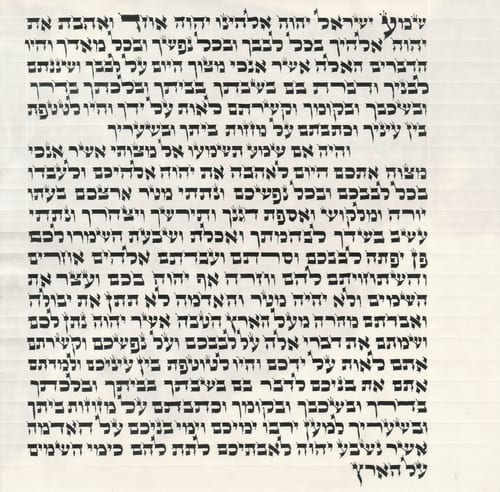
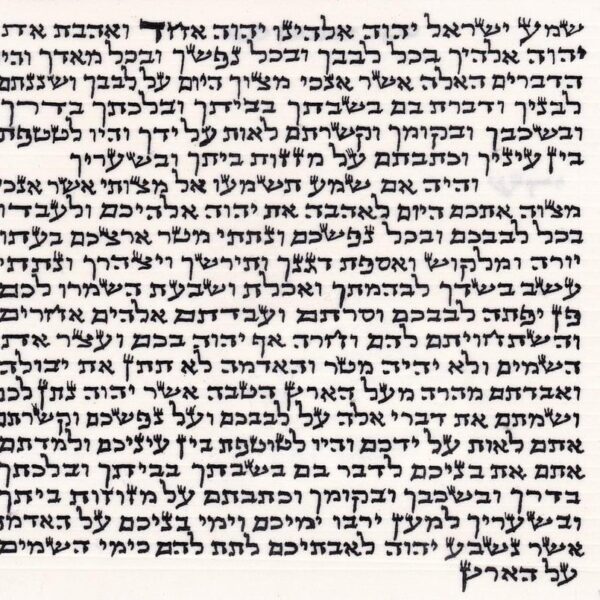
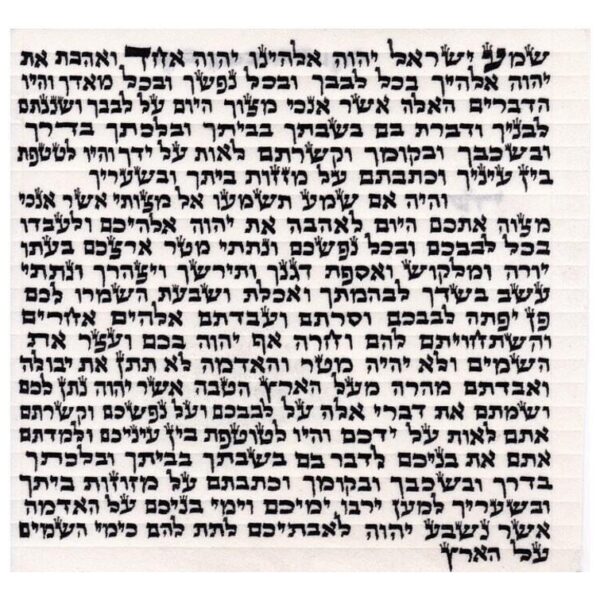

From time immemorial we have always proclaimed the Oneness of God on the thresholds of our homes. In order to view our mezuzah scrolls please select from the appropriate category:
Bet Yosef Script – Preferred by Ashkenaz Communities
Ketav Arizal – Preferred by Chassidic & Eastern European Communities
Sephardic Script – Preferred by Sepharadim and Middle Eastern Communities
Mezuzah Scrolls
Handwritten Kosher Mezuzah Scrolls — Crafted According to the Traditions of STa”M
A Mezuzah Scroll is among the most recognizable and enduring mitzvot of Jewish life, affixed to the entrances of Jewish homes, synagogues, schools, and places of study in fulfillment of the Torah commandment written in Parshat Shema. Yet beyond the Mezuzah case itself lies the true essence of the mitzvah — the handwritten klaf prepared by a qualified sofer according to the precise halachic requirements of STa”M.
At SeferTorah.Net, our Mezuzah Scrolls are written by experienced sofrim trained in the laws of STa”M, using kosher parchment prepared lishmah and written with the kavvanah appropriate for sacred Hebrew texts. Every Mezuzah klaf is produced according to established halachic standards and carefully checked for accuracy, spacing, letter formation, and overall kosher integrity.
The Halachic Importance of a Kosher Mezuzah Scroll
The kosher status of a Mezuzah depends entirely upon the handwritten scroll inside the case. A decorative Mezuzah case alone carries no halachic significance without a properly written klaf. Every letter of the two Torah paragraphs — Shema and VeHaya Im Shamoa — must be written in sequence, with correct spacing and precise letter formation, by a qualified sofer possessing both technical expertise and yirat shamayim.
Even minor deficiencies such as cracked letters, touching letters, missing and separated crowns, or fading ink may affect the kosher validity of the Mezuzah. For this reason, serious attention must be given not only to aesthetics, but to the caliber of the sofer, the quality of the klaf, and the standards of bedikah applied before the Mezuzah is offered for sale.
Ketav Ari, Ketav Beit Yosef, and Ketav Sefaradi Traditions
Our collection includes Mezuzah Scrolls written according to the principal ksav traditions used throughout the Jewish world.
Ketav Beit Yosef Mezuzah Scrolls
Ketav Beit Yosef is the traditional Ashkenazic STa”M script used widely among Lithuanian, Yeshivish, and many non-Hasidic Ashkenazic communities. Its letter formations follow the rulings and scribal traditions associated with the Beit Yosef and centuries of Ashkenazic STa”M practice.
Ketav Ari Mezuzah Scrolls
Ketav Ari, associated with the Arizal, is commonly used throughout Chabad and many Hasidic and Eastern European communities. Certain letter formations differ from Ketav Beit Yosef, reflecting the particular scribal customs preserved within Hasidic and Eastern European STa”M traditions. Many buyers seeking a Mezuzah according to Chabad or nusach Sefard custom specifically request Ketav Ari Mezuzah Scrolls.
Ketav Sefaradi Mezuzah Scrolls
Ketav Sefaradi follows the traditions of Sephardic Jewry and Edot HaMizrach communities. Its distinct script style reflects the longstanding STa”M customs preserved across Sephardic communities in North Africa, the Middle East, and the Mediterranean Jewish world.
Bedikah and Long-Term Mezuzah Maintenance
A Mezuzah Scroll should not merely be purchased and forgotten. Exposure to humidity, sunlight, heat, and changing weather conditions can gradually affect the integrity of the ink and klaf over time. Most halachic authorities legislate a periodic Mezuzah inspection of twice in seven years by a qualified sofer to verify that the letters remain fully kosher and legible.
At SeferTorah.Net, Mezuzah Scrolls are carefully checked before being offered for sale, helping ensure proper spacing, accurate text, and reliable kosher standards appropriate for daily Jewish observance.
Guidance for Homes, Synagogues, and Institutions
Different environments often require different Mezuzah considerations. A private residence, yeshiva dormitory, synagogue, office, or educational institution may require varying scroll sizes, levels of hidur, or script traditions according to community minhag and practical installation needs. In addition, certain doorways are also exempt from the mitzvah!
Our team is available to help buyers identify the appropriate Mezuzah Scroll based on ksav preference, intended use, budget, and halachic custom.
Frequently Asked Questions
What makes a Mezuzah Scroll kosher?
A kosher Mezuzah Scroll must be handwritten by a qualified sofer on properly prepared klaf written lishmah. Every letter must conform to the halachic standards governing STa”M writing.
What is the difference between Ketav Ari and Ketav Beit Yosef Mezuzah Scrolls?
These are two distinct Hebrew scribal traditions with different letter formations and STa”M customs. Ketav Beit Yosef is widely used among Western Ashkenazic communities, while Ketav Ari is commonly associated with Chabad, Hasidic and other Eastern European traditions.
Are Ketav Sefaradi Mezuzah Scrolls different from Ashkenazic scripts?
Yes. Ketav Sefaradi follows the scribal traditions of Sephardic and Edot HaMizrach communities, with unique letter formations and stylistic conventions preserved within Sephardic STa”M practice.
How often should Mezuzah Scrolls be checked?
Many halachic authorities recommend periodic inspection twice in seven years. However, in particular environments exposed to high humidity, sunlight, or sharp changing weather conditions a shorter and more often inspection is always recommended.
Can a Mezuzah case be used with any Mezuzah Scroll?
The Mezuzah case must properly accommodate the size of the klaf without folding or compressing the parchment. Selecting the correct case size is important for preserving the condition of the scroll.
Why is the quality of the sofer important?
Beyond technical writing skill, the yirat shamayim, concentration, and halachic knowledge of the sofer are fundamental elements in the preparation of kosher STa”M, including Mezuzah Scrolls.