


Sterling Silver vs Nickel Judaica: Which Should You Choose?

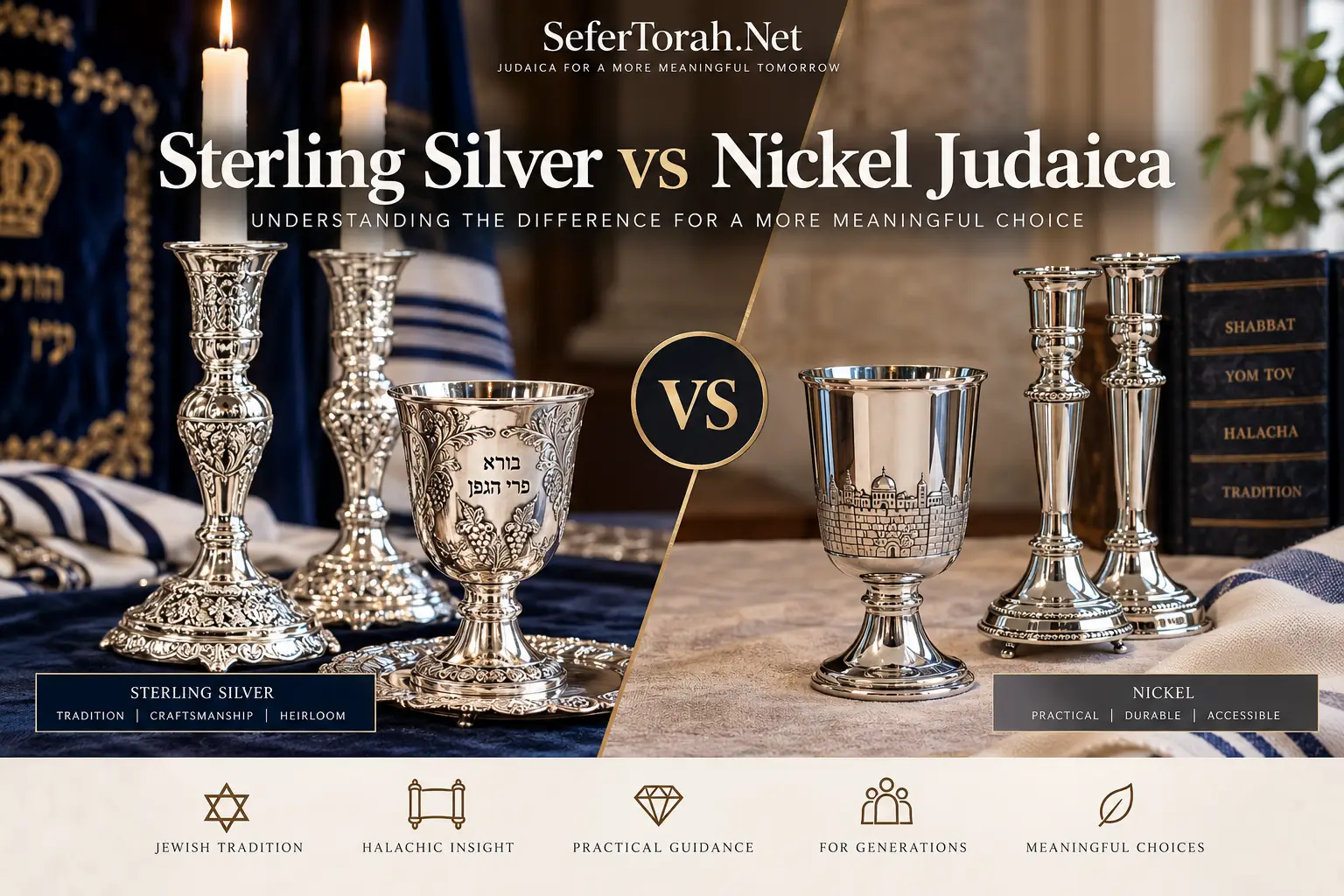
When choosing Judaica, the material is more than a question of appearance. A Kiddush cup, candlestick, Havdalah set, Torah ornament, or other ritual object may be used for generations, displayed prominently in a home or synagogue, or given to commemorate an important Jewish occasion.
That makes the comparison between Sterling Silver vs Nickel Judaica particularly useful. Both materials can be fashioned into attractive and durable Jewish ritual objects, but they differ considerably in composition, appearance, maintenance, craftsmanship, and long-term character.
The right choice depends on what the object is for, how frequently it will be used, the desired style, maintenance expectations, and the importance the buyer places on precious-metal craftsmanship.
What Is Sterling Silver Judaica?
Sterling silver is a recognized silver alloy traditionally composed of 92.5% pure silver, with the remaining portion generally consisting of another metal, commonly copper. The alloy is used because pure silver is relatively soft, while sterling silver provides greater strength for practical objects.
In Judaica, sterling silver is often associated with objects intended to have both functional and ceremonial significance. Examples include:
- Kiddush Cups
- Candlesticks
- Havdalah Sets
- Challah Boards and Trays
- Torah Pointers
- Torah Crowns
- Rimonim
- Torah Breastplates
- Other silver Judaica
For many families and communities, silver Judaica also carries an element of Hidur Mitzvah—the principle of beautifying a mitzvah through the care and dignity given to the objects used in its observance.
The presence of sterling silver, however, does not by itself determine whether an item is more appropriate from a Halachic perspective. The specific mitzvah, object, construction, and manner of use must be considered separately.
What Is Nickel Judaica?
Nickel Judaica is made using nickel or a nickel-containing metal alloy rather than sterling silver. Nickel alloys are valued in decorative and household manufacturing because they can provide a durable surface and a bright, silvery appearance.
One reason nickel is used for Judaica is its visual similarity to silver. A well-finished nickel object can have a clean, polished appearance while requiring somewhat different care from genuine silver.
Nickel can therefore be a practical material for families seeking the appearance and character of traditional metal Judaica without necessarily choosing a precious-metal object.
When purchasing, it is important to distinguish between solid nickel, nickel alloy, nickel-plated materials, and silver-plated materials. These descriptions are not interchangeable and can have very different implications for durability and care.
Sterling Silver vs Nickel Judaica: Key Differences
The most useful way to compare these materials is to look beyond appearance.
| Feature | Sterling Silver | Nickel |
|---|---|---|
| Material | Silver alloy, typically 92.5% silver | Nickel or nickel-containing alloy |
| Appearance | Naturally warm, reflective silver | Bright, silvery metallic appearance |
| Tarnishing | Can tarnish over time | Generally behaves differently from silver |
| Maintenance | Requires occasional polishing | Usually straightforward routine care |
| Craftsmanship | Often associated with fine silver Judaica | Commonly used for durable decorative objects |
| Long-term character | Develops a natural patina if not polished | Generally maintains a consistent metallic appearance |
| Monetary material value | Precious-metal value | No comparable intrinsic silver value |
| Best suited to | Heirloom, ceremonial, collectible, and gift pieces | Practical and decorative Judaica |
This comparison does not mean one material is universally better. It means the materials serve different priorities.
Appearance and Aging
One of the clearest distinctions in Sterling Silver vs Nickel Judaica is how each material changes with time.
Sterling silver naturally reacts with compounds in the surrounding environment and can develop tarnish. This is not evidence that the silver is defective. It is a normal characteristic of the metal.
Some collectors appreciate the changing character of silver, particularly when an object has been part of a family’s Shabbat or holiday traditions for many years. Others prefer to maintain a bright polished finish.
Nickel generally offers a more consistent silvery appearance and may appeal to someone who wants a ceremonial object that requires less attention to silver tarnish.
The choice therefore comes partly down to whether you appreciate the evolving character of silver or prefer a more uniform finish.
Craftsmanship Matters More Than Material Alone
It is tempting to judge Judaica simply by whether it is silver or nickel. That is an incomplete way to evaluate a piece.
Two objects made from the same material can differ substantially in workmanship.
When evaluating Judaica, look at:
Construction
Examine how securely the different components are joined and whether the object feels structurally sound.
Surface Work
Hand chasing, engraving, embossing, filigree, hammering, and other decorative techniques can substantially affect the character of a piece.
Proportion
Traditional Judaica often depends on careful proportion. A Kiddush cup, candlestick, Torah pointer, or other object should be functional as well as visually balanced.
Finish
Look for an even finish and carefully executed details rather than evaluating the material name alone.
Provenance and Maker
For collectible or significant Judaica, knowing who made the piece, where it was produced, and how it was crafted can add important context.
This is particularly relevant when comparing handmade silver Judaica with mass-produced metal objects.
Is Sterling Silver More Halachically Appropriate?
This question requires an important distinction.
Sterling silver is not automatically more Halachically valid than nickel simply because silver is a precious metal.
Halachic requirements vary according to the particular mitzvah and ritual object. For example, the requirements relevant to a Kiddush cup are not identical to those governing a Torah pointer or candlestick.
In many cases, the material primarily concerns beauty, craftsmanship, durability, tradition, and personal preference, rather than basic kosher status.
The concept of Hidur Mitzvah can certainly make craftsmanship and presentation meaningful. But Hidur Mitzvah should not be reduced to the price or precious-metal content of an object.
For questions involving specific Halachic requirements, buyers should consult a qualified Rabbi familiar with the relevant mitzvah.
Which Material Is Better for a Kiddush Cup?
For a Kiddush cup, both practicality and ceremonial presentation matter.
A sterling silver Kiddush cup can become an heirloom that is associated with Shabbat, Yom Tov, family celebrations, and important milestones. Silver also has a long-established place in Jewish ceremonial craftsmanship.
A nickel Kiddush cup may be appropriate for someone who prioritizes a bright metallic appearance and straightforward maintenance.
When choosing, consider:
- Frequency of use
- Size and stability
- Ease of cleaning
- Design
- Craftsmanship
- Personal or family tradition
- Whether the item is intended as an heirloom or everyday piece
The most expensive option is not automatically the most suitable one.
Sterling Silver vs Nickel for Synagogue Judaica
The comparison becomes even more interesting when considering synagogue use.
Objects such as Torah Pointers, Rimonim, Torah Crowns, and Torah Breastplates are closely connected with the public honor and presentation of the Sefer Torah.
For a synagogue, the decision may involve:
- Existing synagogue Judaica
- Matching an established design
- Frequency of handling
- Ease of maintenance
- Budget
- Dedication or memorial requirements
- Traditional or contemporary aesthetic
A sterling silver Torah Pointer, for example, may be selected as a significant dedication piece, while another congregation may prefer a durable metal pointer for regular use.
The important consideration is that the object should be appropriate to its function and handled with proper Kavod HaTorah.
Caring for Sterling Silver Judaica
Sterling silver requires appropriate care.
To preserve silver Judaica:
- Handle pieces with clean, dry hands when practical.
- Avoid unnecessary exposure to moisture and chemicals.
- Use cleaning products specifically intended for silver.
- Follow the manufacturer’s recommendations before polishing.
- Store silver pieces in a suitable environment when they are not being used.
- Avoid aggressive polishing that could damage delicate engraving or surface details.
For highly detailed or antique Judaica, professional cleaning may be preferable to repeated abrasive polishing.
Nickel objects should also be cleaned according to their specific finish. If an item is plated rather than solid metal, aggressive cleaning can eventually affect the surface.
When Should You Choose Sterling Silver?
Sterling silver may be particularly appropriate when you are looking for:
- A meaningful family heirloom
- A significant Jewish gift
- Synagogue dedication Judaica
- Fine ceremonial craftsmanship
- Traditional silver presentation
- Collectible Judaica
- A piece intended to remain in the family for generations
For example, a sterling silver Kiddush cup given for a wedding or Bar Mitzvah can become connected to the family’s Jewish life long after the original occasion.
When Should You Choose Nickel?
Nickel may make sense when your priorities include:
- A bright metallic appearance
- Practical everyday use
- Easier routine maintenance
- A traditional-looking object without sterling silver construction
- A synagogue or household object where material cost is an important consideration
The key is to understand exactly what you are purchasing. Ask whether the item is solid nickel, a nickel alloy, nickel-plated, or another metal with a nickel finish.
Choosing Judaica at SeferTorah.Net
Choosing Judaica should begin with the object’s purpose rather than the material alone.
At SeferTorah.Net, shoppers can explore Judaica for Shabbat, holidays, synagogue use, Jewish celebrations, and meaningful gifts. Depending on your needs, relevant collections include [Kiddush Cups], Candlesticks, Havdalah Sets & Candles, Shabbat Table Accessories, Torah Pointers, and Torah Ornaments.
When comparing pieces, consider the material, construction, decorative technique, intended use, and care requirements together. For a significant purchase or synagogue dedication, taking the time to understand those details can help you choose an object that is appropriate not only today but for years of Jewish use.
Frequently Asked Questions
Is sterling silver better than nickel for Judaica?
Not universally. Sterling silver offers genuine silver content, traditional appeal, and heirloom potential, while nickel can provide durability and a bright metallic appearance. The appropriate choice depends on the object and intended use.
Does sterling silver Judaica tarnish?
Yes. Sterling silver naturally develops tarnish through exposure to compounds in the environment. Proper storage and suitable silver care can help maintain its appearance.
Does nickel Judaica tarnish like silver?
Nickel does not behave exactly like sterling silver and generally does not develop the same characteristic silver tarnish. However, the actual care requirements depend on the alloy and surface finish.
Is sterling silver required for a Kiddush cup?
The fact that an item is sterling silver does not by itself determine its Halachic suitability. Specific Halachic requirements for Kiddush should be considered separately from the question of precious-metal content.
Is silver Judaica a good heirloom?
It can be. Sterling silver is durable when properly maintained, and its ceremonial use can give an object significant family and historical meaning.
What is the difference between nickel and nickel-plated Judaica?
Solid or alloy construction and plating are different. Nickel-plated Judaica has a surface layer of nickel over another material, so the underlying construction and care requirements should be considered.
Does Hidur Mitzvah require silver Judaica?
Not necessarily. Hidur Mitzvah concerns beautifying a mitzvah, but that does not mean every ritual object must be made from silver. Craftsmanship, presentation, suitability, and the circumstances of the mitzvah can all matter.
Is sterling silver suitable for synagogue Judaica?
Yes. Sterling silver is commonly used for ceremonial Judaica, including various Torah ornaments and synagogue objects. The appropriate material depends on the synagogue’s needs, traditions, design, and budget.
How should valuable silver Judaica be cleaned?
Use a method appropriate to the specific piece. Delicate engraving, antique finishes, plating, and specialized decorative work may require professional care rather than aggressive polishing.
What should I consider before buying Judaica?
Consider the object’s purpose, material, craftsmanship, construction, tradition, maintenance requirements, design, and whether it is intended for everyday use, a special occasion, synagogue dedication, or long-term family ownership.
Conclusion
The question of Sterling Silver vs Nickel Judaica is ultimately about more than choosing between two metals.
Sterling silver brings genuine silver content, traditional craftsmanship, heirloom potential, and a distinctive character that changes naturally with age. Nickel can provide a durable, bright metallic finish with different maintenance and cost considerations.
For Judaica used in Jewish life, the most meaningful choice is one that respects the object’s purpose, craftsmanship, tradition, and intended use. Whether selecting a Kiddush cup for Shabbat, a gift for a Bar Mitzvah, or ceremonial Judaica for a synagogue, understanding the material is an important part of making an informed decision.
The goal is not simply to choose the more expensive material. It is to choose Judaica that is appropriate, well-made, meaningful, and worthy of the role it will play in Jewish life.