


How to Care for a Torah Scroll | Sefer Torah Care Guide

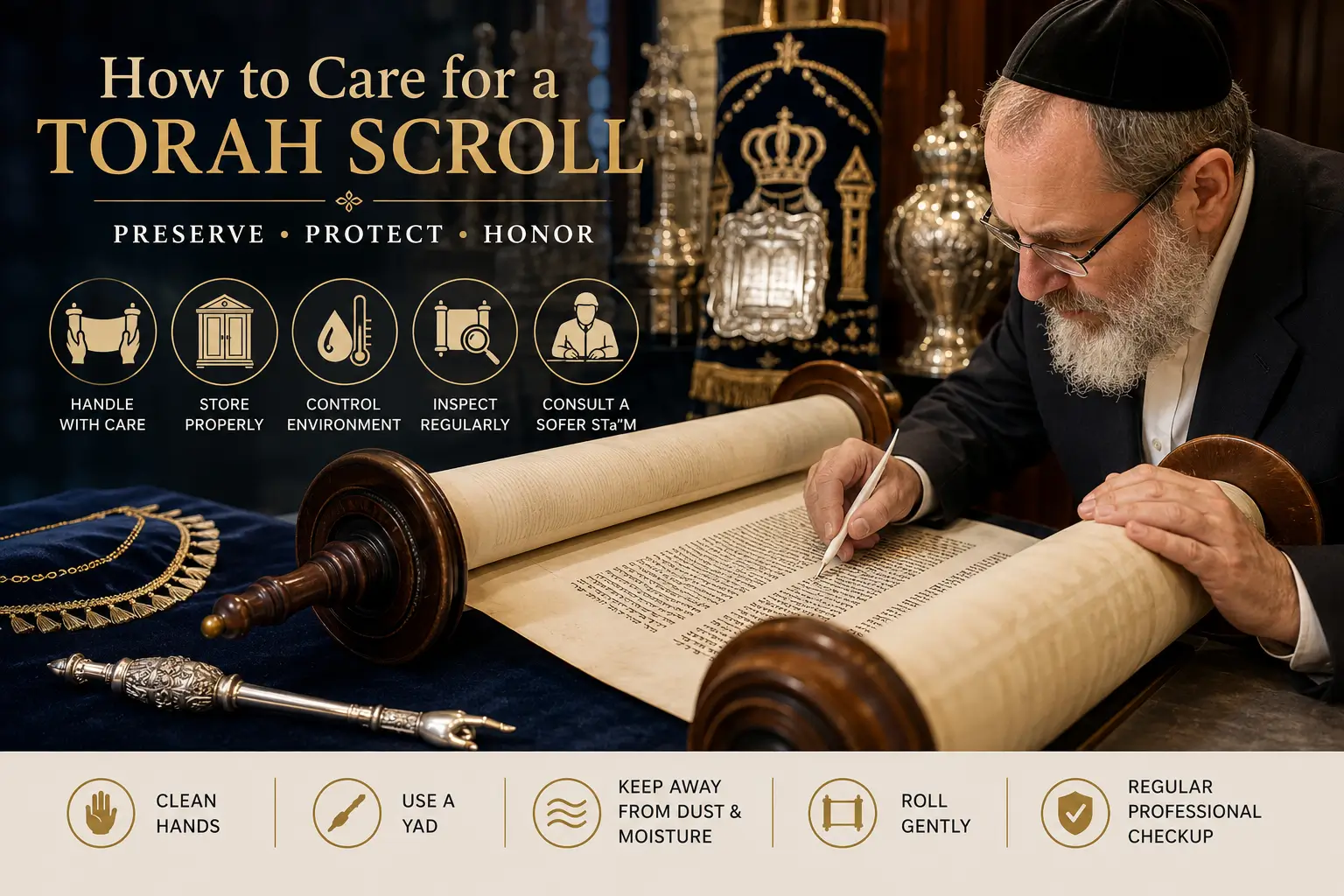
How to Care for a Torah Scroll: A Complete Guide to Proper Handling, Storage, and Preservation
A Sefer Torah is far more than a sacred manuscript. It is the handwritten embodiment of the Torah, meticulously prepared by a qualified Sofer STa”M according to centuries of Halachic tradition. Every letter, every column, and every sheet of klaf is produced with extraordinary precision and written lishmah—for the sacred purpose of creating a Torah scroll suitable for public Torah reading.
Because of its holiness and craftsmanship, understanding how to care for a Torah Scroll is an essential responsibility for every synagogue, Jewish institution, Torah collector, and community entrusted with its use. Proper care not only preserves the physical condition of the scroll but also helps maintain its kosher status for generations.
Daily handling, environmental conditions, storage practices, and regular inspections all play an important role in protecting a Torah scroll from damage. Even minor issues such as excess humidity, improper rolling, or worn parchment can eventually affect the readability of the scroll and require professional repair by an experienced Sofer STa”M.
Whether your congregation owns a newly commissioned Torah or a treasured scroll that has served the community for decades, following established best practices helps safeguard one of Judaism’s most sacred possessions. In this guide, we’ll explore the essential principles of Torah scroll care, explain common mistakes to avoid, and discuss when professional inspection or restoration may be necessary.
Why Proper Torah Scroll Care Matters
Caring for a Torah scroll is rooted in the principle of Kavod HaTorah—showing honor and reverence for the Torah. Jewish law places significant importance on treating sacred writings with dignity, recognizing that a Sefer Torah is used during communal worship and contains the handwritten text of the Five Books of Moses.
Unlike printed books, a Torah scroll is created entirely by hand. Thousands of carefully formed letters are written with specially prepared ink on kosher parchment, making each scroll a unique work of sacred craftsmanship. Because every letter contributes to the scroll’s validity, even relatively small areas of wear may require attention before they develop into larger problems.
Proper maintenance also protects the considerable investment involved in commissioning or acquiring a Torah scroll. With attentive care and periodic professional inspections, many Torah scrolls continue serving communities for well over a century.
Good Torah care includes:
- Correct handling during Torah readings
- Appropriate storage inside the Aron Kodesh
- Maintaining stable environmental conditions
- Regular visual inspections
- Scheduled Halachic examinations by qualified Sofrim
These practices help preserve both the physical integrity and ritual suitability of the scroll.
Understanding What Can Damage a Torah Scroll
One of the most important aspects of learning how to care for a Torah Scroll is understanding the factors that contribute to deterioration. While parchment and traditional STa”M ink are remarkably durable when properly maintained, they remain natural materials that respond to their environment.
Humidity and Temperature
Fluctuations in humidity can cause parchment to expand or contract over time. Excess moisture may encourage mold growth, while extremely dry conditions can make the klaf brittle and more susceptible to cracking.
Maintaining a stable climate inside the synagogue helps reduce unnecessary stress on the parchment and ink.
Frequent Handling
Torah scrolls are designed for regular communal use, yet repeated handling without proper care may gradually affect the parchment, stitching, handles (Atzei Chaim), and decorative accessories.
Those entrusted with Torah reading should always support the scroll carefully when opening, lifting, and rolling it.
Dust and Environmental Contaminants
Dust accumulation inside the Aron Kodesh or storage area can settle on the parchment over time. Although routine cleaning should never involve direct treatment of the parchment itself, maintaining a clean environment helps protect the scroll from unnecessary exposure.
Accidental Physical Damage
Improper rolling techniques, dropping the scroll, sharp jewelry, or placing objects on top of the Torah can all result in damage that requires professional evaluation.
Preventing accidental damage is considerably easier than repairing it.
Best Practices for Daily Torah Scroll Handling
Respectful handling is one of the most effective ways to preserve a Torah scroll throughout years of regular synagogue use. Communities often establish consistent procedures so that everyone involved in Torah services understands how to protect the scroll while maintaining the dignity of the reading.
Some practical recommendations include:
Handle with Clean, Dry Hands
Before touching the Torah, ensure that hands are clean and completely dry. Moisture, oils, lotions, or dirt may transfer to the parchment or handles over time.
Support the Scroll Properly
When opening or closing a Torah scroll, avoid placing unnecessary pressure on the parchment. The rollers should move smoothly without forcing the scroll into position.
Roll Carefully
Fast or uneven rolling may place stress on stitched sections and parchment edges. Taking a few extra moments helps reduce long-term wear.
Keep Food and Drinks Away
Food, beverages, candles with dripping wax, or other potential contaminants should never be placed near an open Torah scroll.
Use Appropriate Torah Accessories
Many congregations use protective Torah mantles, Torah binders (gartels), and Torah pointers (Yad) to minimize direct contact with the parchment during public readings.
On SeferTorah.Net, you’ll find a carefully selected collection of Torah Scrolls, Torah Mantles, Torah Pointers (Yad), Torah Crowns, Rimonim, and other synagogue essentials designed to support respectful Torah presentation while complementing the beauty and dignity of every Sefer Torah. These items not only enhance the synagogue experience but also contribute to the proper care and protection of sacred Torah scrolls when used appropriately.
Proper Storage Inside the Aron Kodesh
Correct storage is just as important as careful handling. When a Torah scroll is not being read, it should be returned to the Aron Kodesh in a manner that protects it from environmental stress while honoring its sacred status.
The storage area should remain clean, dry, and free from excessive heat, moisture, or direct sunlight. Stable conditions help preserve both the parchment and the handwritten ink over time.
Communities should also periodically examine decorative coverings, Torah mantles, and storage shelves to ensure they remain clean and do not place unnecessary pressure on the scroll.
A well-maintained Aron Kodesh reflects the community’s commitment to Hidur Mitzvah—beautifying the mitzvah through respectful care of sacred objects—while helping preserve the Torah for future generations.
How Often Should a Torah Scroll Be Inspected?
Regular inspection is one of the most important aspects of how to care for a Torah Scroll. Even when a Torah scroll appears to be in excellent condition, natural aging, environmental changes, and frequent use can gradually affect the parchment and lettering. Small imperfections may go unnoticed during public Torah readings but can eventually impact the scroll’s kosher status if left unaddressed.
According to accepted Halachic practice, Torah scrolls should be examined periodically by a qualified Sofer STa”M. The frequency of inspection depends on several factors, including the age of the scroll, how often it is used, and the conditions in which it is stored.
A newly commissioned Torah that is carefully maintained in a climate-controlled synagogue may require less frequent attention than an older scroll used multiple times each week. Likewise, Torah scrolls exposed to fluctuating humidity or frequent travel may benefit from more regular evaluations.
During an inspection, the Sofer carefully examines:
- Letter formation and spacing
- Ink condition and fading
- Parchment integrity
- Stitching between sheets (Yeriot)
- Damage caused by moisture or age
- Cracks, tears, or worn sections
- Areas where letters may be touching or separating
Modern computerized scanning (Bedikah b’Machshev) can assist in identifying potential issues, but it does not replace the trained eye and Halachic judgment of an experienced Sofer. A comprehensive evaluation often combines both traditional expertise and modern technology to ensure the Torah remains suitable for public reading.
Signs Your Torah Scroll May Need Professional Attention
Many Torah scrolls serve their communities faithfully for generations, but no scroll is immune to wear. Recognizing the early signs of deterioration allows problems to be addressed before more extensive restoration becomes necessary.
Some common indicators include:
Faded or Cracked Letters
Over many years, ink may begin to weaken or develop fine cracks. Because every letter must meet precise Halachic standards, even minor changes can affect readability.
Tears or Damage to the Klaf
Natural parchment is durable, yet it can become damaged through accidental handling, aging, or environmental conditions. Small tears should always be evaluated by a qualified Sofer rather than repaired independently.
Loose Stitching
Individual sheets of parchment are sewn together using traditional methods. If stitching begins to loosen, sections of the Torah may require professional reinforcement.
Difficulty Rolling the Scroll
If the Torah no longer rolls smoothly or feels unusually tight or uneven, the problem may involve the parchment, the Atzei Chaim (wooden rollers), or the scroll’s overall condition.
Moisture or Mold
Exposure to excessive humidity can lead to mold, staining, or deterioration of both ink and parchment. Any evidence of moisture should be addressed immediately to prevent further damage.
Whenever any of these signs appear, it is advisable to suspend use of the affected portion until the Torah has been evaluated by a knowledgeable Sofer STa”M.
The Role of a Sofer STa”M in Torah Maintenance
A Sofer STa”M is far more than a skilled calligrapher. The Sofer is trained in the detailed Halachic laws governing the writing, inspection, repair, and preservation of Sifrei Torah, Tefillin, and Mezuzot.
Because every Torah scroll is handwritten according to precise legal requirements, only a qualified Sofer possesses the expertise necessary to determine whether a repair is permissible and how it should be performed.
Professional Torah maintenance may include:
- Comprehensive Halachic inspections
- Letter corrections
- Ink restoration where permitted
- Repairing damaged parchment
- Re-stitching separated sections
- Restoring worn or aging scrolls
- Confirming continued kosher status
Attempting to repair a Torah scroll without proper training can compromise its validity. For this reason, synagogues and private owners should always consult experienced STa”M professionals whenever concerns arise.
Torah Restoration vs. Preventive Preservation
Many people assume that Torah care begins only when damage becomes visible. In reality, preventive preservation is the most effective way to protect a Torah scroll for future generations.
Routine inspections, proper storage, careful handling, and stable environmental conditions significantly reduce the need for major restoration work.
When restoration is required, the objective is not to modernize the scroll but to preserve its original sanctity while maintaining full compliance with Halacha. Depending on the condition of the Torah, restoration may involve replacing damaged stitching, correcting letters, repairing parchment, or carefully restoring sections affected by age.
Older Torah scrolls often possess deep historical and communal significance. Preserving these scrolls allows congregations to continue reading from the same Sefer Torah that has served families and communities for decades, sometimes even centuries.
Common Mistakes to Avoid When Caring for a Torah Scroll
Even well-intentioned caretakers can unknowingly shorten the life of a Torah scroll. Avoiding a few common mistakes helps preserve both its physical condition and Halachic integrity.
Some practices to avoid include:
- Storing the Torah in areas with excessive humidity or direct sunlight
- Rolling the parchment too tightly or unevenly
- Touching the writing unnecessarily during Torah reading
- Delaying professional inspections after visible damage appears
- Attempting repairs without a qualified Sofer STa”M
- Using household cleaning products on parchment or sacred accessories
- Ignoring changes in temperature within the Aron Kodesh
Thoughtful daily care, combined with regular professional maintenance, greatly extends the lifespan of a Torah scroll while honoring the principle of Kavod HaTorah.
Support Proper Torah Care with the Right Synagogue Accessories
Proper Torah care extends beyond inspections and careful handling. Using appropriate synagogue accessories helps protect the scroll during storage, transportation, and public Torah readings while enhancing Hidur Mitzvah.
At SeferTorah.Net, you’ll find a comprehensive selection of products designed to support the long-term preservation and dignified presentation of your Sefer Torah, including:
- Torah Scrolls for synagogues, schools, and private collections
- Torah Mantles to protect the scroll from dust and daily wear
- Torah Pointers (Yad) that reduce direct contact with the parchment during readings
- Torah Crowns (Keter Torah) and Rimonim for honoring the Torah
- Torah Breastplates (Hoshen) and decorative ornaments
- Additional Synagogue Supplies crafted to complement traditional Jewish worship
Choosing suitable Torah accessories not only beautifies the mitzvah but also contributes to preserving your Torah scroll for future generations. Exploring related categories on SeferTorah.Net can help synagogue leaders and collectors find solutions that support both the practical care and respectful presentation of these sacred treasures.
Frequently Asked Questions
1. How often should a Torah Scroll be checked?
A Sefer Torah should be inspected periodically by a qualified Sofer STa”M, particularly if it is used regularly for public Torah readings. Older Torah scrolls or those exposed to changing environmental conditions may require more frequent examinations. Routine inspections help identify worn letters, damaged parchment, loose stitching, or other issues before they affect the scroll’s kosher status.
2. Can a damaged Torah Scroll be repaired?
In many cases, yes. Tears in the klaf, faded lettering, separated stitching, or other forms of wear can often be repaired by an experienced Sofer STa”M. Every repair must comply with Halachic requirements, so Torah restoration should never be attempted by someone without proper STa”M training.
3. What environmental conditions are best for preserving a Torah Scroll?
A Torah scroll should be stored in a clean, dry, climate-controlled environment with stable temperature and humidity. Excessive moisture, direct sunlight, extreme heat, or rapid environmental changes can gradually damage both the parchment and ink. Proper storage inside the Aron Kodesh helps protect the scroll for generations.
4. Is it acceptable to touch the parchment directly?
While brief contact may occasionally be unavoidable, unnecessary handling of the writing should generally be avoided. Many congregations use a Torah Pointer (Yad) during public readings to reduce direct contact with the parchment and help preserve the handwritten text.
5. What should I do if a Torah Scroll is accidentally dropped?
A Torah scroll that has been dropped should be carefully examined by a qualified Sofer STa”M before being used again. The Sofer can determine whether any letters, parchment, stitching, or rollers have sustained damage requiring repair. Communities may also observe traditional customs associated with honoring the Torah after such an incident, according to local Minhag and rabbinic guidance.
6. How long can a Torah Scroll last?
When written by a skilled Sofer and properly maintained, a Torah scroll can remain in use for well over a century. Many historic Sifrei Torah have served Jewish communities for generations through regular inspections, careful handling, and professional restoration when necessary.
7. Can old Torah Scrolls be restored instead of replaced?
Often they can. Depending on the condition of the parchment and lettering, an experienced Sofer may restore portions of an older Torah scroll while preserving as much of the original work as possible. Restoration is performed in accordance with Halacha, with the goal of maintaining the scroll’s kosher status whenever feasible.
8. Which Torah accessories help protect a Torah Scroll?
Several synagogue accessories contribute to proper Torah care, including:
- Torah Mantles
- Torah Binders (Gartels)
- Torah Pointers (Yad)
- Torah Crowns (Keter Torah)
- Rimonim
- Torah Breastplates (Hoshen)
While these items primarily enhance the dignity and presentation of the Torah, they also help protect the scroll during storage, transportation, and public reading.
9. Why should inspections only be performed by a Sofer STa”M?
A Sofer STa”M has specialized knowledge of the Halachic laws governing the writing, inspection, and repair of Torah scrolls. Determining whether a letter remains kosher or whether a repair is permissible requires years of study and practical experience. Professional evaluation ensures that the Torah remains suitable for communal reading.
10. Where can I find Torah care accessories and synagogue supplies?
SeferTorah.Net offers a wide range of products that support the respectful care and presentation of Torah scrolls, including Torah Mantles, Torah Pointers (Yad), Torah Crowns, Rimonim, Hoshen, and other synagogue essentials. These products complement proper Torah maintenance while helping communities uphold the principles of Kavod HaTorah and Hidur Mitzvah.
Conclusion
Understanding how to care for a Torah Scroll is both a practical responsibility and a profound expression of reverence for the Torah. Every Sefer Torah represents countless hours of sacred work performed by a qualified Sofer STa”M, with every letter written according to the exacting standards of Halacha. Preserving that work requires ongoing attention, thoughtful handling, and a commitment to proper maintenance.
By storing the Torah in suitable conditions, handling it respectfully during services, scheduling regular professional inspections, and addressing signs of wear before they become serious, synagogues and collectors can help ensure that a Torah scroll remains kosher and beautiful for generations to come.
Equally important is using appropriate Torah accessories that support both preservation and the dignity of public Torah reading. Whether you are caring for a newly commissioned Sefer Torah or a treasured scroll with decades of history, thoughtful stewardship reflects the timeless values of Kavod HaTorah and Hidur Mitzvah.
For those seeking expertly crafted Torah Scrolls, Torah Mantles, Torah Pointers (Yad), Torah Crowns, Rimonim, and other synagogue essentials, SeferTorah.Net offers a carefully curated collection designed to serve the needs of synagogues, Jewish institutions, and collectors worldwide. By combining proper Torah care with quality Judaica and guidance from experienced STa”M professionals, communities can preserve these sacred treasures for future generations.