


Torah Scroll Sizes Explained | Choosing the Right Sefer Torah

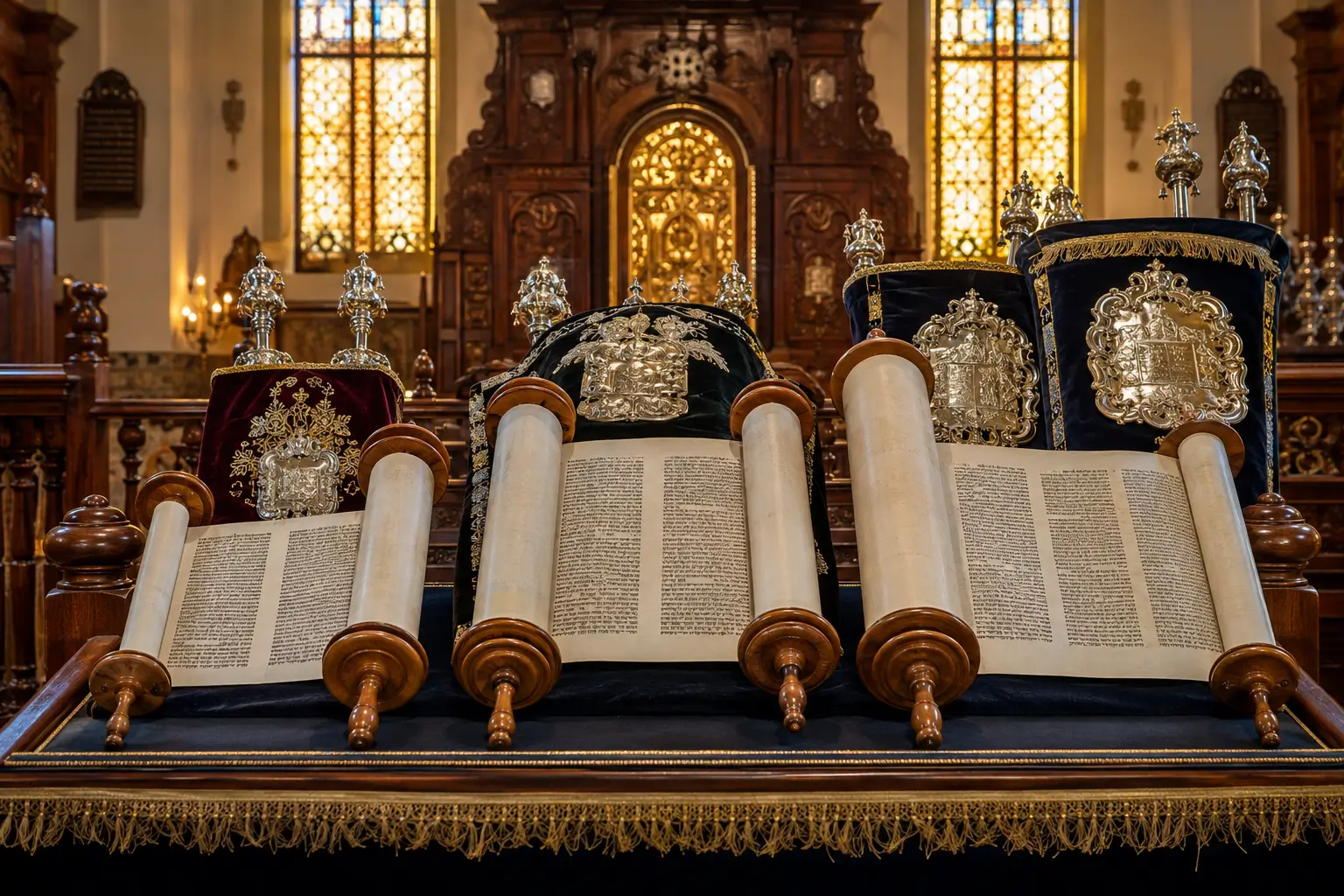
Selecting a Sefer Torah involves far more than choosing a beautiful script or commissioning an accomplished Sofer STa”M. Among the many considerations that influence a Torah scroll’s suitability for a synagogue, school, private minyan, or collector is its physical size. Understanding Torah scroll dimensions is an important part of making an informed decision, as the height of the parchment, the number of columns, the writing style, and the intended use all contribute to the scroll’s practicality and appearance.
This guide to Torah Scroll Sizes Explained is intended to help synagogue leaders, Rabbis, Torah committees, Bar Mitzvah families, and collectors understand how Torah scroll sizes vary, why those differences matter, and how they influence both daily use and long-term stewardship. While all kosher Torah scrolls contain the identical sacred text, their dimensions, layout, and presentation may differ significantly according to community tradition, craftsmanship, and the needs of the congregation.
A Sefer Torah represents one of the greatest expressions of hidur mitzvah—beautifying a mitzvah through excellence and reverence. Choosing the appropriate size is therefore not simply a practical decision; it also reflects how a community intends to honor the Torah during public reading, procession, and storage. Factors such as the dimensions of the Aron Kodesh, the strength and experience of those carrying the Torah, and the customs of the congregation often influence the choice of scroll size.
At SeferTorah.Net, we regularly assist synagogues and private buyers in understanding the differences between available Torah scrolls, including new commissions, restored scrolls, and carefully evaluated pre-owned Sifrei Torah. Selecting the proper size is only one aspect of the decision, but it is among the first considerations that should be discussed before acquiring a Sefer Torah.
Why Torah Scroll Size Matters
Although every kosher Sefer Torah contains the same 304,805 handwritten letters, there is no single universal size for every Torah scroll. Throughout Jewish history, different communities have adopted scrolls of varying heights based on regional traditions, synagogue architecture, intended use, and the writing practices of individual sofrim.
The height of a Torah scroll directly influences several practical considerations. A larger scroll often creates a more commanding presence during Torah reading and ceremonial processions, making it especially appropriate for larger congregations or prominent synagogue sanctuaries. At the same time, greater size also increases weight, requiring stronger etz chaim (rollers), appropriately fitted Torah mantles, and experienced handling during hagbah and gelilah.
Smaller Torah scrolls, by contrast, are frequently chosen for private chapels, schools, educational institutions, travelling minyanim, and communities where portability is an important consideration. Their lighter weight can make them easier to lift and transport while still preserving every halachic requirement governing the writing of a kosher Sefer Torah.
It is important to understand that Torah scroll size does not determine whether a scroll is more or less kosher. The halachic validity of a Sefer Torah depends upon the accuracy of every letter, the preparation of the klaf lishmah, the expertise and yirat shamayim of the Sofer STa”M, and ongoing inspection and maintenance—not simply on its dimensions. Nevertheless, choosing an appropriate size contributes significantly to the Torah’s usability, durability, and the dignity with which it is read before the congregation.
For this reason, experienced Judaica specialists generally recommend evaluating Torah size alongside other important considerations, including script tradition, intended community use, storage requirements, and future maintenance. Buyers who understand these factors are far better equipped to choose a Sefer Torah that will faithfully serve their congregation for generations.
Common Torah Scroll Sizes Explained
While every kosher Sefer Torah contains the same sacred text, Torah scrolls are produced in a variety of heights to accommodate different congregational needs, synagogue furnishings, and long-established community customs. The overall dimensions of a Torah scroll influence its appearance, weight, readability, and compatibility with Torah ornaments, mantles, and the Aron Kodesh.
Although measurements vary among individual sofrim and workshops, Torah scrolls are generally grouped into several common size ranges.
Small Torah Scrolls
Smaller Torah scrolls are often selected for private minyanim, educational institutions, chapels, retirement communities, and situations where portability is especially important. Their lighter weight makes them easier to transport and more manageable during hagbah and gelilah, particularly when multiple people regularly handle the scroll.
These scrolls are also frequently chosen for Torah learning programs and outreach organizations that require a kosher Sefer Torah for regular travel. Despite their smaller dimensions, they remain subject to the same halachic standards governing the preparation of the klaf, the writing lishmah, and the precision of every letter.
Standard Synagogue Torah Scrolls
The majority of congregations choose medium-sized Torah scrolls that provide an excellent balance between dignity, readability, and practicality. These scrolls are commonly used for weekly Torah readings, Shabbat services, Yom Tov, and lifecycle events throughout the Jewish year.
For many synagogues, this size offers comfortable handling while providing an elegant visual presence during public Torah reading. It also accommodates a broad selection of Torah mantles, breastplates (Hoshen), crowns (Keter Torah), Rimonim, and Torah Pointers (Yad), allowing communities to coordinate their Torah ornaments according to local minhag.
Large Torah Scrolls
Larger Torah scrolls create an especially distinguished presence within the synagogue and are often commissioned for newly dedicated congregations, prominent sanctuaries, or significant Torah dedication projects. Their impressive dimensions reflect the community’s desire to honor the Torah through hidur mitzvah, while providing excellent visibility during public reading.
Because larger scrolls require more parchment, additional writing time, and carefully balanced etz chaim, they are generally heavier than smaller Torah scrolls. Communities considering a larger Sefer Torah should also ensure that their Aron Kodesh, Torah mantle, and supporting ornaments are appropriately sized for the completed scroll.
Factors That Determine Torah Scroll Size
Choosing a Torah scroll is rarely based on dimensions alone. Experienced Judaica specialists and Sofrim STa”M typically evaluate several practical and halachic considerations before recommending a particular size.
Intended Community Use
A synagogue conducting multiple weekly services may prioritize durability and ease of handling, while a private chapel may value portability. Educational institutions often choose lighter Torah scrolls that students and younger readers can safely lift during Torah services.
Writing Style and Letter Proportions
The physical size of a Torah scroll is influenced not only by parchment height but also by the ksav being written. Different scribal traditions—including Ketav Beit Yosef, Ketav Ari, and Ketav Sefaradi—feature distinctive letter formations that may subtly affect the appearance and layout of each column while fully maintaining halachic requirements.
Aron Kodesh and Synagogue Furnishings
Before commissioning a Torah scroll, communities should verify that the intended dimensions are compatible with the existing Aron Kodesh, Torah mantle, breastplate, crowns, and storage arrangements. Proper fit protects the Torah while ensuring it can be handled with dignity during services.
Long-Term Stewardship
A Sefer Torah is expected to serve generations of Jewish worship. Communities should therefore consider future maintenance, transportation, periodic bedikah, and restoration requirements alongside the initial purchase. Selecting an appropriate size from the outset often simplifies the acquisition of compatible Torah ornaments and protective accessories throughout the scroll’s lifetime.
Related Judaica Collections at SeferTorah.Net
Choosing the appropriate Torah scroll frequently involves selecting the sacred items that accompany it during public Torah reading and synagogue use. Readers may also find these collections helpful when planning a complete Torah presentation:
- Torah Scrolls – Explore new, restored, and pre-owned kosher Sifrei Torah written according to established STa”M traditions.
- Torah Mantles – Protective mantles designed to complement Torah scrolls of various dimensions.
- Torah Breastplates (Hoshen) – Decorative breastplates that reflect both synagogue tradition and artistic craftsmanship.
- Torah Crowns & Rimonim – Traditional Torah ornaments that enhance the dignity of the Sefer Torah.
- Torah Pointers (Yad) – Essential synagogue accessories used during public Torah reading while preserving the sanctity of the handwritten parchment.
Selecting these items together allows congregations to create a harmonious Torah presentation that reflects both their minhag and their commitment to kavod haTorah.
How to Care for a Torah Scroll
A Sefer Torah is among the holiest objects in Jewish life. Beyond its monetary value and remarkable craftsmanship, it embodies generations of Torah transmission, written lishmah by a qualified Sofer STa”M in accordance with precise halachic requirements. Proper care is therefore not merely a matter of preservation—it is an expression of kavod haTorah, the honor due to the Torah itself.
Handle the Torah Scroll with Reverence
Every Torah scroll should be handled with care during removal from the Aron Kodesh, public reading, hagbah, and gelilah. Excessive pressure on the etz chaim, improper lifting techniques, or accidental impact can place unnecessary strain on the parchment and rollers. Communities often ensure that individuals performing these honors are familiar with the proper handling of the Sefer Torah, particularly when larger or heavier scrolls are involved.
Maintain Appropriate Environmental Conditions
The parchment (klaf) and ink naturally respond to changes in humidity and temperature. Excessive moisture, direct sunlight, prolonged heat, or unusually dry conditions may affect both the parchment and the written text over time. A Torah scroll should therefore be stored within a clean, climate-controlled Aron Kodesh, protected from unnecessary environmental stress.
Schedule Regular Halachic Inspection
Even a carefully maintained Torah scroll should undergo periodic bedikah by a qualified Sofer STa”M. Small changes to individual letters, natural aging of the parchment, or environmental factors may affect the scroll’s halachic status over many years of use.
Many communities follow the accepted practice of having a Sefer Torah professionally inspected at regular intervals, or immediately after any event that may have exposed the scroll to moisture, accidental damage, or unusual handling. Early inspection often prevents minor issues from developing into more significant restoration work.
Protect the Torah During Daily Use
Using properly fitted Torah mantles, breastplates, crowns, and storage accessories helps protect the scroll while preserving its dignity during synagogue services. These ornaments should be selected according to the dimensions of the Torah scroll to avoid unnecessary strain on the parchment or etz chaim.
Routine care, careful transportation, and appropriate storage all contribute to preserving a Sefer Torah for future generations.
Choosing the Right Torah Scroll with Expert Guidance
Acquiring a Sefer Torah is rarely a decision based solely on dimensions. Experienced buyers typically evaluate several interconnected factors, including the intended community, writing tradition, age of the scroll, condition of the parchment, script style, intended frequency of use, and long-term maintenance requirements.
At SeferTorah.Net, we work closely with synagogues, Rabbis, schools, collectors, and private buyers seeking guidance throughout this process. Whether you are commissioning a newly written Sefer Torah, evaluating a restored scroll, or considering a carefully inspected pre-owned Torah, our goal is to help you make an informed decision that reflects both your community’s minhag and your commitment to hidur mitzvah.
Beyond Torah scrolls, we also offer coordinated synagogue Judaica, including Torah mantles, Torah crowns, Rimonim, breastplates (Hoshen), Torah Pointers (Yad), and other Torah ornaments selected to complement the dimensions and character of your Sefer Torah.
If you require guidance beyond the examples shown on our website, our team is pleased to discuss additional inventory, custom projects, and Torah dedication opportunities that may best suit your congregation.
Frequently Asked Questions
1. Is there a standard size for every Torah scroll?
No. While every kosher Sefer Torah contains the same sacred text, Torah scrolls are produced in various dimensions to meet the needs of different synagogues, schools, private communities, and collectors.
2. Does a larger Torah scroll mean higher quality?
Not necessarily. The halachic validity of a Torah scroll depends on the accuracy of its writing, the preparation of the klaf lishmah, and the expertise of the Sofer STa”M, rather than its physical size.
3. Which Torah scroll size is best for a synagogue?
The ideal size depends on factors such as congregation size, Aron Kodesh dimensions, ease of handling, and community preference. Many synagogues choose medium-sized Torah scrolls that balance visibility with practical daily use.
4. Are Torah scroll sizes different between Ashkenazic and Sephardic communities?
Community traditions may influence preferred dimensions, writing styles, Torah ornaments, and synagogue furnishings. However, Torah scroll size itself is generally determined by practical and communal considerations rather than by halachic obligation alone.
5. How often should a Torah scroll be inspected?
Periodic bedikah by a qualified Sofer STa”M is recommended throughout the lifetime of a Torah scroll. Additional inspections should be arranged whenever a scroll has been exposed to moisture, accidental damage, or other conditions that may affect its kosher status.
6. Can an older Torah scroll be restored?
In many cases, yes. A qualified Sofer STa”M can evaluate whether a Torah scroll is suitable for restoration and determine the work necessary to restore its halachic integrity while preserving as much of the original manuscript as possible.
7. What Torah ornaments should match the scroll size?
Torah mantles, breastplates, crowns, Rimonim, and Torah Pointers should be selected according to the dimensions and style of the Torah scroll to ensure proper fit, protection, and harmonious presentation.
8. Can SeferTorah.Net help me choose the right Torah scroll?
Yes. We regularly assist synagogues, Rabbis, schools, and private buyers in selecting Torah scrolls based on intended use, script tradition, condition, craftsmanship, and community requirements.
9. Does Torah scroll size affect long-term care?
Larger Torah scrolls generally require greater care during lifting, transportation, and storage, while smaller scrolls may offer greater portability. Regardless of size, every Sefer Torah benefits from proper handling, routine inspection, and appropriate environmental protection.
Conclusion
Understanding Torah Scroll Sizes Explained is an important step toward selecting a Sefer Torah that will faithfully serve a congregation or family for generations. Although every Torah scroll contains the identical sacred text, differences in dimensions influence handling, synagogue presentation, compatibility with Torah ornaments, and long-term stewardship.
The most suitable Torah scroll is one that reflects your community’s traditions, practical needs, and commitment to honoring the Torah with dignity and reverence. Whether you are purchasing your first Sefer Torah, replacing an existing scroll, or planning a Torah dedication project, informed guidance helps ensure that your investment supports both halachic integrity and the enduring beauty of this sacred mitzvah.
At SeferTorah.Net, we are honored to assist synagogues and individuals in selecting kosher Torah scrolls, synagogue Judaica, and Torah ornaments that uphold the highest standards of craftsmanship, tradition, and kavod haTorah. Our team is always available to discuss your requirements and help you identify the most appropriate solutions for your community.