

How to Commission a New Torah Scroll

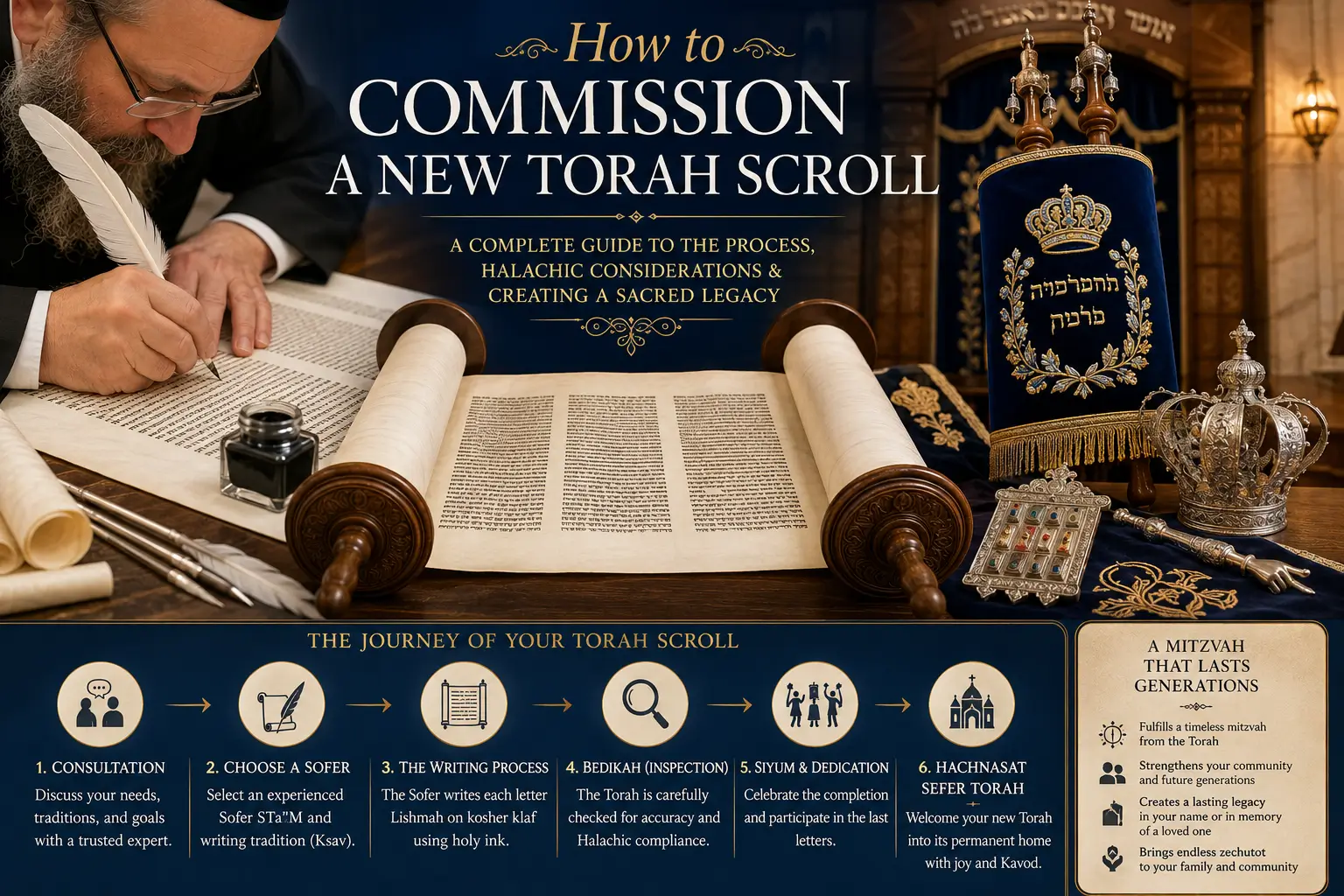
A Sefer Torah is the most sacred handwritten text in Judaism, serving as the spiritual center of synagogue worship and an enduring symbol of Jewish continuity. Commissioning a new Torah scroll is far more than purchasing a ceremonial object—it is participating in a mitzvah that has connected generations of Jewish communities for centuries. Whether a Torah is dedicated in memory of a loved one, donated to a synagogue, or prepared for a growing congregation, the process deserves thoughtful planning and a clear understanding of both Halacha and the craftsmanship involved.
Understanding How to Commission a New Torah Scroll begins with recognizing that every Torah is individually handwritten by a qualified Sofer STa”M. Unlike printed books, no two Torah scrolls are identical. Every letter is written Lishmah—with the specific intention of fulfilling the mitzvah—and every stage follows precise Halachic requirements that have been preserved through generations.
For rabbis, synagogue committees, philanthropists, Bar Mitzvah families, and private collectors, commissioning a Torah is often a once-in-a-lifetime undertaking. Knowing what to expect helps ensure the finished scroll reflects both Halachic integrity and the unique traditions of the community it will serve.
Why Commission a New Torah Scroll?
The Torah commands, “Now therefore write this song for yourselves” (Deuteronomy 31:19), which Jewish tradition understands as the mitzvah of writing or participating in the writing of a Sefer Torah. While few individuals possess the knowledge required to write a Torah themselves, commissioning a qualified Sofer fulfills this commandment by supporting the creation of a kosher Torah scroll.
Communities commission new Torah scrolls for many reasons, including:
- Establishing a Torah for a new synagogue or Beit Midrash
- Honoring the memory of a loved one
- Celebrating a Bar Mitzvah or family milestone
- Marking the dedication of a Jewish institution
- Replacing a Torah that is no longer repairable
- Strengthening communal Torah learning and worship
Every commissioned Torah becomes part of the spiritual life of its congregation, often serving multiple generations during Shabbat services, festivals, weddings, and other significant occasions.
If your community is also selecting ceremonial accessories, this is an ideal time to coordinate items such as Torah Mantles, Torah Crowns, Torah Breastplates (Hoshen), Torah Pointers (Yad), and Rimonim, ensuring they complement the dignity of the new scroll.
Understanding the Torah Writing Process
Before commissioning a Torah, it is helpful to understand the extraordinary level of expertise involved in its creation.
A kosher Sefer Torah contains 304,805 Hebrew letters, all written entirely by hand using traditional STa”M methods. Every letter must conform to detailed Halachic standards regarding shape, spacing, and formation. Even a single incorrectly formed letter may render the Torah invalid until corrected.
The writing process begins with carefully prepared klaf (parchment) produced specifically for sacred writing. The Sofer uses specially prepared ink and a traditional quill, writing each section according to centuries-old practices. Throughout the project, the Sofer works with complete concentration, ensuring every letter is written Lishmah and according to accepted Halachic standards.
Depending on the complexity of the project and the Sofer’s schedule, completing a Torah scroll commonly takes 12 to 18 months, although larger commissions or highly customized projects may require additional time.
After completion, the Torah undergoes extensive Bedikah (inspection). Modern inspections often combine careful manual review by experienced experts with computerized verification to identify possible textual irregularities while preserving traditional standards.
Choosing the Right Sofer STa”M
Selecting the individual who will write your Torah is perhaps the most important decision in the entire commissioning process.
A qualified Sofer STa”M is more than an accomplished calligrapher. He must possess extensive knowledge of Halacha governing Torah writing, demonstrate exceptional precision, and approach the work with sincere Yirat Shamayim (reverence for Heaven).
When evaluating a Sofer, consider questions such as:
Experience and Training
Ask about the Sofer’s years of experience, teachers, certifications, and previous Torah commissions. An experienced Sofer should be comfortable discussing different writing traditions, including Ashkenazic, Sephardic, and other accepted styles.
Writing Style (Ksav)
Different Jewish communities follow distinct writing traditions. Common options include:
- Ksav Beis Yosef
- Ksav Ari
- Ksav Sefaradi
Your rabbi or Halachic authority can help determine which script is appropriate for your congregation or personal minhag.
Transparency Throughout the Process
Many contemporary Torah commissions include regular progress updates, photographs of completed sections, opportunities to dedicate individual portions, and even supervised participation in writing selected letters near the completion of the scroll.
Working with an established Judaica specialist also provides guidance on selecting complementary synagogue items and ceremonial accessories that will accompany the Torah throughout its years of communal use.
Planning Your Torah Scroll Commission
Once you have selected a qualified Sofer STa”M, the next step is to establish the scope of the project. Every Torah commission is unique, reflecting the traditions, needs, and aspirations of the individual or community sponsoring it.
Many commissions begin with a consultation to discuss the intended use of the Torah. Will it become the primary Torah for a synagogue? Is it being dedicated in memory of a loved one, presented as a Bar Mitzvah legacy, or donated to a yeshiva or Jewish institution? These considerations often influence the writing style, timeline, and ceremonial aspects of the project.
It is also important to discuss practical details, including:
- The preferred Ksav (writing tradition)
- The size of the Torah scroll
- Community customs (Minhag)
- Estimated completion schedule
- Inspection procedures
- Dedication opportunities for family members or donors
Clear communication at the beginning of the project helps ensure that every aspect of the commission aligns with Halachic requirements and the expectations of the sponsoring community.
What Influences the Cost of a New Torah Scroll?
One of the most common questions people ask when learning How to Commission a New Torah Scroll is how pricing is determined.
Unlike manufactured products, every Torah is created entirely by hand. The cost reflects months of meticulous craftsmanship, extensive Halachic knowledge, and the significant time invested by the Sofer.
Several factors influence the overall investment, including:
Experience of the Sofer
Highly experienced Sofrim who have written numerous Torah scrolls often have longer waiting lists and may command higher fees due to their reputation and expertise.
Script Tradition
Different styles of Ksav, including Beis Yosef, Ari, and Sefaradi, require specialized training and may vary slightly in complexity depending on community standards.
Parchment Quality
Only parchment prepared according to Halachic requirements may be used for a kosher Torah. The quality and preparation of the klaf contribute to the longevity and beauty of the completed scroll.
Inspection and Certification
A properly commissioned Torah undergoes multiple stages of Bedikah, including careful manual review and, in many cases, computerized verification to identify any potential inconsistencies before the Torah is placed into service.
Rather than focusing solely on cost, many communities view a Torah commission as a lasting investment in Jewish life—one that will serve generations of worshippers and students.
Customizing Your Torah Scroll and Ceremonial Accessories
Although the text of every kosher Torah remains identical, many aspects of the commission can be customized while remaining fully consistent with Halacha.
Communities frequently select ceremonial accessories that reflect their traditions and enhance Kavod HaTorah (honoring the Torah). These items are often prepared alongside the Torah so everything is ready for the dedication ceremony.
Depending on your congregation’s needs, you may also wish to explore:
- Torah Mantles that protect and beautify the scroll.
- Torah Crowns representing honor and reverence.
- Torah Breastplates (Hoshen) crafted with meaningful symbolic designs.
- Torah Pointers (Yad) for respectful public Torah reading.
- Rimonim that complement the appearance of the completed Torah.
- Durable Torah Cases for Sephardic communities and congregations that use enclosed scrolls.
Selecting these items together creates a harmonious presentation while preserving the dignity of the Torah during public worship.
Preparing for a Siyum and Hachnasat Sefer Torah
The completion of a Torah scroll is traditionally marked by two deeply meaningful events.
First, family members, donors, or honored guests may participate in the final letters under the direct supervision of the Sofer. This symbolic participation allows members of the community to share personally in the fulfillment of the mitzvah.
Following completion, many congregations celebrate a Hachnasat Sefer Torah, the ceremonial procession welcoming the new Torah into its permanent home. These celebrations often include Torah learning, music, dancing, communal meals, and words of Torah, reflecting the joy associated with welcoming a new Sefer Torah.
Planning these events well in advance allows families and synagogue leaders to create a meaningful celebration while ensuring all Halachic considerations are observed.
Why Work with an Experienced Judaica Partner?
Commissioning a Torah scroll involves much more than hiring a Sofer. Many communities benefit from working with an established Judaica provider that understands both the Halachic requirements and the practical details involved in the process.
At SeferTorah.net, we work closely with synagogues, rabbis, institutions, and private families to help guide every stage of a Torah commission. Whether you are purchasing your first Torah scroll or expanding an existing synagogue collection, our team can assist with selecting the appropriate Torah, coordinating ceremonial accessories, and answering questions throughout the process.
In addition to Torah Scrolls, we offer carefully curated collections of Tefillin, Mezuzot, Torah Ornaments, Torah Crowns, Torah Pointers, Rimonim, Torah Mantles, and other synagogue essentials, making it easy to prepare every aspect of your Torah dedication with confidence.
A thoughtfully planned commission ensures that your new Sefer Torah will serve your community with dignity, authenticity, and lasting spiritual significance for generations to come.
Frequently Asked Questions
1. How long does it take to commission a new Torah scroll?
A new Sefer Torah typically takes 12 to 18 months to complete, depending on the Sofer STa”M’s schedule, the writing style (Ksav), and the level of customization requested. Because every one of the Torah’s 304,805 letters is handwritten Lishmah, the process cannot be rushed without compromising Halachic standards.
2. Who is qualified to write a Torah scroll?
Only a properly trained Sofer STa”M who possesses the necessary Halachic knowledge, practical experience, and Yirat Shamayim may write a kosher Torah scroll. The Sofer must follow centuries-old traditions governing every stage of the writing process, from preparing the parchment to forming each Hebrew letter.
3. Can families or donors participate in writing the Torah?
Yes. It is common for donors, family members, or community leaders to participate by completing one or more of the final letters under the direct supervision of the Sofer. This allows participants to share personally in the mitzvah while ensuring the Torah remains fully kosher according to Halacha.
4. What determines the cost of a new Torah scroll?
Several factors influence the investment required, including the Sofer’s experience, the selected Ksav, parchment preparation, inspection procedures, and the overall complexity of the commission. Rather than purchasing a manufactured item, you are commissioning months of meticulous sacred craftsmanship.
5. Can a Torah scroll be customized?
While the Torah text itself must remain exactly as prescribed by Halacha, many ceremonial aspects may be personalized. Communities often choose custom Torah Mantles, Torah Crowns, Hoshen (Breastplates), Torah Pointers (Yad), Rimonim, and dedication inscriptions to reflect their traditions and commemorate significant occasions.
6. What happens after the Torah scroll is completed?
Following completion, the Torah undergoes a comprehensive Bedikah (inspection), which may include both manual review and computerized verification. Once approved, many communities celebrate a joyful Hachnasat Sefer Torah, welcoming the new Torah into the synagogue with music, dancing, and communal celebration.
7. What writing traditions are available?
Different Jewish communities follow different writing traditions, including Ksav Beis Yosef, Ksav Ari, and Ksav Sefaradi. Your rabbi or Halachic authority can help determine which style best reflects your congregation’s Minhag and communal practice.
8. How should a new Torah scroll be maintained?
Proper care is essential to preserve the Torah for future generations. The scroll should be stored under appropriate environmental conditions, handled respectfully during services, and inspected periodically by a qualified Sofer to identify and correct normal wear before it affects the Torah’s kosher status.
9. Is commissioning a Torah scroll considered a mitzvah?
Yes. Commissioning a Torah scroll enables individuals and communities to participate in the mitzvah of writing a Sefer Torah, as derived from Deuteronomy 31:19. Although the Sofer performs the physical writing, those who commission the Torah actively participate in fulfilling this enduring commandment.
10. Where can I begin the process of commissioning a new Torah scroll?
The first step is consulting with a trusted Judaica specialist who can explain the writing process, discuss Halachic considerations, recommend an experienced Sofer STa”M, and help coordinate every aspect of the commission—from selecting the Torah itself to choosing the appropriate synagogue accessories.
Conclusion
Understanding How to Commission a New Torah Scroll is about far more than arranging the creation of a handwritten manuscript. It is a journey that combines Halacha, craftsmanship, tradition, and communal responsibility into a single enduring mitzvah. From selecting an experienced Sofer STa”M and choosing the appropriate Ksav to preparing for a meaningful Hachnasat Sefer Torah, every stage contributes to a sacred legacy that can inspire generations.
Whether your synagogue is welcoming its first Torah, replacing an aging scroll, or dedicating one in honor or memory of someone special, careful planning ensures the finished Sefer Torah reflects the highest standards of Jewish tradition and reverence.
At SeferTorah.net, we are honored to assist rabbis, synagogues, institutions, and families throughout every stage of the commissioning process. In addition to expertly crafted Torah Scrolls, we offer a comprehensive selection of Torah Mantles, Torah Crowns, Torah Breastplates, Torah Pointers, Rimonim, Mezuzot, Tefillin Bags, and other synagogue essentials to help your community preserve and celebrate the beauty of Jewish tradition.
If you are ready to commission a new Torah scroll or would like expert guidance tailored to your congregation’s needs, our team is here to help you begin this meaningful journey with confidence and care.