


Caring for Silver Judaica: Cleaning, Storage and Preservation

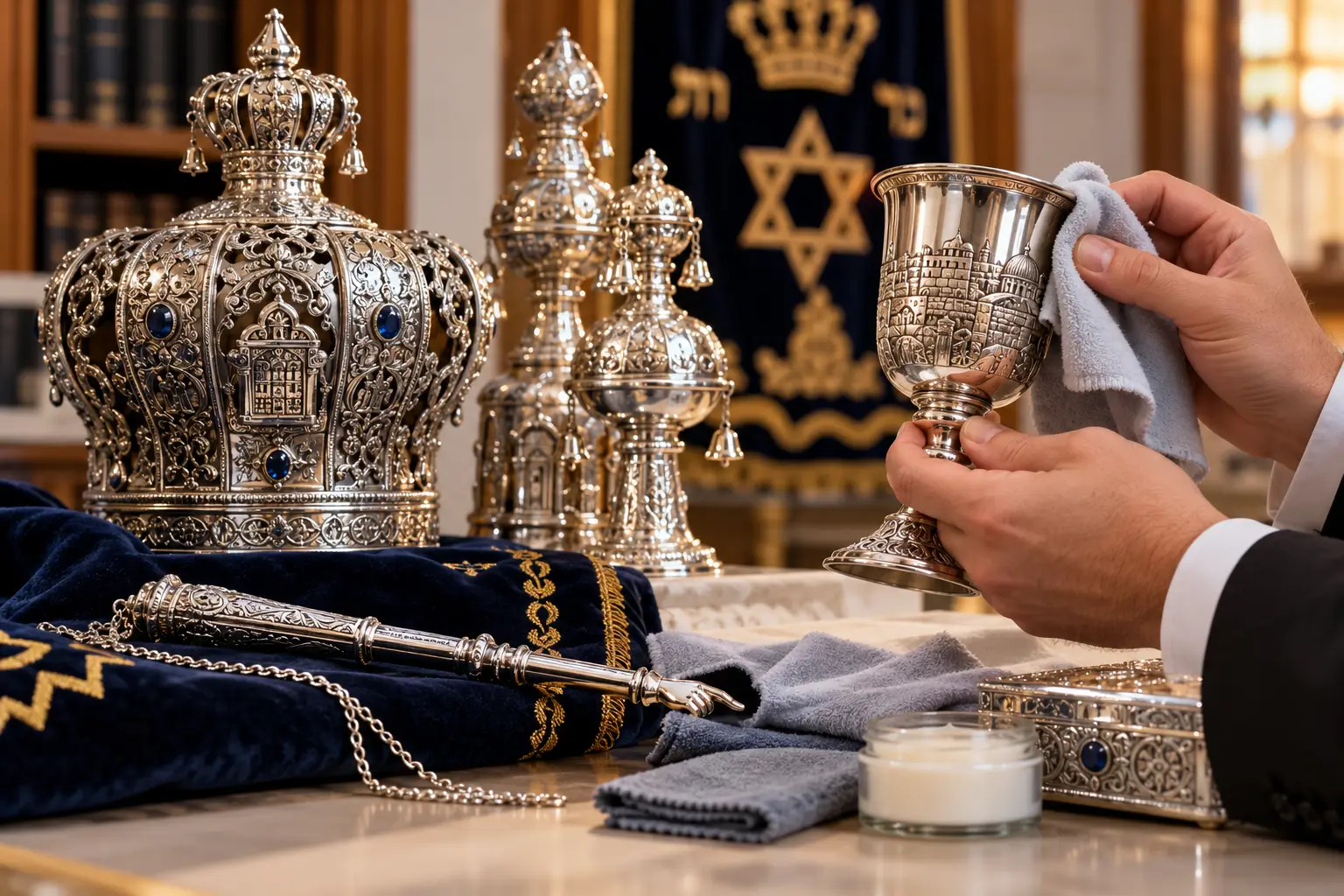
Silver Judaica occupies a special place in Jewish homes and synagogues. From Kiddush cups used on Shabbat to Torah crowns, Rimonim, and Yad Torah pointers used in communal worship, these objects combine practical purpose, craftsmanship, and the desire to honor Jewish tradition.
Properly caring for silver Judaica helps preserve its appearance, structural integrity, and usefulness over time. However, silver objects do not all require the same treatment. Solid sterling silver, silver-plated metal, silver-dipped finishes, and pieces incorporating gemstones or other materials may respond differently to cleaning products and polishing techniques.
The key is to understand what an object is made of before attempting to clean it. Gentle handling, suitable storage, and occasional maintenance can often prevent the need for aggressive polishing or expensive restoration.
This guide explains how to identify different silver finishes, clean common Judaica items safely, prevent tarnish, and recognize when professional care is the better choice.
Why Caring for Silver Judaica Matters
Silver has long been used in Jewish ceremonial objects because it can be shaped into intricate designs, engraved with decorative details, and formed into durable vessels and ornaments. In synagogue settings, silver Torah ornaments can accompany the Sefer Torah during services, while Kiddush cups and other ritual objects are used in Jewish homes throughout the year.
The concept of Hidur Mitzvah—beautifying a mitzvah through appropriate care and presentation—helps explain why many families and communities take particular care of their ritual objects. Nevertheless, the specific halachic requirements of a mitzvah should be distinguished from the practical maintenance of the silver object itself. Cleaning silver is generally a matter of preservation, craftsmanship, and responsible use rather than a universal halachic obligation.
Silver naturally reacts with sulfur-containing substances in the environment, forming a surface layer known as tarnish. Depending on the conditions, tarnish can appear yellow, brown, gray, or nearly black. Humidity, air pollution, fingerprints, certain fabrics, and household chemicals may accelerate discoloration.
Tarnish does not automatically mean that an item is damaged. In many cases, it can be removed safely. However, repeated polishing can gradually wear down silver, particularly when an item is plated or features fine engraving.
The aim of caring for silver Judaica is therefore not to make every object shine constantly. It is to maintain the object appropriately while protecting its original finish and craftsmanship.
Identify the Silver Before Cleaning It
Before choosing a cleaning method, check the item’s product description, hallmark, packaging, or manufacturer documentation. If the composition is uncertain, avoid strong cleaners until the material has been identified.
Sterling Silver
Sterling silver generally contains 92.5% silver and 7.5% other metals, commonly copper. It may carry a “925” or “Sterling” mark, although markings vary by manufacturer and country.
Sterling silver can tarnish with exposure to the environment. For many uncoated sterling silver items, a soft silver-polishing cloth is an appropriate starting point. Intricate engraving, antique finishes, gemstones, and attached components may require additional precautions.
Silver-Plated Judaica
Silver-plated objects have a layer of silver over a different metal. This layer may be relatively thin, making the object more vulnerable to abrasive polishing and repeated chemical cleaning.
Use gentle methods and avoid scouring powders, rough cloths, and vigorous rubbing. If the underlying metal becomes visible, ordinary polishing cannot replace the missing silver. A qualified specialist may need to assess whether replating is possible.
Silver-Dipped and Specially Finished Objects
Some Judaica features a silver-dipped finish, decorative oxidation, lacquer, gold accents, or a combination of materials. The appropriate care method depends on how the object was manufactured.
For example, a silver-dipped Torah pointer should not automatically be treated as identical to an uncoated sterling silver pointer. Similarly, a deliberately darkened engraving may be part of the original design rather than unwanted tarnish.
Practical rule: When the material or finish is uncertain, begin with dry dusting and consult the manufacturer before applying polish, liquid cleaner, or an improvised home remedy.
How to Clean Silver Judaica Safely
A careful cleaning routine begins with the least aggressive method. Not every item needs polishing, and not every silver-care product is suitable for every finish.
Step 1: Remove Dust and Fingerprints
Use a clean, soft, lint-free cloth to remove loose dust and surface oils. Handle the object securely, supporting its main body rather than lifting it by a delicate finial, chain, or attachment.
For accessible decorative details, a soft brush can help remove dust. Do not force a brush into narrow openings or use pressure that could loosen delicate components.
Step 2: Use a Suitable Polishing Cloth
For compatible silver surfaces, a purpose-made silver-polishing cloth is often a sensible first choice. Follow the manufacturer’s instructions and use gentle strokes.
Pay particular attention to engraved lettering, embossed designs, and hand-chased details. Some darkened recesses are intentional features that give the design depth. Removing them may change the appearance of the object.
Step 3: Apply Silver Polish Only When Necessary
If a polishing cloth is insufficient, choose a product explicitly suitable for the item’s material and finish. Follow its directions, including any recommended testing on an inconspicuous area.
Avoid allowing polish to contact gemstones, pearls, adhesives, fabric, wood, painted decoration, or protective coatings unless the product is specifically approved for those materials.
If the item contains several materials or has an unfamiliar finish, ask the manufacturer or a professional silver-care specialist for guidance.
Step 4: Remove Residue and Dry Thoroughly
Some cleaning products require dry buffing; others specify rinsing or another removal method. Follow the instructions rather than assuming all polish should be washed off.
When rinsing is permitted, use water as directed and dry the object thoroughly. Moisture trapped in joints, hollow components, or decorative attachments can contribute to deterioration.
Step 5: Inspect the Object
After cleaning, check for remaining moisture, loose stones, damaged plating, bent details, or unexpected changes in the finish.
Stop if the surface begins flaking, the base metal becomes visible, or the finish changes noticeably. Further polishing may worsen the damage.
Caring for Different Types of Silver Judaica
Different ritual objects have different shapes, uses, and construction methods. Their maintenance should reflect these differences.
Torah Crowns and Rimonim
Torah crowns and Rimonim often feature raised ornamentation, finials, engraving, and delicate decorative elements. These details can collect dust and may be damaged by careless handling.
- Support the main body when lifting or moving an ornament.
- Avoid holding delicate finials or protruding components.
- Use a soft cloth for routine dusting.
- Avoid abrasive compounds around detailed metalwork.
- Store detachable components securely to prevent scratches and impacts.
In a synagogue, cleaning should fit the community’s established procedures for handling Torah ornaments. Silver-care products should be kept away from the Sefer Torah, its mantle, and other sacred objects.
Torah Pointers (Yad)
A Yad is used to follow the text during Torah reading without directly touching the parchment. Its practical role makes comfortable handling and a well-maintained surface important.
Fingerprints may accumulate on frequently handled pointers. Wipe the surface gently with a suitable cloth, paying attention to the grip, chain, and decorative tip.
For silver-plated or silver-dipped Yads, avoid aggressive polishing that could damage the finish. If the pointer includes gemstones, engraved motifs, or multiple metals, confirm the recommended cleaning method before using liquid products.
Explore the Torah Pointers collection at SeferTorah.Net to compare designs and finishes when selecting a Yad for synagogue use or as a Judaica gift.
Kiddush Cups and Ritual Tableware
Kiddush cups and other ritual vessels require additional consideration because they may contact wine, grape juice, and other liquids.
Follow the manufacturer’s cleaning instructions after use. If a vessel is intended for contact with food or drink, choose only cleaning products suitable for that purpose and rinse or dry it as directed.
Do not assume that silver or silver-plated tableware is dishwasher-safe. Dishwasher detergents, high temperatures, and contact with other utensils may damage the finish or decorative components.
Silver Torah Cases and Decorative Ornaments
Some Torah cases and ceremonial ornaments incorporate silver alongside gold accents, gemstones, wood, fabric, or protective coatings. These mixed-material objects may need specialist attention.
Avoid immersing them in cleaning solutions or dismantling their components without guidance. For valuable, antique, or elaborately decorated pieces, professional assessment is often safer than attempting a complete home cleaning.
How to Prevent Silver Judaica from Tarnishing
Preventive care can reduce the need for polishing and help preserve the original finish.
Store Silver in Suitable Conditions
Keep silver Judaica in a dry environment with stable conditions. Avoid damp basements, bathrooms, and locations exposed to condensation.
Use individual soft-lined containers or protective bags intended for silver. Anti-tarnish cloths and storage materials can also help limit exposure to tarnish-causing compounds. Ensure that the material does not scratch delicate surfaces.
Keep Silver Away from Reactive Materials
Some rubber products, wool fabrics, adhesives, and household chemicals can contribute to tarnishing or surface damage. Avoid direct contact with these materials during storage.
Keep silver away from bleach, chlorine, and unsuitable cleaning agents. Do not mix cleaning products or experiment with chemical treatments.
Handle Items Carefully
Clean, dry hands help reduce fingerprints and oils. For valuable or delicate pieces, appropriate gloves may help during extended handling, provided they do not compromise a secure grip.
After a ceremony or regular use, inspect the object and wipe away surface residue when appropriate. Small, consistent maintenance steps can reduce the need for more intensive cleaning.
Avoid Excessive Polishing
Silver does not need to be polished after every use. If the object is clean and its appearance is acceptable, gentle dusting and appropriate storage may be sufficient.
Repeated polishing can remove silver and soften fine decorative details. This is especially important for silver-plated objects and pieces with antique or oxidized finishes.
When to Seek Professional Silver Care
Professional assistance is advisable when an item has heavy tarnish, a fragile finish, intricate handwork, or a combination of materials that makes cleaning uncertain.
Consider a specialist if you notice:
- Silver plating wearing through.
- Cracks, dents, or bent decorative elements.
- Loose gemstones, chains, or attachments.
- A protective coating that is peeling or becoming cloudy.
- Discoloration that does not respond to gentle cleaning.
- An antique object’s original finish is unknown.
For synagogue Judaica, seek someone experienced in ceremonial and decorative metalwork. Explain the object’s materials, intended use, age if known, and any previous repairs or cleaning treatments.
The goal should be to preserve the original craftsmanship, not simply to make every surface uniformly bright. Before authorizing restoration, ask what treatment is proposed, whether it may remove original material, and whether a less invasive option is available.
Choosing Silver Judaica for Long-Term Use
Caring for silver Judaica begins when you select an item. Understanding the materials and construction makes future maintenance easier and helps you choose an object suited to its intended use.
Before purchasing, consider the following:
- Material: Is the item sterling silver, silver-plated, silver-dipped, or made from another metal?
- Finish: Does it feature lacquer, oxidation, gold accents, or decorative coatings?
- Use: Will it be handled frequently during synagogue services or used occasionally at home?
- Maintenance: Does the manufacturer provide specific cleaning and storage instructions?
- Repair: Can damaged components be repaired, and is specialist restoration available?
For synagogue leaders, families, and Judaica collectors, clear product information is particularly useful when selecting objects that will be handled regularly or passed down through generations.
Explore Silver Judaica at SeferTorah.Net
SeferTorah.Net offers Judaica for Jewish homes, synagogues, and communities, including Torah ornaments, Torah pointers, and other ritual and ceremonial accessories. When selecting an item, review its product details carefully to understand the materials, design, and any available care instructions.
Browse the Torah Pointers collection to explore Yads in different designs and finishes, or visit the SeferTorah.Net store to discover additional Judaica and synagogue accessories.
If you are considering an elaborate ornament or an item intended for frequent communal use, contact the team with questions about construction and recommended maintenance before purchasing. Choosing an item with clear material information can help you make a better-informed decision and care for it appropriately over time.
Frequently Asked Questions About Caring for Silver Judaica
1. How often should silver Judaica be cleaned?
There is no universal cleaning schedule. Clean an item when it has visible tarnish, fingerprints, or residue that requires attention. Regular dusting and suitable storage may reduce the need for polishing. Frequently handled objects may need more routine wiping than items kept in a display cabinet.
2. Can I use regular silver polish on all Judaica?
No. A polish suitable for solid sterling silver may damage silver plating, protective coatings, gemstones, or intentional oxidized finishes. Check the manufacturer’s instructions and choose a cleaner appropriate for the specific material and finish.
3. What is the difference between sterling silver and silver-plated Judaica?
Sterling silver generally contains 92.5% silver. Silver-plated Judaica has a layer of silver over a different metal. Plated items require more cautious cleaning because repeated polishing can wear through the surface and expose the base metal.
4. How can I prevent silver Judaica from tarnishing?
Store items in a dry environment, use suitable anti-tarnish storage materials, and keep silver away from reactive substances and harsh chemicals. Wipe fingerprints away with an appropriate soft cloth when needed. These habits can reduce tarnishing, although they may not prevent it entirely.
5. Is it safe to clean silver Torah ornaments at home?
Gentle dusting may be appropriate for many ornaments. However, Torah crowns, Rimonim, and other ceremonial pieces can include delicate metalwork, gemstones, plating, or protective coatings. Confirm the material and finish before using polish or liquid cleaners. Seek professional assistance for fragile or valuable items.
6. Can baking soda be used to clean silver Judaica?
Avoid homemade abrasive treatments unless you have confirmed that they are suitable for the particular object. Powders and improvised cleaning methods can scratch surfaces or damage plated and treated finishes. A manufacturer-approved silver-care product is generally a more controlled choice.
7. Why has my silver Judaica turned black?
Black discoloration is often tarnish caused by silver reacting with sulfur-containing compounds. However, some designs intentionally use darkened recesses to emphasize engraving. Determine whether the discoloration is tarnish or part of the original finish before attempting to remove it.
8. Can worn silver-plated Judaica be restored?
A qualified specialist may be able to replate an object, depending on its construction and condition. Polishing cannot replace silver that has worn away. Ask for an assessment before deciding whether restoration is practical.
9. Are silver Kiddush cups dishwasher-safe?
Do not assume that a silver or silver-plated Kiddush cup can go in a dishwasher. Detergents, heat, and contact with other utensils may damage the finish or decorative details. Follow the manufacturer’s instructions, particularly for objects with mixed materials or protective coatings.
10. How should antique or inherited silver Judaica be maintained?
Begin with gentle dusting and suitable storage. Avoid aggressive polishing until you understand the object’s material, age, and original finish. Antique pieces may contain delicate engravings or intentional patina that restoration could diminish. Consult a specialist experienced in antique silver and ceremonial Judaica when necessary.
Conclusion
Caring for silver Judaica means understanding the material, respecting the craftsmanship, and preserving objects that have a place in Jewish family life and communal worship.
The most effective approach is straightforward: identify the finish, clean gently when necessary, avoid harsh or abrasive treatments, store each piece appropriately, and seek professional assistance when damage or uncertainty arises. Excessive polishing is not a substitute for proper care.
Whether you maintain a family Kiddush cup, a Torah pointer, or elaborate synagogue ornaments, thoughtful maintenance can help preserve the object’s appearance and usefulness for years to come. When purchasing new Judaica, clear material information and manufacturer care instructions provide a valuable starting point for long-term preservation.