


How Long Do Tefillin Last? A Guide to Lifespan, Care and Inspection

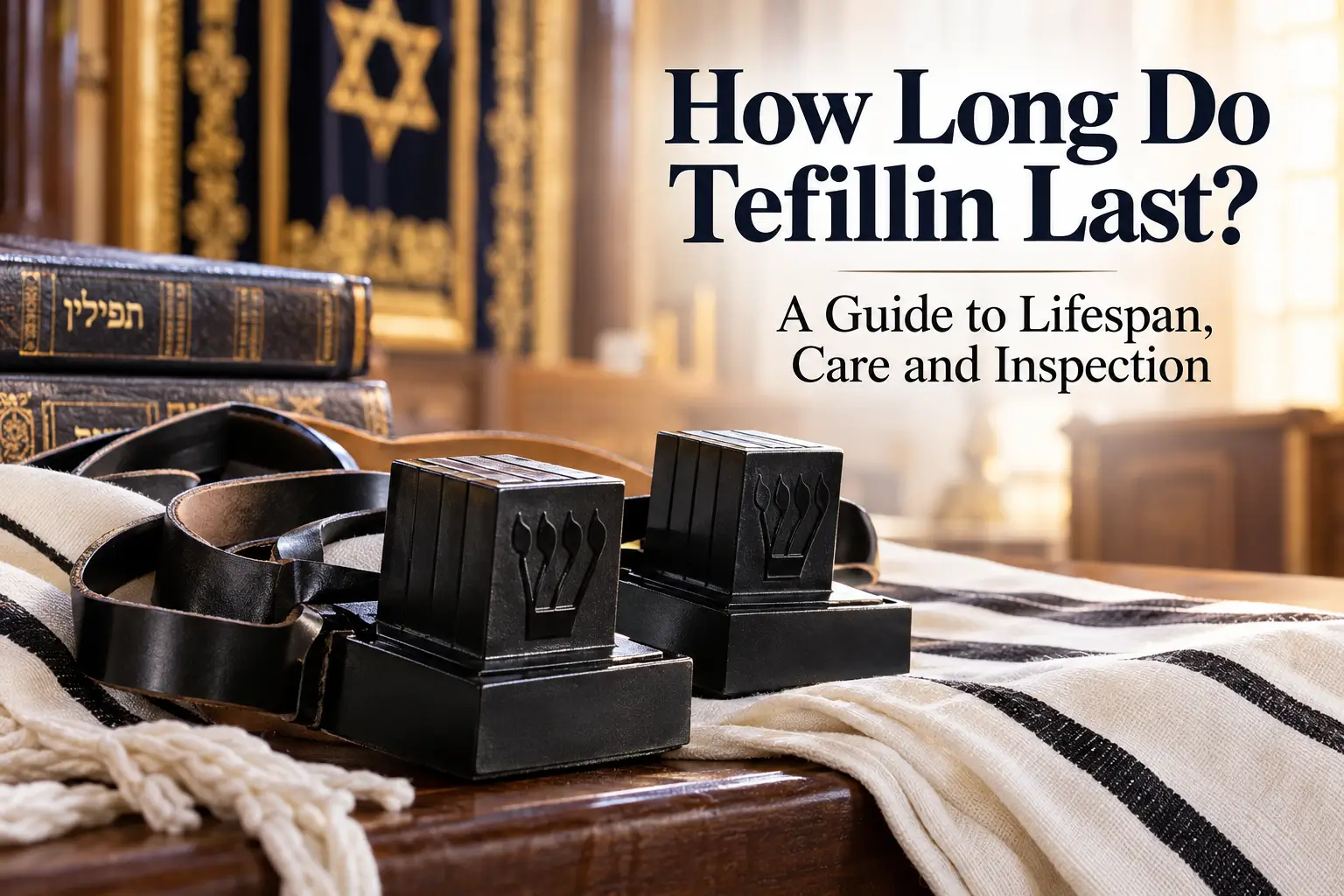
How long do tefillin last? A properly made, carefully maintained pair can remain usable for many decades, and in some circumstances even longer. There is no single expiration date for tefillin. Their continued usability depends on the condition of the leather compartments, the straps, the handwritten parshiyot inside, and whether the pair remains kosher according to Halacha.
Tefillin are not ordinary religious accessories. They contain sacred passages from the Torah, handwritten by a qualified sofer STa”M, and are worn as part of a daily mitzvah. Their longevity therefore involves two separate considerations: how long the physical materials last and whether the tefillin continue to meet the requirements of the mitzvah.
Understanding these distinctions helps you care for your tefillin responsibly, recognize potential problems, and know when to consult a qualified expert.
How Long Do Tefillin Last in Practice?
Tefillin do not have a fixed lifespan comparable to an item with a manufacturer-defined replacement date. A pair that remains structurally sound and halachically valid may continue to be used for many years.
Several factors determine its longevity:
- The batim: The leather compartments must retain their required shape, structure and integrity.
- The parshiyot: The handwritten parchment passages must remain legible and halachically valid.
- The retzuot: The straps must retain the required condition, dimensions and appearance, including the relevant black surfaces.
- Storage and handling: Moisture, excessive heat, direct sunlight, pressure and rough handling can contribute to deterioration.
- Frequency of use: Daily use exposes tefillin to sweat and handling, while infrequently used pairs may deteriorate unnoticed in storage.
Age alone does not establish that tefillin are invalid. Equally, a relatively new pair should not be assumed kosher merely because it looks undamaged. Their status depends on their construction, condition and halachic requirements.
What Determines the Lifespan of Tefillin?
1. The Batim: Leather Compartments
The batim house the handwritten parshiyot. Their construction requires specialized craftsmanship because their shape and structure are part of the halachic requirements of tefillin.
Over time, moisture and perspiration can affect the leather. The compartments may become misshapen, their structural integrity may weaken, or the stitching and base may develop problems. Damage can affect the tefillin’s validity even when the exterior initially appears acceptable.
Inspect the outside periodically for cracks, deformation, damaged stitching or other visible changes. Do not attempt to reshape, open or repair the batim yourself. Their construction and repair should be entrusted to a qualified specialist.
2. The Parshiyot: The Handwritten Passages
The parshiyot contain the Torah passages required for tefillin. They must be written according to the applicable halachic rules, including the requirements governing the letters, parchment and writing process.
The ink can deteriorate, letters can crack or become damaged, and moisture can affect the parchment. Some defects may be impossible to identify by examining the closed leather compartments.
For this reason, visual inspection of the exterior cannot establish the kashrut of the internal parshiyot. When an expert examination is necessary, it should be performed by someone competent in checking tefillin and, where required, opening and properly resealing the batim.
3. The Retzuot: Tefillin Straps
The retzuot experience repeated bending, tension, friction and exposure to sweat. Their black surfaces can fade or wear, while the leather may crack, become brittle or sustain damage.
Check the straps for peeling, cracks, worn edges and areas where the black covering is no longer intact. A strap that looks acceptable from a distance may still require attention if the wear affects a halachically significant area.
A qualified sofer or other appropriate tefillin specialist can determine whether the straps can be restored or whether replacement is necessary.
How Often Should Tefillin Be Checked?
This question requires a distinction between the basic halachic rule and recommended practice.
Shulchan Aruch, Orach Chayim 39:10, discusses the principle that tefillin established as kosher do not necessarily require routine rechecking when their enclosures remain intact. However, the halachic discussion also addresses pairs that are worn only occasionally, as well as damage that may affect their validity.
Later authorities and community customs encourage periodic inspection because sweat, moisture and physical deterioration can compromise tefillin over time. Some communities follow the practice of checking tefillin annually, often around the month of Elul.
A commonly cited guideline for tefillin used only occasionally is to have them checked twice within seven years. The appropriate practice can vary according to circumstances and the halachic authority one follows.
Tefillin should receive prompt expert attention after a potentially damaging event, including:
- Falling into water or becoming soaked.
- Exposure to significant moisture or prolonged heat.
- Visible damage to the batim or stitching.
- Suspected damage to the straps or internal parchment.
- Extended storage or infrequent use that raises concern about deterioration.
If you are unsure whether your pair remains kosher, consult your rabbi or a qualified tefillin examiner (magiah). Do not rely on age or appearance alone.
How to Make Your Tefillin Last Longer
Proper care cannot eliminate natural wear, but it can help prevent avoidable damage.
Store Them Correctly
Keep tefillin in their protective bags or cases when they are not being worn. Store them in a clean, dry place away from direct sunlight, radiators, hot vehicles and damp environments.
Avoid placing heavy objects on top of the cases. Pressure can damage the leather compartments or distort their shape.
Keep Them Away from Moisture
Allow your hair and skin to dry before putting on tefillin. Sweat and dampness can gradually affect the leather and, in some circumstances, the parchment inside.
If the tefillin become wet, do not use a hair dryer, heater or direct sunlight to dry them. Seek guidance from a qualified expert, particularly if the compartments or straps have become soaked.
Handle Them Carefully
Use both hands when removing or storing the tefillin. Avoid pulling the straps sharply, forcing knots into position or placing the batim where they can be knocked or crushed.
Do not apply household leather conditioners, oils, polish or cleaning chemicals unless a qualified specialist has specifically advised that a particular product is suitable.
Examine the Exterior Regularly
A simple visual check can help you notice problems early. Look at the shape of the batim, the stitching, the condition of the straps and any obvious signs of moisture or physical damage.
This is preventive observation, not a substitute for a halachic inspection. Internal parchment cannot be reliably assessed from the outside.
When Should You Repair or Replace Tefillin?
Repair is not always necessary simply because tefillin are old. Some problems can be addressed by a qualified specialist, while others may require replacing components or obtaining a new pair.
The decision depends on the exact defect, the construction of the tefillin and the applicable halachic requirements.
For example, straps may sometimes be replaced when they no longer meet the relevant requirements. Damage to the batim may call for specialist repair, while an issue with a parshiyah requires evaluation by someone qualified in the laws of STa”M. Not every defect is repairable, and not every repair restores halachic validity.
Before authorizing work, ask the specialist to explain the problem, the proposed repair and whether the finished tefillin will be checked for kashrut.
Choosing Tefillin Built for Long-Term Use
If you are purchasing tefillin for yourself or a Bar Mitzvah, consider more than the initial price or exterior appearance. The reliability of the seller, the provenance of the parshiyot, the construction of the batim and the suitability of the straps are all important.
Look for clear information about:
- Who prepared or supplied the tefillin and how their kashrut is established.
- The type and construction of the batim.
- The origin and checking of the parshiyot.
- The specifications and condition of the retzuot.
- Available documentation, inspection arrangements and after-sales guidance.
The appropriate choice depends on your minhag, budget and halachic requirements. A knowledgeable rabbi or qualified sofer can help you assess the options.
Explore Tefillin at SeferTorah.Net
If you are purchasing a new pair or replacing worn components, explore the relevant Tefillin Sets, Tefillin Batim, Tefillin Retzuot, Tefillin Parshiyot and Tefillin Accessories categories at SeferTorah.Net.
Compare the available options carefully and seek clarification about construction, kashrut and suitability before purchasing. For a mitzvah performed regularly, informed selection and responsible maintenance matter more than appearance alone.
Frequently Asked Questions
1. How long do tefillin last before they need to be replaced?
There is no universal replacement interval. Tefillin may remain usable for decades if their components remain in good condition and they continue to meet halachic requirements. Replacement should be based on an expert assessment of their condition, not age alone.
2. Do tefillin expire?
Tefillin do not have a standard expiration date. However, their materials can deteriorate, and damage to the batim, parshiyot or retzuot may affect their kashrut. Continued use depends on their actual condition.
3. How often should I have my tefillin checked?
The halachic requirements depend on the circumstances. Tefillin established as kosher and used regularly are treated differently from pairs worn only occasionally or exposed to damage. Periodic inspection is widely encouraged; follow the guidance of your rabbi and community custom.
4. Can tefillin last for 50 years or longer?
Yes, they can remain usable for many decades, provided their structure and internal parchment remain valid. Longevity cannot be guaranteed based on age or price, so condition and appropriate expert guidance remain essential.
5. Can sweat damage tefillin?
Yes. Sweat and moisture can affect the leather compartments and, over time, may damage the parchment or contribute to deformation. Allow damp hair to dry before wearing tefillin, store them properly and seek an expert assessment if moisture has caused concern.
6. What should I do if my tefillin get wet?
Do not apply direct heat or attempt to dismantle them. Keep them away from further moisture and contact a qualified tefillin examiner or rabbi promptly. Water exposure can affect both the external leather and the internal parshiyot.
7. Do unused tefillin need to be checked?
Infrequently used tefillin deserve particular attention because deterioration can occur unnoticed during storage. Classical halachic guidance discusses checking such pairs twice within seven years. Ask a competent authority how that guidance applies to your situation.
8. Can worn tefillin straps be replaced?
In many cases, replacement may be possible, but the straps must meet the relevant halachic requirements. Have a qualified specialist evaluate the condition, required dimensions and other applicable details before using replacement straps.
9. Should I buy new tefillin if my current pair is old?
Not necessarily. An older pair may remain valid, while a newer pair may have a problem that requires attention. Have the tefillin evaluated before deciding whether repair, component replacement or a new pair is appropriate.
10. Who should inspect tefillin?
Choose a qualified magiah or tefillin specialist with the necessary expertise in the parshiyot, batim and relevant halachic requirements. A general visual check cannot confirm that the internal passages are kosher.
Conclusion
How long do tefillin last? Potentially for many decades, but their true lifespan is determined by their condition and continued halachic validity rather than a fixed number of years.
Protect the batim from moisture and physical damage, care for the retzuot, store the pair properly and seek expert guidance when damage is suspected. Periodic inspection should follow the applicable halachic guidance and community custom.
Whether you are maintaining a pair inherited from family or choosing tefillin for a Bar Mitzvah, informed purchasing and responsible care help preserve an important mitzvah for years to come. Explore the relevant Tefillin categories at SeferTorah.Net and consult a qualified authority when you need guidance on kashrut, repair or replacement.