


Indoor vs Outdoor Mezuzah Cases: Choosing the Right Protection

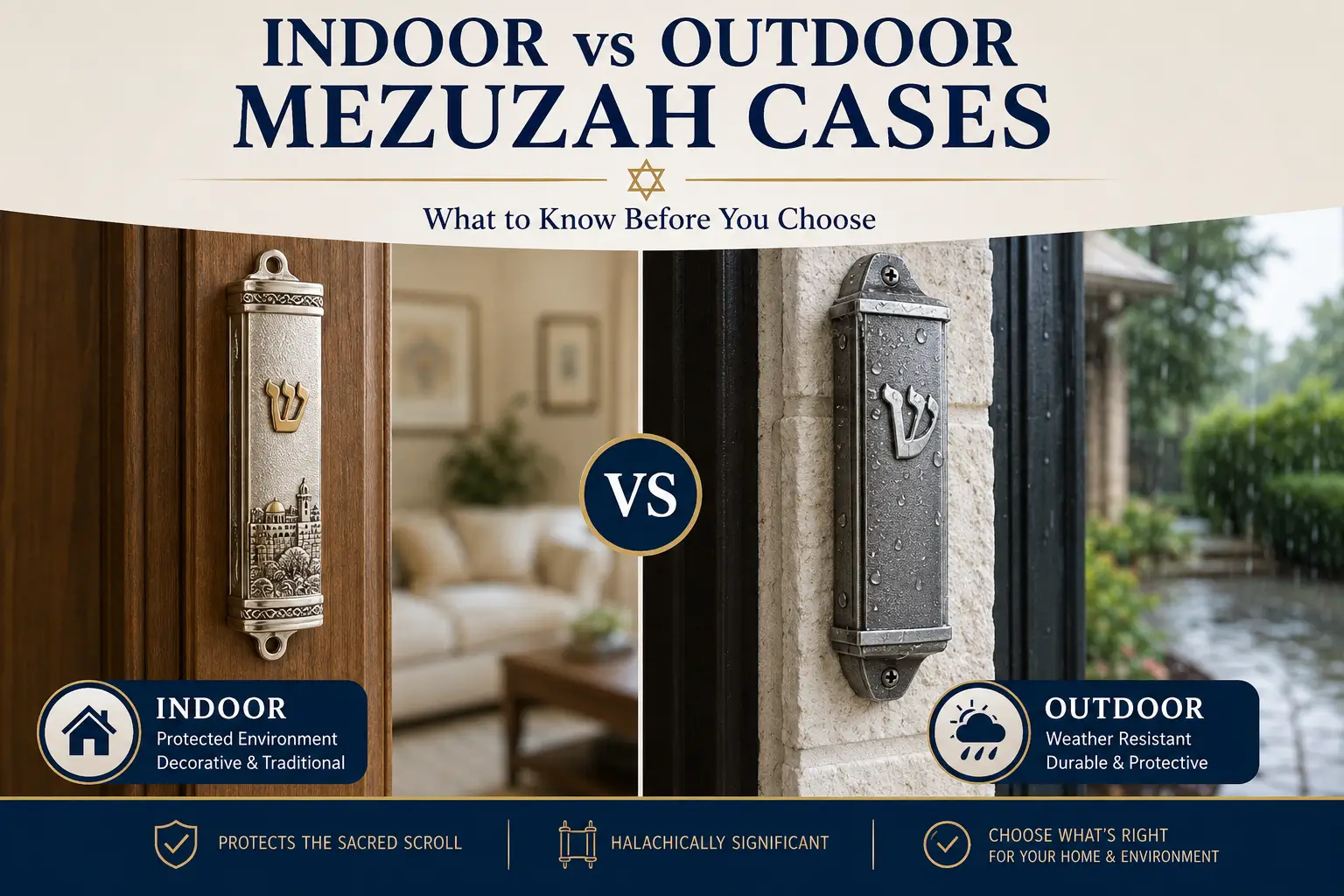
A Mezuzah is more than an ornament attached to a doorpost. At its center is a handwritten parchment scroll containing the first two paragraphs of the Shema, written according to the exacting laws of STa”M. The case surrounding that scroll serves an important practical purpose: protecting the parchment from moisture, physical damage, dirt, and other environmental conditions while allowing the Mezuzah to remain properly affixed to the doorway.
When choosing between indoor vs outdoor Mezuzah cases, the primary consideration should therefore be the environment in which the Mezuzah will be installed. A case used inside a protected hallway has very different demands from one mounted on an exposed exterior doorway.
The case itself does not make a Mezuzah kosher. The parchment must be properly written by a qualified sofer, and the Mezuzah must be placed and maintained according to Halachic requirements. The purpose of choosing an appropriate case is to help preserve that sacred parchment and maintain its condition over time.
What Is the Difference Between Indoor and Outdoor Mezuzah Cases?
The fundamental difference is environmental protection.
An indoor Mezuzah case is generally exposed to relatively stable conditions. It may be installed inside a home, synagogue, office, school, or other enclosed building where the parchment is protected from direct rain, snow, strong sunlight, and significant temperature changes.
An outdoor Mezuzah case must contend with greater exposure. Depending on the location, it may encounter rain, humidity, condensation, dust, direct sunlight, freezing temperatures, heat, and repeated seasonal changes. These conditions can affect the parchment inside the case, which is why exterior Mezuzot deserve particular attention and periodic inspection.
This does not mean that every outdoor Mezuzah requires an elaborate or expensive case. Rather, the case should be selected according to the actual conditions of the doorway.
Indoor Mezuzah Cases
For an interior doorway, the main concern is usually protection from ordinary handling, dust, accidental impact, and household conditions.
Indoor applications may include:
- Bedroom entrances
- Living rooms
- Kitchens
- Offices
- Study rooms
- Synagogue interior doorways
- School and classroom entrances
An indoor case may therefore emphasize accessibility, appearance, and appropriate fit for the parchment. Decorative materials such as metal, wood, glass, Lucite, or other Judaica materials can be appropriate depending on the location.
However, transparency requires consideration. A transparent Mezuzah case is not suitable in every environment. Traditional guidance specifically notes circumstances in which the parchment should not be visibly exposed, including locations facing a bathroom or certain areas where modesty or inappropriate exposure could become an issue.
The important point is that indoor does not simply mean decorative. The location still needs to be evaluated according to the sanctity of the Mezuzah and the conditions surrounding the doorway.
Outdoor Mezuzah Cases
Exterior doorways present a more demanding environment.
An outdoor Mezuzah may be exposed to:
- Rain
- Humidity
- Condensation
- Dust
- Direct sunlight
- Heat
- Cold
- Wind
- Accidental impact
Moisture is particularly important because a Mezuzah scroll is written on parchment. Prolonged exposure to adverse weather can damage the parchment or affect the writing. Sources discussing Mezuzah maintenance specifically recommend greater attention to Mezuzot installed outside because of their vulnerability to weather conditions.
For this reason, when choosing an outdoor case, buyers should look beyond appearance and consider how effectively the case protects the scroll from the specific conditions of the installation site.
A sheltered porch, for example, presents different requirements from a doorway completely exposed to driving rain.
Does the Mezuzah Case Need to Be Waterproof?
A protective case should provide meaningful protection from moisture, but buyers should not assume that a case described as weather-resistant makes the Mezuzah permanently immune to environmental damage.
The parchment should remain properly protected inside the case, and the case itself should be maintained. If moisture has entered the case, or if the case has cracked, opened, or deteriorated, the scroll should be removed and inspected by a qualified sofer.
Regular inspection is particularly important for outdoor Mezuzot because environmental exposure can accelerate deterioration.
Material Matters, but Location Matters More
Mezuzah cases are available in many materials and finishes. Metal, silver, nickel, wood, plastic, glass, Lucite, and other decorative materials are commonly used in Judaica design.
The material can affect:
- Resistance to weather
- Weight
- Durability
- Appearance
- Mounting requirements
- Ease of cleaning
- Long-term maintenance
But material alone should not determine whether a case is suitable for indoor or outdoor use.
A beautifully designed case that is inappropriate for prolonged exposure to rain is not necessarily the right choice for an exposed exterior doorway. Conversely, an extremely rugged case may be unnecessary for a protected interior hallway.
The correct approach is to match the case to the environment.
Protecting the Mezuzah Scroll
The scroll is the essential part of the mitzvah, and the case exists to protect it.
When inserting a Mezuzah into a case, care should be taken not to bend, pinch, or otherwise damage the parchment. Traditional guidance also emphasizes placing the rolled scroll correctly inside the case and ensuring that it is positioned right-side-up.
The case should also be kept clean without allowing cleaning liquids to enter the interior. Guidance on Mezuzah care specifically recommends lightly dusting the exterior rather than using liquid cleaners that could seep inside and damage the parchment.
This is especially important for exterior cases, where dirt and moisture can accumulate more quickly.
Indoor vs Outdoor Mezuzah Cases: How Should You Choose?
When comparing indoor vs outdoor Mezuzah cases, consider these practical questions:
1. Is the doorway exposed to weather?
If rain, snow, humidity, or direct weather exposure can reach the case, choose protection appropriate to exterior conditions.
2. Is the doorway sheltered?
A covered entrance may experience considerably less exposure than a completely open doorway.
3. What is the local climate?
High humidity, heavy rainfall, freezing temperatures, and intense sunlight can all influence the appropriate case.
4. Is the case decorative or primarily protective?
For an interior doorway, aesthetic considerations may play a larger role. For an exposed exterior doorway, environmental protection should take priority.
5. Is the case properly sized?
The case should accommodate the particular Mezuzah scroll without bending, crushing, or unnecessarily compressing the parchment.
6. Does the location present special Halachic concerns?
Certain locations may require guidance concerning transparency, exposure, placement, or the status of the doorway itself. When there is uncertainty, consult a qualified Rav.
Mezuzah Placement Still Matters
Choosing an appropriate case is only one part of properly installing a Mezuzah.
The Mezuzah is generally affixed on the right-hand side of the doorway as one enters, at the lower portion of the upper third of the doorpost. Depending on the doorway and its configuration, determining the correct side can become more complicated, particularly with interior doorways, unusual entrances, or doorways without conventional doors.
The case should not be selected or installed in a way that compromises proper placement.
If the doorway is unusual or there is uncertainty regarding its Halachic status or the correct location, it is appropriate to ask a competent Rabbi rather than relying solely on a general installation guide.
Shop Mezuzah Cases for Your Home or Synagogue
SeferTorah.Net offers a selection of Mezuzah cases for different settings, styles, and practical requirements. Whether you are replacing an existing case, preparing Mezuzot for a new home, furnishing a synagogue, or looking for decorative Judaica, consider both the character of the doorway and the level of environmental exposure.
For exterior entrances, pay particular attention to protection from moisture and weather. For interior locations, you may have greater flexibility in selecting materials and artistic designs.
You can explore our Mezuzah Cases collection to compare available styles and choose a case appropriate for your setting. If you are uncertain about the appropriate size, material, or application, contact SeferTorah.Net for guidance.
Most importantly, remember that the beauty of the case should never overshadow the importance of the scroll inside. A properly written and maintained Mezuzah parchment remains the essential foundation of the mitzvah.
When Should an Outdoor Mezuzah Be Checked?
Mezuzot require periodic inspection by a qualified sofer. Traditional guidance recommends checking Mezuzot twice every seven years, while exterior Mezuzot may warrant more frequent attention because of their exposure to weather and environmental conditions.
If an outdoor case has been exposed to significant rain, moisture, heat, physical impact, or other adverse conditions, it is prudent to have the parchment examined rather than assuming that the protective case has prevented all damage.
A case is a protective measure—not a substitute for proper Mezuzah inspection.
Frequently Asked Questions About Indoor vs Outdoor Mezuzah Cases
What is the main difference between indoor and outdoor Mezuzah cases?
The primary difference is the level of environmental protection required. Indoor cases generally face stable conditions, while outdoor cases need to protect the parchment against rain, humidity, sunlight, temperature changes, and other weather-related exposure.
Can I use an indoor Mezuzah case outside?
Not necessarily. The suitability of a case depends on its construction, location, and exposure to weather. A case intended for a protected interior doorway may not provide adequate protection for an exposed exterior entrance.
Do outdoor Mezuzah cases need to be waterproof?
They should provide appropriate protection from moisture, particularly when installed in locations exposed to rain. However, even a protective case does not eliminate the need for periodic inspection of the Mezuzah scroll.
Does the Mezuzah case affect whether the Mezuzah is kosher?
The case itself does not determine the kashrut of the parchment. The Mezuzah scroll must be properly written according to Halachic requirements and installed correctly. The case primarily protects the scroll.
What materials are suitable for outdoor Mezuzah cases?
Suitable materials depend on the particular product and environment. When selecting an outdoor case, consider resistance to moisture, weather exposure, physical impact, and temperature changes rather than choosing solely on appearance.
Can I use a glass or transparent Mezuzah case indoors?
Transparent cases may be appropriate in some locations, but they are not suitable for every doorway. Certain environments raise concerns about exposing the sacred parchment, particularly near bathrooms or locations involving inappropriate exposure. When uncertain, consult a Rav.
How often should an outdoor Mezuzah be checked?
Mezuzot are traditionally checked twice every seven years, but exterior Mezuzot may require more frequent inspection because of their increased exposure to weather. A qualified sofer can determine whether the parchment remains in proper condition.
How should I clean a Mezuzah case?
The exterior can generally be lightly dusted. Avoid liquid cleaners that could seep through openings in the case and reach the parchment.
Does an outdoor doorway require a different Mezuzah placement?
The fundamental placement requirements do not change simply because a doorway is outdoors. However, unusual entrances, gates, porches, and other configurations can raise specific Halachic questions. A competent Rabbi should be consulted when the correct placement is uncertain.
Should I choose appearance or protection when buying a Mezuzah case?
Both can be considered, but protection of the sacred parchment comes first. For outdoor locations, environmental suitability should be a primary consideration. For protected indoor locations, buyers may have greater flexibility to prioritize artistic style while still ensuring that the case properly protects and accommodates the scroll.
Conclusion
The question of indoor vs outdoor Mezuzah cases is ultimately a question of matching the protective case to the doorway and its environment. Indoor installations generally allow greater flexibility, while exposed exterior entrances require greater attention to moisture, weather, temperature, and long-term protection.
Whatever case you choose, the essential priority remains the Mezuzah scroll itself: properly written, properly installed, respectfully maintained, and periodically inspected by a qualified sofer. A well-selected case serves its purpose by protecting that sacred parchment while allowing the Mezuzah to remain a visible and meaningful expression of Jewish life.