


Glass vs Metal Mezuzah Cases

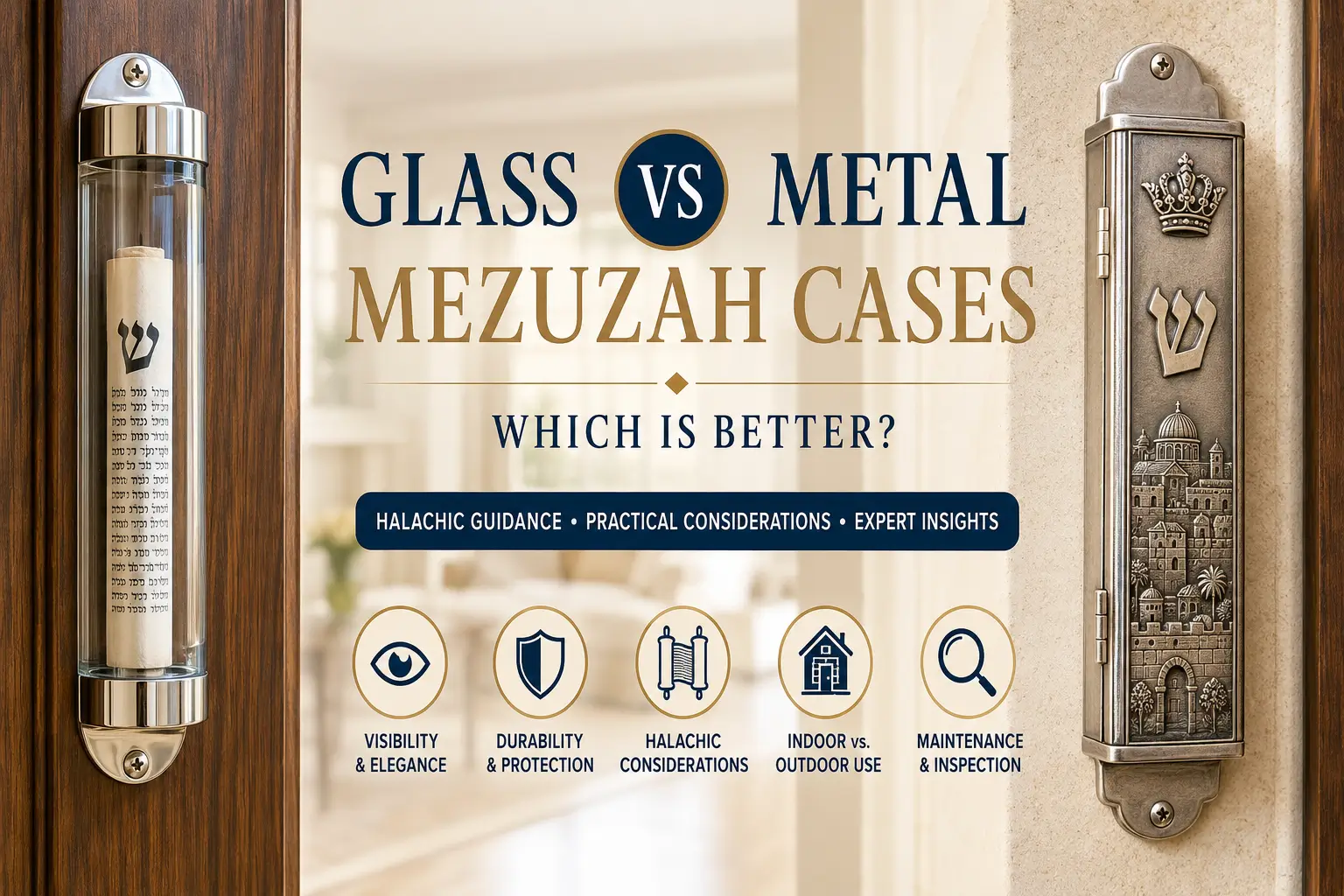
A mezuzah case is more than an attractive covering for a parchment scroll. Its primary practical purpose is to protect the klaf from moisture, physical damage, dirt, and environmental exposure, while its design can also contribute to the hiddur mitzvah and kavod associated with the mitzvah of mezuzah. Chabad’s guidance, for example, emphasizes placing the scroll in a protective case and taking care that the parchment is properly rolled and positioned.
For that reason, choosing between glass vs metal mezuzah cases should not be based solely on appearance. The location of the mezuzah, exposure to weather, visibility of the scroll, ease of inspection, durability, and community practice can all matter.
Glass and metal also present different practical advantages. A transparent case can allow the exterior of the scroll to remain visible, while a well-constructed metal case can provide substantial protection in exposed locations. At the same time, there are halachic and traditional considerations surrounding transparent and metal cases that should not be overlooked.
What Is the Purpose of a Mezuzah Case?
The mezuzah itself is the handwritten parchment containing the two Torah passages from Devarim 6:4–9 and 11:13–21. The parchment is prepared by a qualified sofer STa”M, rolled according to the appropriate tradition, and placed on the doorpost. The case protects this sacred parchment after it has been properly prepared.
The case also serves a second function: kavod ha-mitzvah. Mezuzah cases range from simple protective tubes to finely made Judaica pieces in silver, metal, glass, wood, and other materials. The beauty of the case can enhance the presentation of the mitzvah, but the case should never become the focus at the expense of the quality and kosher status of the mezuzah scroll itself. Chabad’s guidance specifically emphasizes that the parchment and its writing are the essential object of the mitzvah, while the case serves to protect and honor it.
Glass Mezuzah Cases: Visibility and Elegance
Glass mezuzah cases are particularly distinctive because they allow the scroll or its outer surface to remain visible. Transparent cases have a long-standing place in discussions of mezuzah design, and there is no general prohibition against a mezuzah case being made from glass. One rabbinic responsum specifically notes that the halachic sources allow a mezuzah case to be made from various materials, including glass, provided the scroll is properly rolled and can be removed for inspection.
A glass case can therefore be an attractive option for an appropriate indoor location where visibility is desired and the case is protected from physical impact.
Advantages of Glass Cases
Glass offers several practical characteristics:
- Visibility: The case can allow the exterior of the rolled scroll to be seen.
- Decorative presentation: Clear glass has a restrained appearance that works well with contemporary and traditional interiors.
- Easy visual observation: The condition and position of the case can often be observed without opening it.
- Distinctive Judaica design: Glass can be incorporated into artistic mezuzah cases while retaining a simple appearance.
There are, however, important limitations. Glass can break when subjected to impact, and transparent cases are not automatically appropriate for every location.
Chabad sources note that transparent cases should not be used in certain settings, including locations facing a bathroom and certain private areas where considerations of modesty apply. In such circumstances, an opaque covering may be appropriate.
Metal Mezuzah Cases: Durability and Protection
Metal mezuzah cases are widely used because metal provides a strong protective enclosure and can withstand conditions that may be difficult for fragile materials. Aluminum, stainless steel, brass, silver, and other metals can be formed into simple or highly decorative cases.
For an exterior entrance, gate, porch, or another location exposed to weather, the construction of the case becomes especially important. A properly enclosed case can help protect the klaf from rain, moisture, dirt, and physical contact. Guidance from the Orthodox Union similarly emphasizes that a mezuzah case should be properly closed so that moisture from a wall or rain does not damage the scroll.
Metal also allows considerable artistic expression. Silver and other precious-metal finishes can be engraved, embossed, chased, or decorated with Jewish motifs, making them suitable for homeowners and synagogues seeking a more substantial piece of Judaica.
An Important Traditional Consideration
The question of metal is not entirely a matter of durability.
Within certain Jewish traditions, particularly in sources associated with Kabbalah and Chassidic practice, there is a custom to avoid metal cases for mezuzot. Chabad sources cite the teaching associated with the Baal Shem Tov that metal, particularly iron, is associated with shortening human life, whereas the mezuzah is associated with life and protection.
This should not be presented as a universal prohibition applying equally to every Jewish community. Historical sources and contemporary practices differ, and many mezuzah cases are made from metal. A person who follows a particular minhag, especially a Chassidic or Kabbalistic tradition, should consult the appropriate Rav regarding which case material is suitable.
Glass vs Metal Mezuzah Cases: Which Should You Choose?
There is no single answer for every doorway.
The better question is: Where will the mezuzah be installed, and what does your community tradition require or prefer?
For Interior Doorways
Glass can be particularly attractive for suitable interior locations where there is little risk of impact or weather exposure. It provides a clean presentation and may allow the outer portion of the rolled scroll to remain visible.
For locations where privacy, modesty, or the presence of inappropriate surroundings is a concern, however, a transparent case may not be appropriate. An opaque case or additional covering may be preferable according to the applicable halachic guidance.
For Exterior Doorways
For an exposed entrance, the protective properties of the case deserve greater attention. Rain, humidity, direct sunlight, temperature changes, and accidental impact can all affect the condition of the mezuzah over time.
A well-sealed metal case can provide strong protection in these circumstances. The case should fit the scroll properly and prevent water from reaching the parchment.
For Synagogues and Institutional Buildings
Synagogues, schools, yeshivot, and Jewish institutions may have dozens of mezuzot installed throughout a building. In these situations, consistency, durability, ease of maintenance, and community minhag can be more important than simply choosing the most decorative design.
A synagogue may also choose different case materials for interior and exterior locations, depending on the environment and the desired aesthetic.
The Case Must Not Compromise the Mezuzah
One of the most important considerations when comparing Glass vs Metal Mezuzah Cases is not the material itself, but whether the case allows the mezuzah to remain properly positioned and accessible for inspection.
The parchment must be handled carefully. It should not be crushed, bent, or improperly rolled. A case should provide enough room for the scroll without putting unnecessary pressure on the klaf.
A mezuzah also requires periodic inspection by a qualified sofer. Chabad guidance recommends having mezuzot checked periodically, with additional concern when they are exposed to adverse weather conditions.
For this reason, a case that permanently seals the parchment inside and prevents proper inspection can create a serious practical problem. A glass case is not automatically preferable simply because the scroll can be seen, and a metal case is not automatically preferable simply because it is stronger. The complete installation must be considered.
Choosing a Mezuzah Case at SeferTorah.Net
At SeferTorah.Net, choosing a mezuzah case should begin with the mezuzah scroll itself. A decorative case cannot make an invalid or poorly written scroll kosher.
When selecting a case, consider:
- The size of your mezuzah klaf
- Interior or exterior installation
- Exposure to rain and humidity
- Direct sunlight
- Risk of impact
- Whether transparency is appropriate
- Your family’s or community’s minhag
- The material and craftsmanship of the case
- How the scroll will be accessed for inspection
Our collection of Mezuzah Cases provides options for different settings, traditions, and aesthetic preferences. If you are unsure which case is appropriate for a particular doorway, it is wise to ask a qualified Rav or knowledgeable Judaica professional before making your selection.
Caring for Your Mezuzah Case
Whatever material you choose, maintenance matters.
A case should remain securely attached and should be checked periodically for cracks, loose fittings, moisture intrusion, or other damage. Outdoor cases deserve particular attention because weather exposure can gradually affect both the case and the parchment inside.
When cleaning the exterior, avoid allowing liquid to seep into the case. Chabad specifically advises against liquid cleaners because moisture can enter the case and damage the parchment.
If there is any concern about the condition of the klaf, the correct response is not simply to replace the case. The mezuzah should be removed carefully and examined by a qualified sofer.
Frequently Asked Questions
Is glass or metal better for a mezuzah case?
Neither material is universally better. Glass offers visibility and an elegant presentation, while metal generally provides greater resistance to impact and weather. The appropriate choice depends on the location, environmental conditions, and your family’s or community’s minhag.
Are glass mezuzah cases kosher?
A glass case can be used for a mezuzah. The material itself does not make the case invalid. The scroll must be properly written, rolled, positioned, protected, and accessible for appropriate inspection.
Are metal mezuzah cases allowed according to Halacha?
Metal mezuzah cases are widely used, but there are traditional and Kabbalistic customs in some communities to avoid metal cases, particularly iron. Because practices differ, those following a specific minhag should consult their Rav.
Can you see the mezuzah through a glass case?
A transparent case can allow the exterior of the rolled parchment to be visible. However, the Torah text itself should not be displayed outward. The mezuzah must be rolled according to the appropriate tradition, with the written text inward.
Are transparent mezuzah cases appropriate everywhere?
No. Certain locations raise additional considerations regarding modesty and the presence of bathrooms or other inappropriate surroundings. In such circumstances, an opaque covering may be required or preferred according to the applicable halachic guidance.
What type of mezuzah case is best for an outdoor door?
For an exposed outdoor doorway, protection from rain, humidity, sunlight, and impact should be a priority. A properly enclosed and weather-resistant metal case can be a practical option, although the appropriate choice also depends on your community’s custom.
How often should a mezuzah be checked?
Mezuzot should be periodically inspected by a qualified sofer. Chabad guidance cites the practice of checking mezuzot twice every seven years, with more frequent attention when they are exposed to adverse weather conditions.
Does a beautiful mezuzah case make the mezuzah more kosher?
No. The kosher status of the mezuzah depends primarily on the parchment, writing, preparation, and other halachic requirements. A beautiful case can express hiddur mitzvah and kavod, but it cannot compensate for a non-kosher scroll.
Should I choose a glass case for an indoor mezuzah?
A glass case can be suitable for an appropriate indoor location where transparency is acceptable. However, consider the room, privacy and modesty concerns, risk of impact, and your community’s practice before choosing a transparent case.
How do I know which mezuzah case is right for my home?
Start with the dimensions and type of your mezuzah scroll, then consider the doorway’s environment, indoor or outdoor exposure, desired level of protection, appearance, and your minhag. When in doubt, consult a qualified Rav or knowledgeable Judaica specialist.
Conclusion
The choice between Glass vs Metal Mezuzah Cases is ultimately a question of balancing protection, presentation, environment, and tradition.
Glass offers transparency and a distinctive aesthetic, while metal can provide substantial durability for exposed locations. Neither material should be selected in isolation from the halachic and practical circumstances of the doorway.
Most importantly, remember that the case is there to protect and honor the mezuzah scroll. The heart of the mitzvah remains the properly prepared parchment, handwritten by a qualified sofer STa”M according to the requirements of Halacha. A thoughtfully chosen case simply helps preserve that sacred scroll while adding an appropriate measure of kavod and beauty to the mitzvah.