


Choosing First Tefillin: A Practical Guide for Bar Mitzvah Families

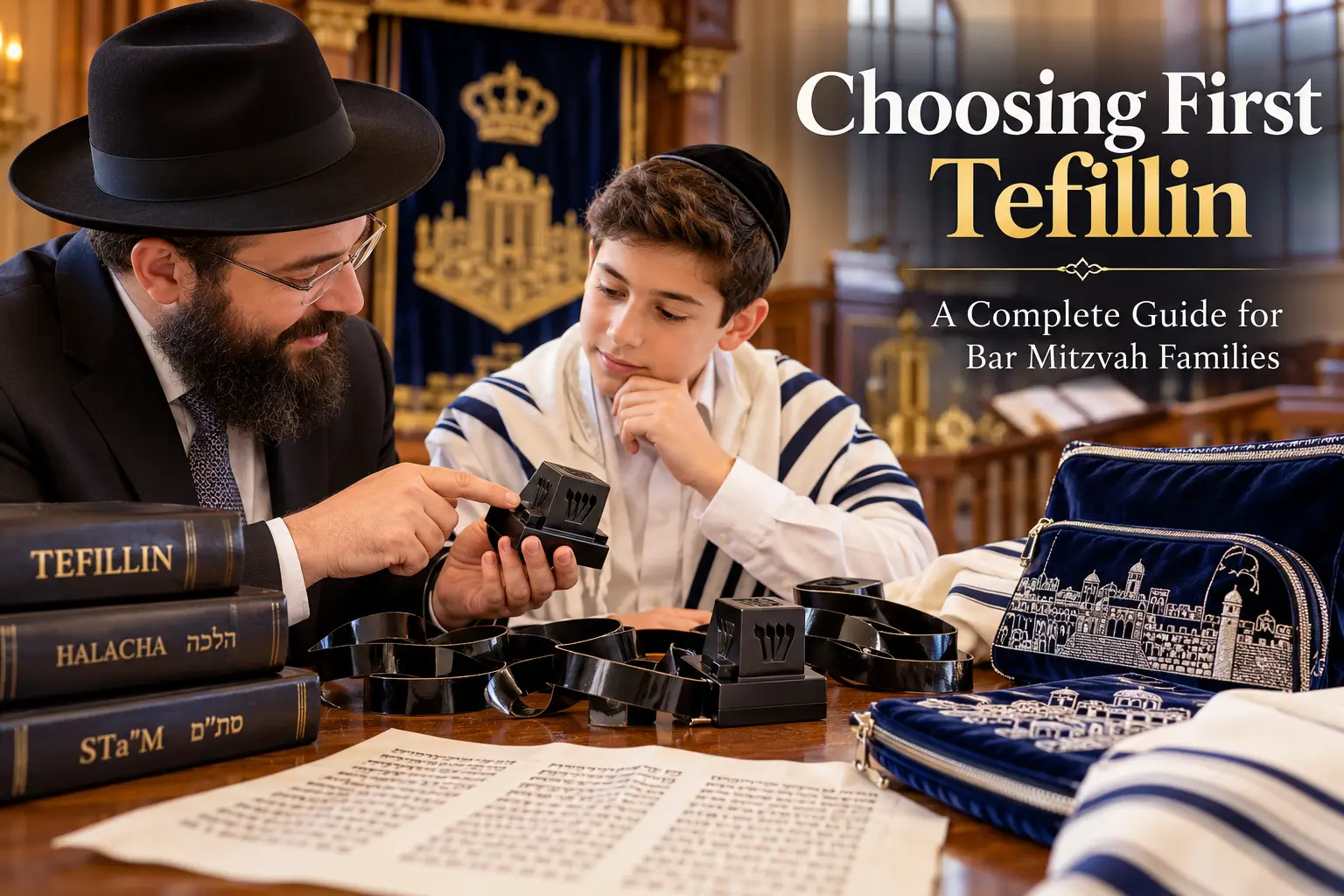
Choosing a first pair of tefillin is an important step in preparing for Bar Mitzvah and beginning a lifelong mitzvah. For many families, however, the purchasing process can be confusing. Tefillin may look similar from the outside, yet the differences in the batim, parshiyot, retzuot, writing tradition, craftsmanship, and level of inspection can be significant.
A first-time buyer may also encounter terms such as Gassot, Dakot, Peshutim, Ktav Beit Yosef, Ktav Ari, Sephardic, and Chabad, without immediately knowing what they mean or which distinctions matter.
The goal when Choosing First Tefillin should not simply be finding a pair within a certain price range. The first priority is that the tefillin be properly made according to Halacha and obtained from a trustworthy source. From there, families can consider the boy’s community, family minhag, physical needs, craftsmanship, and appropriate level of Hidur Mitzvah.
What Should You Know Before Choosing First Tefillin?
Tefillin consist of two separate units: Tefillin Shel Yad, worn on the arm, and Tefillin Shel Rosh, worn on the head. Both contain handwritten sections of Torah on parchment and are housed in specially prepared leather batim. Leather retzuot secure the tefillin in place.
The mitzvah applies to Jewish males from Bar Mitzvah age, although communities have different customs regarding when a boy begins training with tefillin before his Bar Mitzvah. For example, Chabad practice traditionally begins tefillin training approximately two months before the Bar Mitzvah, with the blessing introduced after the boy has learned to put them on correctly.
Because the mitzvah involves precise requirements, choosing a reliable source is particularly important. A respected seller should be able to explain who produced the batim, who wrote or inspected the parshiyot, what writing tradition is followed, and how the retzuot were prepared.
The Three Main Components of Tefillin
When Choosing First Tefillin, it helps to understand the three basic components.
1. Batim — The Leather Houses
The batim are the leather housings that contain the handwritten parshiyot. The quality and construction of the batim can vary considerably.
One commonly discussed distinction is between Gassot and Dakot. Gassot tefillin are made from thicker leather and require specialized craftsmanship to form the characteristic shape and compartments of the head tefillin. Dakot use thinner leather.
There are also Peshutim, which represent a simpler form of construction. The fact that different types exist does not mean that price alone determines whether a pair is kosher. The relevant question is whether the tefillin meet the applicable Halachic requirements and were produced and inspected properly.
For a Bar Mitzvah boy, the physical size of the tefillin also matters. Very large tefillin may not remain properly positioned on a smaller arm or head. The objective is correct placement, not simply selecting the largest or most expensive pair.
2. Parshiyot — The Handwritten Parchments
Inside the batim are the four Torah passages traditionally placed in tefillin.
These parshiyot must be written by a qualified Sofer STa”M according to the detailed laws governing the writing of tefillin. Even a small problem involving a letter can potentially affect the validity of the parchment, which is why the identity and reliability of the sofer and the inspection process are important considerations.
A buyer should therefore ask:
- Who wrote the parshiyot?
- What writing tradition was used?
- Were they inspected?
- Who performed the inspection?
- Is the parchment appropriate for the intended minhag?
- Can the seller provide reliable information about their kashrut?
The writing tradition can also differ between communities. For example, Beit Yosef and Ari represent different traditions of Hebrew letter formation, while Sephardic communities may follow their own established traditions.
This is one reason families should consult their rabbi or community authority before purchasing a first pair.
3. Retzuot — The Leather Straps
The retzuot are not merely accessories. They are an integral part of the tefillin and are subject to Halachic requirements.
Their color, preparation, knots, dimensions, and attachment to the batim all matter. The correct configuration can also depend upon the wearer’s community and established minhag.
Another important practical issue is whether the wearer is right- or left-handed. The shel yad is normally worn on the weaker arm, so a left-handed person’s arrangement may differ from that of a right-handed wearer. This should be established before ordering a pair.
Choosing First Tefillin According to Family Minhag
One of the most important questions to answer before buying is:
Which minhag does the family follow?
A first pair of tefillin should generally be consistent with the family’s established Halachic tradition.
Depending on the community, you may encounter:
- Ashkenazic tefillin
- Sephardic tefillin
- Chabad/Ktav Ari tefillin
- Other established regional or family traditions
These differences can involve the form of the Hebrew letters, the construction and knots of the retzuot, and other details.
This is not simply a matter of appearance. A family should not select a style because it looks attractive in a photograph. The appropriate tradition should be established before purchasing.
For this reason, a conversation with the boy’s rabbi or knowledgeable Judaica authority is one of the most useful steps in Choosing First Tefillin.
Gassot, Dakot or Peshutim: Which Should You Choose?
This is one of the most common questions from families purchasing their first pair.
There is no universal answer based solely on price.
Peshutim are constructed using simpler leather construction.
Dakot are made from thinner leather.
Gassot are made from thicker leather and involve more demanding craftsmanship in forming the batim.
A family should first establish the required Halachic standard and minhag. After that, budget and the level of Hidur Mitzvah can be considered.
A useful principle is that the buyer should understand exactly what additional craftsmanship or construction is being paid for rather than assuming that a higher price automatically means greater Halachic suitability.
A reliable seller should explain the differences clearly rather than simply presenting a price list.
What Makes a Pair Suitable for a Bar Mitzvah Boy?
A Bar Mitzvah boy’s first tefillin need to be both Halachically appropriate and practically wearable.
Several factors deserve attention:
Correct Size
The tefillin must sit correctly. The shel rosh should be positioned properly on the head, while the shel yad should be placed in the correct location on the upper arm.
Appropriate Retzuot
The straps should be properly sized and arranged for the wearer.
Familiarity With the Minhag
The family should know which writing and knotting traditions they follow.
Reliable Kashrut
The buyer should be able to establish that the batim, parshiyot and retzuot meet the relevant requirements.
Proper Instruction
Buying tefillin is only the beginning. The boy should learn how to put them on correctly, how to position them, how to wrap the retzuot, and how to care for them.
Chabad sources, for example, specifically emphasize learning the practical laws of tefillin and having the boy become proficient in correct placement during the preparatory period.
Don’t Choose Tefillin Based on Appearance Alone
A photograph can show you the exterior of a pair of tefillin, but it cannot tell you everything that matters.
Two pairs may appear almost identical while differing in:
- Leather construction
- Parshiyot
- Writing tradition
- Inspection
- Retzuot
- Knots
- Squareness
- Craftsmanship
- Certification or supervision
The internal parshiyot are especially important because their kashrut cannot be determined simply by looking at the outside of the batim.
For this reason, a trustworthy source matters. Halachic guidance emphasizes purchasing from someone who can establish the kashrut of the batim, parshiyot, and retzuot.
How Much Should You Spend on First Tefillin?
There is no single appropriate price for every family.
Instead of beginning with the question, “What is the cheapest pair?” or “What is the most expensive pair?”, begin with:
What does our minhag require, what level of Hidur Mitzvah are we seeking, and what can our family reasonably afford?
Price differences can reflect genuine differences in leather, construction, craftsmanship, parchment, writing, inspection, and other factors.
However, a higher price should not be treated as a substitute for reliable kashrut.
A knowledgeable seller should be able to explain what distinguishes one level from another and help the family understand what they are actually purchasing.
Caring for Your First Tefillin
Once you have purchased tefillin, proper care becomes part of protecting the investment and maintaining the mitzvah.
Keep tefillin away from:
- Excessive moisture
- Direct sunlight
- Extreme temperatures
- Unnecessary pressure
- Hard impacts
Tefillin should also be stored in a way that protects the batim and retzuot.
A [<u>Thermal Tefillin Protectors</u>] can be useful for protecting tefillin during storage or transport, particularly where temperature and environmental conditions are a concern.
For families looking for a coordinated carrying solution, Tefillin Bags and Tallit/Tefillin Bag Sets provide practical ways to keep the tefillin protected and organized.
Tefillin also require periodic inspection. Chabad’s purchasing guidance notes that tefillin should be checked by a qualified scribe periodically, with additional attention after damage or exposure to conditions that could affect them. Chabad
Choosing First Tefillin at SeferTorah.Net
When purchasing a first pair, the goal should be confidence in what you are receiving—not simply convenience.
At SeferTorah.Net, families can explore Tefillin Sets alongside related Tefillin Parchments and Batim (Housings) as they learn about the components that make up a complete pair of tefillin.
Whether the purchase is for a Bar Mitzvah, a first personal pair, or a replacement set, it is important to identify the appropriate minhag, understand the construction, and obtain guidance when questions arise.
A first pair of tefillin can become part of a person’s daily Jewish life for many years. Taking time to make an informed purchase is therefore worthwhile.
Practical First Tefillin Buying Checklist
Before placing an order, make sure you can answer these questions:
☐ Which minhag does our family follow?
☐ Is the boy right- or left-handed?
☐ Which type of batim are we purchasing?
☐ Who wrote the parshiyot?
☐ What ksav was used?
☐ Who inspected the parshiyot?
☐ What type of retzuot are included?
☐ Will the tefillin fit the boy correctly?
☐ Does the seller provide clear information about kashrut?
☐ Has the boy learned how to put them on correctly?
This checklist can prevent many of the common mistakes families make when buying their first pair.
Frequently Asked Questions
1. When should a boy get his first tefillin?
The timing varies according to community and family practice. Some communities begin training several months before Bar Mitzvah. Chabad practice traditionally begins approximately two months before the Bar Mitzvah, with the blessing introduced after proficiency has been developed.
2. Should first tefillin be Gassot or Dakot?
That depends on the family’s Halachic practice, needs, and desired level of Hidur Mitzvah. Gassot and Dakot differ primarily in the leather and construction of the batim.
3. What is the difference between Beit Yosef and Ari tefillin?
They represent different traditions of Hebrew letter formation and related STa”M practices. The appropriate choice should follow the family’s established minhag rather than simply personal preference.
4. Does handedness matter when buying tefillin?
Yes. The shel yad is normally worn on the weaker arm, so a left-handed wearer may require a different arrangement. This should be discussed before ordering.
5. How do I know if tefillin are kosher?
A buyer should purchase from a trustworthy source that can provide reliable information about the kashrut of the batim, parshiyot, and retzuot.
6. Are expensive tefillin automatically better?
Not necessarily. Price can reflect craftsmanship and materials, but the primary concern is Halachic suitability and reliable supervision. Families should understand what they are paying for.
7. How often should tefillin be checked?
The appropriate inspection schedule can depend on usage and condition. A commonly cited guideline is twice every seven years, with inspection sooner if the tefillin are damaged, exposed to water, or otherwise compromised.
8. Can a Bar Mitzvah boy use very small tefillin?
Size should be determined by proper fit and the quality of the construction rather than by the assumption that smaller is automatically preferable. Very small parshiyot can also present additional writing challenges.
9. Should I buy tefillin online?
Online purchasing can be convenient, but the same Halachic questions remain: who made the batim, who wrote and checked the parshiyot, what minhag is followed, and what guarantees of kashrut are provided?
10. What should I buy with first tefillin?
A protective Tefillin Bag or appropriate Thermal Tefillin Protector can help with storage and transport. Some families also choose a combined Tallit/Tefillin Bag Set for organized daily use.
Conclusion
Choosing a first pair of tefillin is more than selecting a Bar Mitzvah purchase. It is preparation for a mitzvah that can become part of a Jewish man’s daily routine for decades.
The most important considerations are Halachic suitability, reliable kashrut, family minhag, proper construction, correct fit, and appropriate instruction. Once those foundations are established, families can consider craftsmanship, Hidur Mitzvah, budget, and practical accessories.
The best purchase is an informed one: understand what is inside the batim, know which tradition you follow, ask the right questions, and choose a trustworthy source.