


Judaica Gift Buying Guide: How to Choose Meaningful Jewish Gifts

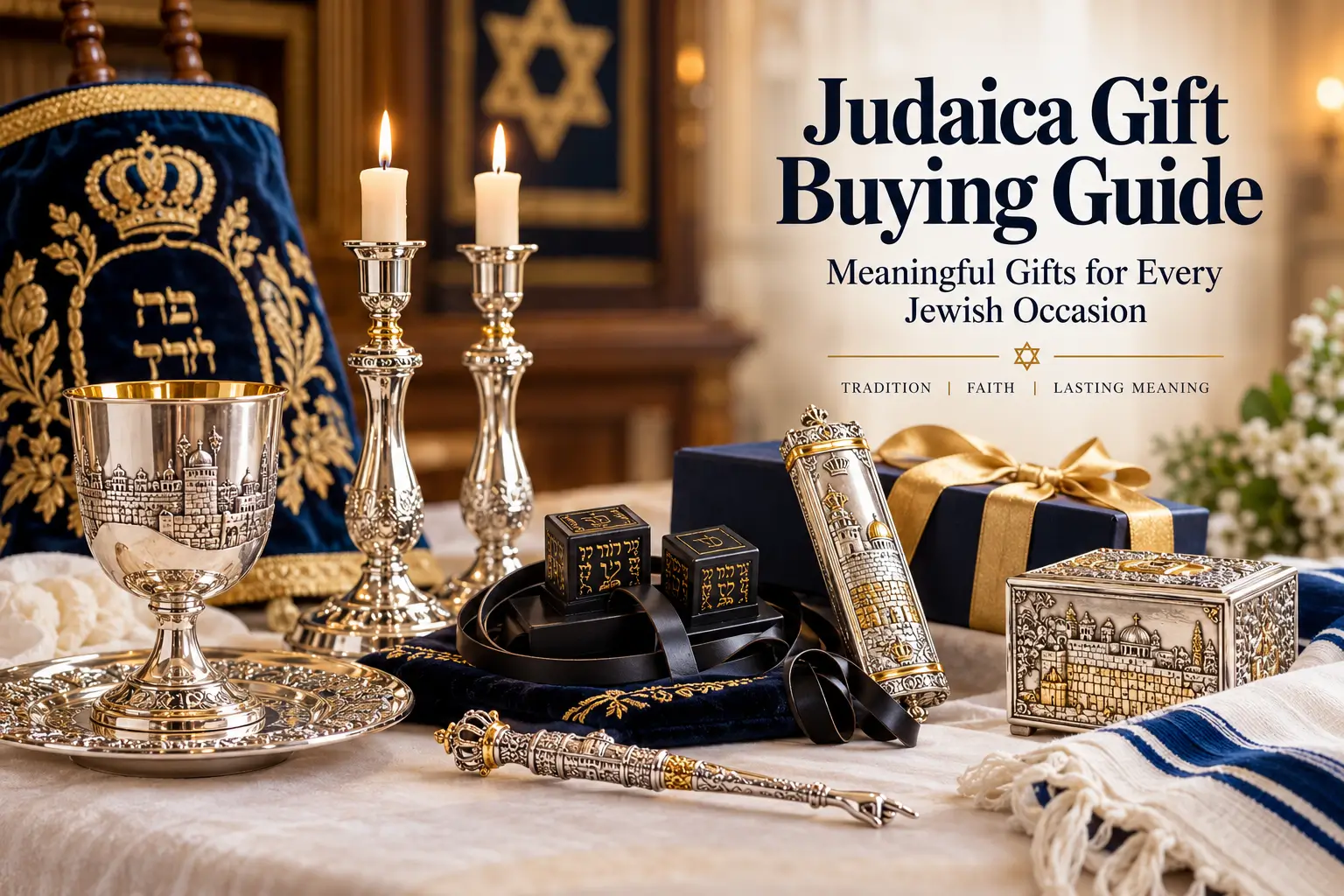
Choosing a Jewish gift involves more than selecting an attractive object. Judaica connects Jewish identity, tradition, family life, and religious observance. A Kiddush cup may become part of a family’s Shabbat table for decades. A pair of Tefillin may mark a young man’s entry into an important stage of Jewish life. A Torah ornament may serve an entire congregation during public Torah reading.
This Judaica Gift Buying Guide explains how to choose thoughtful, appropriate gifts for weddings, Bar and Bat Mitzvahs, Jewish holidays, housewarmings, and synagogue dedications. It covers practical considerations, differences between decorative and ritual objects, materials, craftsmanship, and questions to ask before purchasing.
Whether you are buying for a family member, a rabbi, a synagogue, or someone beginning to build a Judaica collection, the goal is to select an item that reflects the occasion, respects Jewish tradition, and will be valued by its recipient.
What Is Judaica, and Why Does It Make a Meaningful Gift?
Judaica refers broadly to objects associated with Jewish religious practice, tradition, education, and cultural life. Some items serve a direct ritual function, while others commemorate Jewish history, express identity, or enhance the home and synagogue.
Common Judaica gifts include:
- Shabbat and holiday items: Kiddush cups, Havdalah sets, candlesticks, and Seder plates.
- Ritual objects: Tallitot, Tefillin, Mezuzah cases, and related accessories.
- Torah ornaments: Torah crowns, Rimonim, breastplates, and Torah pointers known as Yads.
- Ceremonial and decorative Judaica: Jewish artwork, engraved silver objects, and meaningful Hebrew inscriptions.
- Synagogue gifts: Torah ornaments, ceremonial accessories, and items intended for communal use.
The most suitable choice depends on how the recipient observes Jewish tradition, the occasion, and whether the gift is intended for practical use or display.
A thoughtful Judaica gift can become part of a recurring family or communal practice. Its meaning often grows through repeated use and the memories associated with it.
How to Choose the Right Judaica Gift
Before comparing designs or prices, consider the recipient and the purpose of the gift.
Consider the Recipient’s Jewish Practice
Jewish communities share many traditions but may differ in customs, liturgical practices, and preferences. Ashkenazic, Sephardic, Mizrahi, Chabad, and other communities may follow different minhagim in particular areas of religious life.
These differences do not mean every gift must follow a particular communal style. They do mean that a little research can help you make a more appropriate choice.
For example, when purchasing a Tallit, Tefillin, or another ritual item, confirm the recipient’s preferences rather than assuming that one design or tradition suits everyone. For a decorative gift, consider whether the recipient prefers traditional craftsmanship, contemporary design, or a particular Hebrew inscription.
When uncertain, ask a family member, rabbi, or the recipient discreetly.
Match the Gift to the Occasion
A gift suitable for a wedding may not be the best choice for a Bar Mitzvah or synagogue dedication. Consider both the symbolism and the intended use.
- Wedding: Kiddush cups, Shabbat candlesticks, Havdalah sets, and other items for a Jewish home.
- Bar Mitzvah: Tefillin accessories, a Tallit where appropriate, Jewish books, or a meaningful Judaica object.
- Housewarming: A Mezuzah case, Shabbat accessories, or Jewish artwork.
- Hanukkah: A Hanukkiah suitable for the recipient’s needs and preferences.
- Torah dedication: Torah crowns, Rimonim, breastplates, Yads, or other ceremonial ornaments.
- Rabbi or synagogue appreciation: A suitable communal Judaica item or a carefully selected ceremonial gift.
For ritual objects, distinguish between the decorative object itself and the religious requirements associated with its use. A beautiful case, for example, is not the same as a properly prepared Mezuzah scroll.
Think About Everyday Use
An item intended for regular use should be practical to handle, clean, store, and maintain. A large decorative object may be appropriate for a synagogue but unsuitable for a small home. Silver-plated items may require different care from solid sterling silver.
Consider storage space, maintenance, durability, and whether the recipient already owns a similar item. A well-chosen gift should fit naturally into the recipient’s life.
Judaica Gift Ideas for Important Jewish Occasions
Jewish Wedding Gifts
Jewish weddings often mark the beginning of a shared household and a new chapter of family life. Judaica gifts can help establish traditions that the couple will continue after the wedding.
A Kiddush cup can be used for Shabbat and holiday meals. Candlesticks may become part of the family’s weekly Shabbat preparation. A Havdalah set can accompany the ceremony marking the conclusion of Shabbat.
When choosing silver or silver-colored items, check the material and care instructions. If the couple has a particular communal tradition or aesthetic preference, take that into account.
Bar and Bat Mitzvah Gifts
A Bar or Bat Mitzvah is an important milestone in Jewish communal and family life. The most suitable gift depends on the recipient’s age, interests, religious practice, and family customs.
For a Bar Mitzvah boy who will begin wearing Tefillin, families may appreciate accessories such as a Tefillin bag or protective case. The Tefillin themselves require more careful consideration because their preparation, writing, and Halachic suitability are significant.
For a Bat Mitzvah, consider Jewish books, meaningful artwork, or Judaica connected with the recipient’s interests and family practices.
Avoid assuming that every family follows the same customs regarding gifts or ritual objects. When buying an item intended for religious use, consult the family about what is appropriate.
Jewish Holiday Gifts
Jewish holidays provide opportunities to give gifts that become part of an annual tradition.
A Hanukkiah can be a meaningful gift for Hanukkah, while a Seder plate may be appreciated by a family that hosts Pesach gatherings. A Kiddush cup or Havdalah set may be suitable for someone who regularly observes Shabbat.
Choose objects that reflect the recipient’s actual needs. For example, consider the number of people typically gathered around the table, the amount of storage available, and the materials that suit the household’s preferences.
Gifts for Synagogues and Torah Dedications
A gift for a synagogue may serve many people over an extended period. The selection process should therefore consider communal needs, compatibility with existing ritual objects, and the synagogue’s established customs.
Torah ornaments include crowns, Rimonim, breastplates, and Yads. These objects may differ in size, materials, attachment systems, and decorative motifs.
Before purchasing, confirm measurements and compatibility with the synagogue’s Sefer Torah and existing ornaments. The rabbi, gabbai, or person responsible for ritual objects can help establish what is needed.
For a Torah dedication, coordinate with the synagogue before selecting an item. A coordinated set may be appropriate in some circumstances, while a single ornament that complements the existing collection may be more useful in others.
Understanding Materials and Craftsmanship
Material descriptions matter when buying Judaica, particularly when an item is intended for frequent use or long-term preservation.
Sterling Silver, Silver-Plated, and Other Finishes
Sterling silver generally contains 92.5% silver and is often marked “925” or “Sterling.” Silver-plated objects have a layer of silver over another metal, while other Judaica may use nickel, brass, aluminum, or specialized decorative finishes.
These materials differ in cost, weight, appearance, and maintenance. A silver-plated object can be attractive, but its finish may wear through if it is polished too aggressively. An engraved or oxidized surface may also require a different cleaning method from plain polished silver.
Read product descriptions carefully and ask the seller about the material if it is unclear. Do not assume that a silver-colored appearance means an object is made from solid silver.
Handmade and Decorative Details
Hand chasing, engraving, embossing, and other metalworking techniques can give Judaica its distinctive appearance. Decorative motifs may include Jerusalem imagery, floral designs, geometric patterns, or Hebrew inscriptions.
When evaluating craftsmanship, look beyond appearance alone. Consider whether the object is structurally sound, whether moving parts fit securely, and whether the finish is appropriate for its intended use.
If an item contains gemstones, delicate attachments, or mixed materials, ask how it should be handled and maintained.
Halachic Suitability of Ritual Objects
Some Judaica is primarily decorative, while other objects are used in mitzvot and therefore require attention to Halachic requirements.
For example, a Mezuzah case is a container; the Mezuzah scroll inside must separately meet the applicable requirements. Tefillin require properly prepared batim, retzuot, and parshiyot. A decorative Torah pointer, meanwhile, is an accessory used during Torah reading rather than a replacement for the Torah scroll itself.
Do not rely on product appearance alone to establish that a ritual object is kosher. Where Halachic suitability matters, consult a knowledgeable rabbi or qualified Sofer STa”M, as appropriate.
The principle of hidur mitzvah—enhancing the performance of a mitzvah—helps explain why many people value careful craftsmanship in ritual objects. However, decorative refinement does not replace the underlying requirements of Halacha.
How Much Should You Spend on a Judaica Gift?
There is no universal budget for Judaica gifts. The appropriate amount depends on the occasion, your relationship with the recipient, the intended use, and the material and craftsmanship of the object.
A modest but thoughtful gift can be more meaningful than an expensive item that does not suit the recipient. Conversely, a synagogue dedication or major family milestone may call for a coordinated contribution or a ceremonial object intended for long-term communal use.
When comparing products, consider:
- The materials and finish.
- The construction and decorative workmanship.
- The item’s size and intended purpose.
- Care and maintenance requirements.
- Whether the object is supplied with accessories or protective storage.
- The seller’s policies for shipping, returns, and damage during delivery.
For fragile silver Judaica or valuable ceremonial objects, confirm how the item will be packaged and shipped. If it is a gift for a specific date, allow enough time for delivery and any personalization.
Common Mistakes to Avoid When Buying Judaica
A little preparation can prevent disappointment and help ensure the gift is appropriate.
Buying a ritual object without checking the recipient’s needs: Tefillin, Tallitot, and other ritual items may involve personal preferences or communal customs. Confirm what is suitable before purchasing.
Confusing decoration with Halachic suitability: An attractive exterior does not establish that a scroll or other ritual component meets religious requirements.
Assuming every silver-colored item is sterling silver: Check the product description and material specifications.
Ignoring size and compatibility: Torah ornaments, cases, and accessories must fit their intended use. Measurements can be particularly important for synagogue gifts.
Choosing solely on price or appearance: Consider maintenance, durability, and whether the object suits the recipient’s daily or communal practice.
Leaving personalization until the last minute: Engraving and custom orders may require additional preparation and delivery time.
Shop Judaica Gifts at SeferTorah.Net
Finding the right Judaica gift is easier when you can compare objects according to their purpose, material, and design. SeferTorah.Net offers Judaica and synagogue accessories for Jewish homes, families, and communities.
Explore the SeferTorah.Net store to discover available Judaica, or browse the Torah Pointers collection for Yads in a range of decorative styles.
When choosing a gift, review the product details and confirm material specifications, dimensions, and care instructions. For synagogue gifts or ceremonial objects, it is worth checking compatibility with the recipient’s existing collection before ordering.
Whether you are selecting a wedding gift, a Bar Mitzvah present, or an ornament for a Torah dedication, choose an object that reflects the occasion and the recipient’s traditions. The best Judaica gifts combine thoughtful selection with a clear understanding of how the item will be used and valued.
Frequently Asked Questions About Buying Judaica Gifts
1. What is a good Judaica gift for a Jewish wedding?
Kiddush cups, Shabbat candlesticks, Havdalah sets, and other items for the Jewish home are common options. Consider the couple’s traditions, existing collection, and preferred style before choosing. Practicality and long-term use are often as important as appearance.
2. What is an appropriate Judaica gift for a Bar Mitzvah?
A suitable gift might include Jewish books, Tefillin accessories, a Tallit where appropriate, or another meaningful Judaica object. If you plan to purchase Tefillin themselves, coordinate with the family to ensure that the selection meets their requirements and preferences.
3. What should I buy for a synagogue or Torah dedication?
Torah crowns, Rimonim, breastplates, and Yads may be appropriate. Ask the synagogue about its needs, measurements, existing ornaments, and communal customs before making a purchase. Compatibility and practical use are especially important for ceremonial gifts.
4. Is sterling silver better than silver-plated Judaica?
Neither is automatically the right choice for every recipient. Sterling silver contains 92.5% silver, while silver-plated items have a silver layer over another metal. They differ in cost, care requirements, and how the finish may wear over time. Choose based on intended use, budget, and maintenance preferences.
5. Can I give a Mezuzah as a gift?
Yes. A Mezuzah case can be a meaningful gift for a new home or another special occasion. Remember that the case and the handwritten Mezuzah scroll are separate components. If the gift includes a scroll, confirm its suitability with a knowledgeable and trusted source.
6. What does hidur mitzvah mean when choosing Judaica?
Hidur mitzvah refers to enhancing a mitzvah through care and beauty. In Judaica, this may be reflected in craftsmanship or the choice of a suitable ritual object. However, decorative beauty does not replace the Halachic requirements that apply to the mitzvah itself.
7. How can I tell whether Judaica is made from genuine silver?
Check for material specifications, relevant hallmarks, and reliable product documentation. Sterling silver is often marked “925” or “Sterling,” but markings alone may not answer every question. Ask the seller for clarification if the product description is ambiguous.
8. Is personalized Judaica a good gift?
Personalized Judaica can be meaningful for weddings, milestone celebrations, and family occasions. Before ordering, confirm the spelling of names and Hebrew inscriptions, review the design, and check the production timeline. Consider whether personalization will affect returns or future use.
9. What Judaica gift is suitable for someone whose traditions I do not know well?
Choose a broadly useful household or decorative item, such as Jewish artwork or an appropriate Shabbat accessory, and avoid assumptions about ritual practice. You can also ask a family member for guidance. For items such as Tefillin or a Tallit, checking preferences beforehand is particularly important.
10. Where can I buy Judaica gifts online?
Choose a specialist retailer that provides clear product descriptions, material information, dimensions, and care guidance. For ritual objects, look for reliable information about the item’s intended function and any relevant requirements. SeferTorah.Net offers Judaica and synagogue accessories through its online store.
Conclusion
A thoughtful Judaica gift recognizes the relationship between Jewish tradition, personal milestones, and everyday practice. By considering the recipient’s customs, the occasion, the object’s material, and its intended use, you can choose something that is both appropriate and meaningful.
Use this Judaica Gift Buying Guide as a starting point, but remember that the best choice is not necessarily the most expensive or elaborate. It is the item that fits the recipient’s needs, respects the relevant traditions, and can be appreciated for years to come.
Explore SeferTorah.Net’s Judaica collections to compare available options, review product details, and select a gift with care.