


How to Store a Torah Scroll Safely in a Synagogue

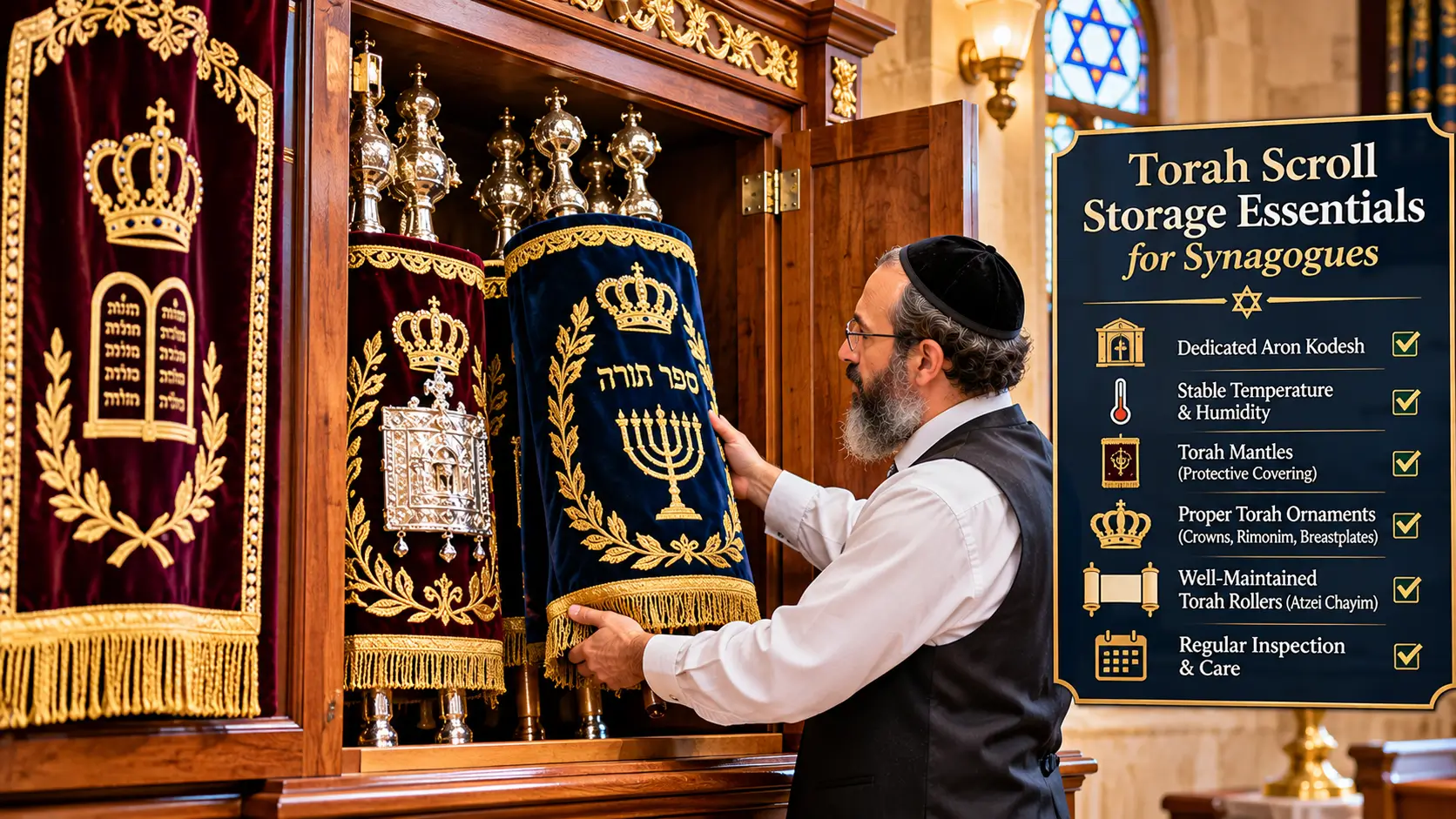
A Sefer Torah is not simply a handwritten religious text. It is one of the most sacred objects in Jewish life, representing the written foundation of Torah and the enduring bond between the Jewish people and Hashem. Its sanctity calls for more than respectful handling during public Torah reading. It also requires thoughtful, consistent care when the scroll is not in use.
Proper Torah scroll storage brings together Halachic responsibility, traditional synagogue practice, and practical preservation. The Aron Kodesh, the room’s environmental conditions, the Torah’s mantle and protective accessories, and the procedures followed by synagogue staff all contribute to its care.
For a synagogue, storing a Torah scroll safely is an ongoing responsibility shared by its leadership, Gabbaim, custodians, and those entrusted with its use. A suitable storage arrangement protects the parchment and ink while maintaining the dignity due to a Sefer Torah.
This guide explains how to store a Torah scroll safely in a synagogue, what conditions to monitor, which accessories may help protect it, and when to seek guidance from a qualified Sofer STa”M or Rabbi.
1. Store the Sefer Torah in a Designated Aron Kodesh
The most appropriate place for a synagogue’s Sefer Torah is a designated Aron Kodesh. Traditionally, the Aron Kodesh is the central place where the community keeps its Torah scrolls when they are not being used for reading.
The practice reflects the importance of giving the Sefer Torah a dedicated and dignified place. The Rambam and later Halachic authorities discuss the sanctity associated with an ark or cabinet designated for a Torah scroll. The Shulchan Aruch, in Yoreh De’ah 282, also addresses the status of the ark and other objects used for the Sefer Torah.
An Aron Kodesh should be:
- Dedicated to storing sacred Torah scrolls.
- Secure against unauthorized access and accidental damage.
- Protected from water leaks, excessive heat, and direct sunlight.
- Kept clean and free from unnecessary objects.
- Designed to allow the scrolls to rest securely without pressure or abrasion.
A synagogue should avoid using the Aron Kodesh as a general-purpose storage cabinet. Ordinary supplies, cleaning materials, personal belongings, and unrelated objects do not belong in a space designated for the Sefer Torah.
Keep the storage area organized
If a synagogue has several Sifrei Torah, each scroll should have a clearly designated position. This reduces unnecessary movement and helps prevent accidental contact between scrolls, ornaments, and other objects.
The arrangement should also allow authorized personnel to remove and return each scroll without pulling, twisting, or placing pressure on its parchment or wooden rollers.
2. Maintain a Stable Temperature and Humidity Level
Environmental conditions are among the most important practical considerations in Torah scroll storage. A Sefer Torah is written on parchment using specialized ink. Both materials can be affected by unsuitable conditions over time.
Excessive moisture may contribute to mold, deterioration, and changes in the parchment. Very dry conditions can make parchment more brittle and may contribute to ink deterioration. Rapid fluctuations can also place stress on the materials.
Monitor humidity
Synagogue administrators should consider placing a reliable digital hygrometer inside or near the Aron Kodesh. This device measures relative humidity and helps identify changes that may otherwise go unnoticed.
Conservation recommendations vary according to the building, climate, parchment condition, and storage design. Some STa”M care guidance recommends maintaining humidity around 40%, while other institutional conservation guidance gives a broader acceptable range. A synagogue should establish an appropriate target with a qualified conservator or experienced Sofer familiar with Torah scroll preservation rather than treating one number as a universal Halachic requirement.
Practical steps include:
- Monitor relative humidity regularly.
- Avoid placing the Aron Kodesh beside leaking pipes or damp walls.
- Investigate condensation or musty odors immediately.
- Avoid sudden temperature changes.
- Ensure that the storage space has suitable ventilation.
- Do not place a Torah scroll directly beside a heater, air-conditioning outlet, or other strong heat or airflow source.
Avoid excessive heat and moisture
A synagogue in a hot or humid climate may need additional environmental monitoring. Air conditioning can help maintain a more stable environment, but direct cold airflow onto the scroll should be avoided.
Likewise, a dehumidifier may be useful in a persistently damp room, but it should not be used without monitoring. Excessive drying can create a different preservation problem.
The objective is a stable, clean environment—not simply the coldest or driest possible storage space.
3. Protect the Torah Parchment from Direct Contact
The parchment, or klaf, contains the sacred Hebrew writing. It should be protected from unnecessary physical contact, friction, moisture, and pressure.
Traditional Halachic practice emphasizes the dignity of the Sefer Torah and the care with which it is handled. The Torah should not be handled casually, and the written surface should not be touched unnecessarily.
Handle the Torah through its Atzei Chayim
The wooden rollers attached to the scroll are called Atzei Chayim, meaning “Trees of Life.” They provide the structural support used to hold, roll, and position the Torah.
When moving a Sefer Torah, authorized handlers should use the appropriate handles and follow the synagogue’s established procedure. They should avoid gripping the parchment, pulling the scroll by its edges, or allowing the written surface to rub against a hard object.
Keep the parchment away from unnecessary accessories
The Yad, or Torah pointer, is used to follow the text during reading. It should be used carefully and should not be dragged across the parchment. A pointer that repeatedly scratches the writing surface can contribute to physical damage.
Similarly, a Torah belt or other accessory should not be fastened so tightly that it places pressure on the scroll. Metal clasps, rough edges, and poorly fitted accessories deserve particular attention.
If a scroll appears stuck, unusually tight, or difficult to roll, do not force it. Ask a qualified Sofer to examine it.
4. Use an Appropriate Torah Mantle and Protective Covering
A Torah mantle serves both a traditional and protective purpose. It is part of the honor given to the Sefer Torah and helps shield the scroll from dust, incidental contact, and other environmental exposure.
The choice of mantle should take account of the scroll’s construction, the synagogue’s Minhag, and the way the Torah is stored and handled.
Choose a suitable Torah Mantle
A mantle should fit the scroll without placing excessive pressure on the parchment or wooden rollers. It should not be so tight that removing it causes friction against the scroll.
Before returning a Torah to the Aron Kodesh, authorized personnel should make sure that:
- The mantle is positioned properly.
- No part of the fabric is caught in the rollers.
- The Torah belt is not excessively tight.
- The covering is clean and completely dry.
- No decorative element is pressing against the written parchment.
Synagogues may select from different styles of Torah Mantles, including traditional, modern, and hand-embroidered designs. The appearance may reflect the congregation’s Ashkenazic or Sephardic tradition, local Minhag, or the occasion for which the mantle is used.
The purpose of decorative beauty is to honor the Torah, not to compromise its physical condition.
Keep the mantle clean and dry
A mantle should be inspected periodically for dust, moisture, loose threads, and damaged embroidery. Cleaning should be carried out carefully, with the Torah scroll removed and stored securely.
Do not use a damp covering on a Sefer Torah. If the mantle becomes wet, it should be removed by an authorized handler and allowed to dry completely before reuse.
5. Store Torah Rollers and Ornaments Carefully
The Atzei Chayim and the ornaments attached to a Torah scroll also require attention. Although they are not the parchment itself, damage to these components can affect the safe handling and storage of the Sefer Torah.
A synagogue may use several traditional accessories, including:
- Torah Rollers: The wooden supports used to hold and roll the scroll.
- Torah Crowns: Decorative ornaments placed above the rollers in certain traditions.
- Rimonim: Ornamental finials traditionally placed on the upper ends of the rollers.
- Torah Breastplates: Decorative breastplates worn over the mantle in communities where this custom is followed.
- Yads – Torah Pointers: Pointers used during Torah reading.
These accessories should be fitted and stored so they do not scratch, press against, or become entangled with the parchment or mantle.
Inspect the Atzei Chayim
Check the rollers for cracks, loose fittings, rough surfaces, and unstable handles. They should turn smoothly without excessive resistance.
If a roller is damaged or does not rotate properly, it should be examined by someone qualified to repair Torah scroll components. Do not attempt improvised repairs while the scroll is mounted.
Protect silver and decorative ornaments
Silver Torah Ornaments should be handled carefully to prevent dents, tarnishing, and damage to their fittings. Cleaning products should never be applied near exposed parchment.
When ornaments are removed for repair or cleaning, keep them in a designated, secure place. Avoid placing them loosely on a table where they may fall or come into contact with the scroll.
6. Protect the Aron Kodesh from Water, Dust, Pests, and Sunlight
Even a beautifully constructed Aron Kodesh cannot protect a Sefer Torah if the surrounding room is poorly maintained.
Water leaks, dust, insects, rodents, and direct sunlight can all create risks for parchment, ink, wood, and textiles.
Check for water damage
Inspect the ceiling, walls, roof, and nearby plumbing for signs of leakage. Pay particular attention after heavy rain or building maintenance.
If water enters the Aron Kodesh or reaches a Torah scroll, do not attempt to dry the parchment with a hair dryer, heater, or direct sunlight. Keep unnecessary handling to a minimum and contact a qualified Sofer or conservator promptly.
Control dust and pests
Dust can accumulate inside cabinets and on fabric coverings. Clean the surrounding storage area regularly, but do not spray cleaning chemicals, insecticides, or fragrances inside the Aron Kodesh.
Pest prevention should focus on maintaining a clean building, sealing entry points, and addressing infestations through methods that do not expose the Torah scroll to harmful chemicals.
Limit direct sunlight
Sunlight can contribute to fading and deterioration of textiles and other materials. The Aron Kodesh should be positioned or designed to limit direct exposure to sunlight.
A closed, well-maintained cabinet also helps reduce dust and accidental contact.
7. Establish Safe Procedures for Removing and Returning a Torah Scroll
Good storage practices do not end when the Torah is placed inside the Aron Kodesh. The process of removing and returning the scroll is equally important.
The Shulchan Aruch, Orach Chayim 149:1, discusses the custom of accompanying the Torah after it has been read. This practice reflects the honor given to the Sefer Torah as it is returned to its designated place.
Synagogues should establish clear procedures for those responsible for handling the scroll.
Before removing the Torah
- Make sure the pathway is clear.
- Confirm that the person handling the Torah is prepared.
- Check that nearby objects will not obstruct movement.
- Avoid rushing, crowding, or unnecessary handling.
While carrying the Torah
The scroll should be held securely and carried with dignity. Handlers should avoid sudden movements, placing it on unstable surfaces, or allowing it to come into contact with furniture or doorframes.
If the Torah must be placed down temporarily, follow the congregation’s Halachic practice and ensure that the surface is suitable and stable.
When returning the Torah
Check that the scroll is positioned securely in its designated place. Make sure the mantle and accessories are correctly arranged and that the scroll is not leaning at an unsafe angle.
Only authorized individuals should be responsible for moving scrolls within the Aron Kodesh.
8. Create a Regular Torah Scroll Storage and Maintenance Routine
A written maintenance routine helps synagogue leadership identify problems before they become serious. It also creates continuity when Gabbaim, custodians, or board members change.
A practical maintenance schedule may include the following:
| Frequency | Recommended action |
|---|---|
| After each use | Return the scroll carefully and check its position, mantle, and accessories. |
| Weekly | Look for visible dust, moisture, unusual odors, or changes in the storage area. |
| Monthly | Review temperature and humidity records and inspect the Aron Kodesh. |
| Every few months | Check the condition of the mantle, belt, rollers, and ornaments. |
| After a leak or building incident | Arrange an immediate assessment if the Torah may have been exposed to water, heat, or other damage. |
| As advised by a qualified Sofer | Arrange professional inspection and any necessary maintenance. |
This schedule is a practical synagogue management framework, not a universal Halachic timetable for checking the scroll’s kosher status.
A maintenance record can include:
- Scroll identification or inventory number.
- Date of each inspection.
- Name of the responsible person.
- Environmental readings, where available.
- Visible concerns or incidents.
- Repairs or professional evaluations.
- Recommendations from the Sofer or conservator.
A synagogue should keep these records securely and make them available to the appropriate leadership and religious authorities.
9. When Should a Synagogue Contact a Qualified Sofer STa”M?
Routine visual checks are useful, but they cannot determine whether a Torah scroll remains kosher. The condition of individual Hebrew letters, ink, parchment, and other scribal details requires specialist knowledge.
A qualified Sofer STa”M understands the requirements governing sacred writing and can assess concerns that ordinary synagogue personnel may not be able to identify.
Seek professional guidance if you notice:
- A letter that appears faded, cracked, or damaged.
- Ink that seems to be flaking or separating from the parchment.
- Tears, holes, or unusual creases in the klaf.
- Signs of mold, water exposure, or insect damage.
- Unusual resistance when rolling the Torah.
- Loose stitching or damaged parchment panels.
- A mantle or accessory that appears to be damaging the scroll.
A visual concern does not automatically mean that a Sefer Torah is pasul. Likewise, a scroll that looks fine from a distance is not necessarily free from scribal defects.
A Sofer can assess the physical and scribal condition, while questions about Halachic status should be referred to the appropriate Rabbi or Halachic authority.
Synagogues that need professional guidance can explore the Torah Evaluations service at SeferTorah.Net to learn more about arranging an assessment.
10. Choose Suitable Torah Storage Accessories and Synagogue Judaica
The right accessories can help a synagogue maintain an organized and respectful storage arrangement. When selecting them, consider the dimensions of the Sefer Torah, the construction of the Aron Kodesh, the congregation’s Minhag, and the practical needs of those who handle the scroll.
At SeferTorah.Net, synagogue leaders and individuals can explore categories related to Torah scroll presentation, storage, and care.
Relevant categories include:
- Torah Scrolls: For communities exploring Sefer Torah options.
- Sephardic Torah Cases: Traditional cases and protective enclosures used by Sephardic communities.
- Torah Rollers: Atzei Chayim and related components for Torah scrolls.
- Torah Mantles: Protective and decorative coverings for Sifrei Torah.
- Torah Ornaments: Traditional accessories that contribute to the dignity of the Torah.
- Torah Crowns, Rimonim, and Torah Breastplates: Decorative synagogue accessories selected according to community custom.
When purchasing a mantle, case, or roller, verify its measurements and compatibility with the scroll. A beautiful accessory that does not fit correctly can create unnecessary handling difficulties.
The principle of Hidur Mitzvah encourages the beautification of mitzvot. In the context of a Sefer Torah, however, beauty should always work together with practical protection and proper respect.
Browse the relevant SEFER TORAH and SYNAGOGUE categories at SeferTorah.Net to explore Torah Scrolls, Sephardic Torah Cases, Torah Rollers, Torah Mantles, and Torah Ornaments for your congregation.
Frequently Asked Questions About Torah Scroll Storage
1. Where should a Torah scroll be stored in a synagogue?
A synagogue should keep its Sefer Torah in a designated Aron Kodesh or another suitable sacred cabinet. The storage area should be secure, clean, and protected from moisture, excessive heat, direct sunlight, and unnecessary handling.
2. Can a synagogue store a Torah scroll in a regular cabinet?
A regular cabinet should not automatically be considered suitable. The storage arrangement should provide the dignity, protection, and dedicated purpose appropriate for a Sefer Torah. A Rabbi should be consulted regarding Halachic requirements for a particular arrangement.
3. What temperature and humidity are best for Torah scroll storage?
A stable, moderate environment is important. Some specialist guidance recommends humidity around 40%, while other conservation guidance provides a broader range. The appropriate conditions depend on the scroll and storage environment, so a synagogue should seek advice from a qualified professional rather than rely on one universal figure.
4. Should a Torah scroll remain covered when it is not in use?
Yes. A suitable Torah mantle is traditionally used to cover and protect the Sefer Torah. The covering should be clean, dry, correctly fitted, and free from features that could scratch or press against the parchment.
5. Can several Torah scrolls be stored in one Aron Kodesh?
Many synagogues store multiple Sifrei Torah in one Aron Kodesh. Each scroll should have a secure, designated position that prevents unnecessary pressure, friction, or contact with other scrolls and accessories.
6. How often should a synagogue inspect its Torah storage area?
A brief visual review should be part of the regular synagogue routine. Environmental readings can be recorded monthly, while the mantle, rollers, and ornaments can be checked periodically. Any sign of water exposure, mold, or physical damage requires prompt attention.
7. What should we do if a Torah scroll becomes wet?
Do not apply direct heat, use a hair dryer, or expose the scroll to sunlight. Avoid unnecessary handling and contact a qualified Sofer or conservator immediately. The correct response depends on the extent of the moisture and the condition of the parchment.
8. Does proper storage guarantee that a Sefer Torah remains kosher?
No. Proper storage helps preserve the scroll, but it does not establish its Halachic status. A qualified Sofer must examine relevant scribal and physical concerns, and a Rabbi should be consulted when a Halachic decision is required.
9. What accessories are useful for protecting a Torah scroll?
A properly fitted Torah mantle, suitable Torah case where appropriate, and correctly maintained Atzei Chayim help support safe handling and storage. Torah Crowns, Rimonim, and other ornaments should also be fitted securely so they do not damage the scroll or its covering.
Conclusion: Preserve the Sefer Torah with Respect and Care
Responsible Torah scroll storage is an essential part of maintaining a synagogue’s sacred responsibilities. A designated Aron Kodesh, stable environmental conditions, appropriate coverings, careful handling, and regular maintenance all contribute to protecting the Sefer Torah.
Just as a community takes care to honor the Torah during public reading, it should give equal attention to the way the scroll is kept when it is not in use. Practical precautions cannot replace Halachic guidance or professional STa”M inspection, but they can help prevent avoidable damage and support the long-term preservation of the scroll.
For synagogue leaders, Gabbaim, and those entrusted with sacred Judaica, a consistent storage routine is an expression of Kavod HaTorah. With informed care and guidance from qualified professionals, a community can preserve its Sefer Torah for the generations that follow.