


Best Torah Mantles for Synagogue Use

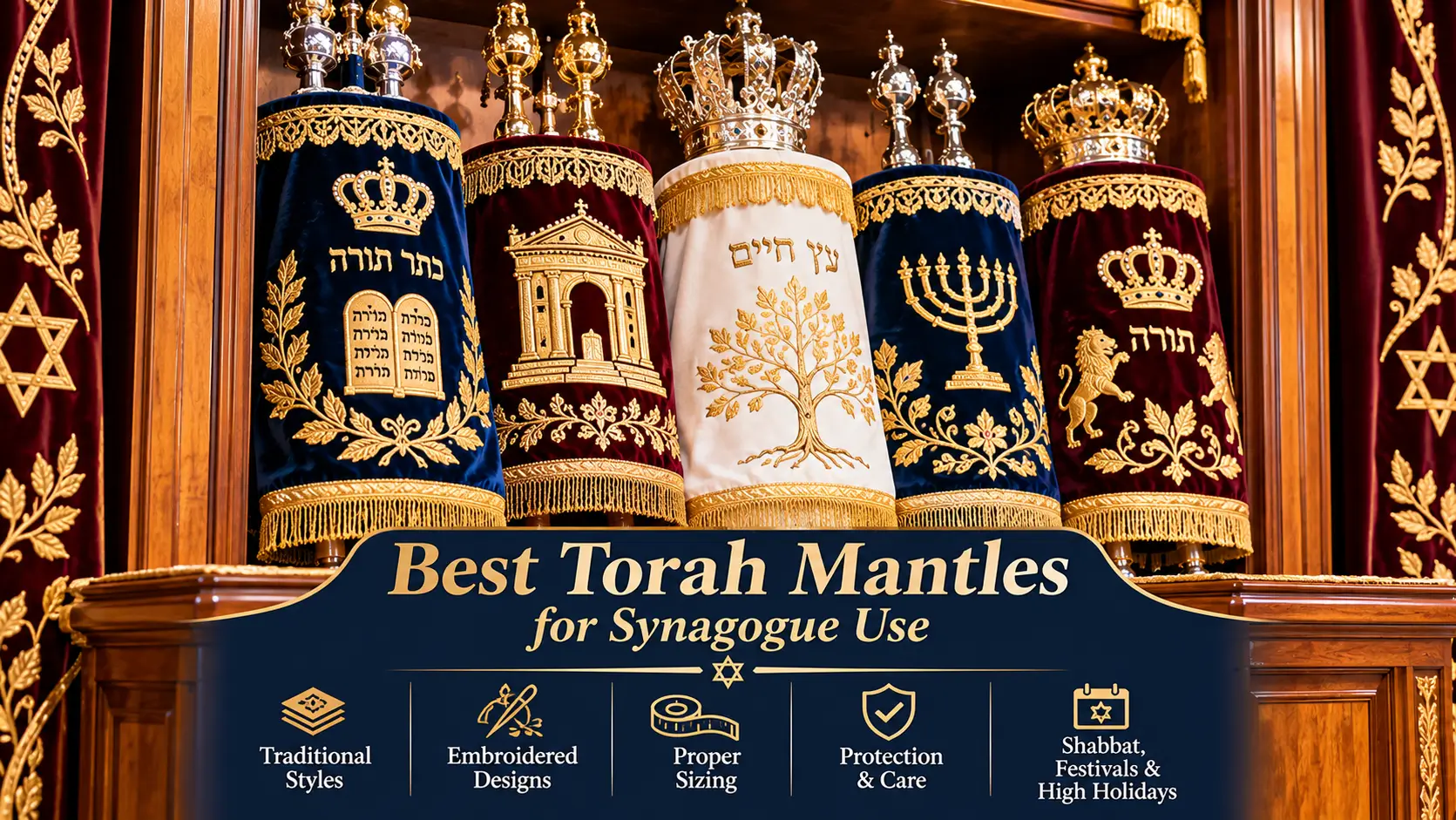
A Sefer Torah occupies a central place in Jewish religious life. Its presence in the Aron Kodesh, its removal for public reading, and its return after the service are all accompanied by customs that express Kavod HaTorah—the honor and reverence due to the Torah. Among the objects associated with this honor, the Torah mantle has an important practical and ceremonial role.
Choosing Torah mantles for synagogue use involves more than selecting an attractive fabric or embroidery design. A suitable mantle should fit the scroll correctly, protect it during ordinary synagogue use, reflect the congregation’s Minhag, and complement the other accessories used with the Sefer Torah.
Synagogues may also need different mantles for Shabbat, festivals, High Holidays, dedications, or other special occasions. Understanding the traditional purpose, construction, materials, and care requirements of these coverings helps synagogue leaders make informed decisions.
This guide explains how to choose Torah mantles for synagogue use, what features deserve attention, how communal customs influence the selection, and how to maintain a mantle respectfully.
1. What Is a Torah Mantle?
A Torah mantle is a protective and decorative covering traditionally placed around a Sefer Torah. It is especially associated with Ashkenazic communities, where the scroll is commonly stored and carried in a fabric mantle rather than enclosed in a rigid case.
The mantle serves two closely related purposes:
- Protection: It helps shield the Torah scroll from dust, incidental contact, and unnecessary exposure during storage and handling.
- Honor: Its design, materials, and decoration express the community’s respect for the sacred text.
The tradition of covering sacred objects is connected with the broader Jewish principle of treating holy items with dignity. A Torah mantle is therefore not simply a piece of synagogue decoration. It is part of the way a community expresses Kavod HaTorah.
Torah mantles and different Jewish traditions
The style of Torah covering varies among Jewish communities.
In many Ashkenazic congregations, the Sefer Torah is dressed in a fabric mantle, often accompanied by a belt and ornaments. The design may feature embroidered Hebrew lettering, crowns, tablets, or other traditional motifs.
Many Sephardic communities, by contrast, use a rigid cylindrical or protective case known as a Tik or תיק. These cases may be made from wood, metal, or other materials and are designed according to the community’s established tradition.
This distinction matters when selecting synagogue accessories. A mantle designed for a conventional Ashkenazic scroll should not be assumed to fit a Torah housed in a Sephardic case.
Synagogue leaders should follow their congregation’s Minhag and consult the Rabbi or Gabbai before changing an established arrangement.
2. What Makes the Best Torah Mantles for Synagogue Use?
The best Torah mantle is one that serves the scroll and the congregation’s needs. Appearance is important, but fit, construction, ease of handling, and compatibility with existing accessories deserve equal attention.
Before choosing a mantle, consider the following features.
Correct sizing and fit
A mantle must be suitable for the particular Sefer Torah. Scrolls differ in dimensions, roller construction, and the way they are dressed.
An incorrectly sized mantle can create practical problems. A covering that is too tight may be difficult to put on or remove. Excess fabric may become caught around the rollers, interfere with the belt, or make handling awkward.
Before ordering, confirm:
- The height and circumference of the dressed scroll.
- The dimensions and shape of the Atzei Chayim.
- The position and size of any existing ornaments.
- Whether the mantle includes an opening or arrangement for the rollers.
- How the covering will sit when the Torah is placed in the Aron Kodesh.
Measurements should be taken carefully, preferably with guidance from someone familiar with the scroll’s construction.
Secure construction
A Torah mantle is handled regularly. Its seams, lining, decorative elements, and closures should be constructed to withstand normal use without creating risks for the scroll.
Inspect the stitching around openings and stress points. Embroidery should be secure, and decorative components should not have sharp or exposed edges that could catch on the Torah’s parchment, rollers, or other coverings.
The interior should be smooth and free from loose threads, rough seams, or hard attachments that could rub against the scroll.
Ease of dressing and removal
A mantle should be manageable for the people responsible for dressing the Torah. If it requires excessive force or complicated adjustments, it may increase the risk of accidental damage during handling.
A well-considered design allows authorized handlers to put on and remove the covering without pulling, twisting, or placing unnecessary pressure on the scroll.
3. Choosing the Right Fabric for a Torah Mantle
Fabric affects the appearance, handling, and maintenance of a Torah mantle. Synagogues should consider how often the scroll is used, the storage environment, and the level of maintenance the congregation can provide.
Velvet Torah mantles
Velvet is a familiar choice for traditional synagogue mantles. Its rich texture provides a dignified appearance and works well with gold or silver embroidery.
Velvet mantles are often selected for Shabbat and festival use, as well as for special synagogue dedications.
However, velvet can collect dust and may require careful cleaning. Its pile can also show signs of wear in areas that are frequently handled.
Silk and satin mantles
Silk and satin offer a smoother appearance and can provide an elegant background for decorative embroidery.
These materials may be appropriate for special occasions or congregations seeking a particular traditional aesthetic. They should be selected with attention to durability, lining, and cleaning requirements.
Delicate fabrics may require more careful handling than heavier textiles.
Brocade and embroidered fabrics
Brocade and other decorative fabrics can incorporate traditional patterns, metallic threads, and symbolic designs.
They may be suitable for a synagogue mantle intended for regular use or for a special dedication, depending on the construction.
When choosing embroidered fabrics, pay attention to the reverse side of the embroidery. Loose threads, knots, or stiff backing materials should not create rough contact with the Torah scroll.
What should a synagogue prioritize?
Rather than choosing fabric solely by appearance, evaluate how it will perform in the congregation’s actual setting.
A mantle used frequently throughout the year may need a different maintenance approach from one reserved for particular festivals. The storage environment, frequency of handling, and cleaning options should all influence the decision.
4. Traditional Designs, Embroidery, and Symbolism
Torah mantles often incorporate visual elements associated with Jewish tradition. Their decoration may reflect the synagogue’s heritage, the occasion for which the mantle was commissioned, or the donor’s wishes.
Common decorative features include:
- Hebrew inscriptions and dedication text.
- The image of the Luchot HaBrit, the Tablets of the Covenant.
- Crowns representing Torah royalty and honor.
- Lions and other traditional decorative motifs.
- Floral patterns and geometric designs.
- Gold or silver-colored embroidery.
Hebrew inscriptions and dedication wording
Some mantles include a dedication in memory of a loved one or in honor of a family member, Rabbi, or community event.
Hebrew wording should be reviewed carefully before embroidery begins. Spelling, names, honorifics, dates, and the intended meaning should be checked by someone competent in Hebrew.
If a verse or sacred phrase is included, the congregation should seek appropriate Rabbinic guidance about the wording and its placement.
Designs should reflect the congregation’s Minhag
A mantle for an established Ashkenazic congregation may follow a different visual tradition from one intended for a Sephardic community or Chabad synagogue.
There is no need to impose one decorative style on every congregation. Respecting local custom is an important part of selecting appropriate synagogue Judaica.
5. Torah Mantles for Shabbat, Festivals, and High Holidays
Some synagogues use one mantle throughout the year. Others maintain several coverings for different occasions.
The choice depends on the congregation’s custom, available resources, and the number of Sifrei Torah in use.
Shabbat and regular synagogue services
A mantle used for regular Shabbat services should be practical, appropriately fitted, and easy for authorized handlers to manage.
Its fabric and embroidery should withstand repeated handling, storage, and dressing without becoming damaged.
Festivals and special occasions
Some communities maintain separate mantles for festivals or important communal events. These may feature distinctive colors, embroidery, or dedication details.
The choice should follow the synagogue’s Minhag and the guidance of its Rabbi. A decorative change should never interfere with the proper dressing or handling of the Torah.
High Holiday mantles
Certain congregations use special mantles for Rosh Hashanah and Yom Kippur. White is a familiar color in some communities, reflecting themes associated with purity, repentance, and the High Holiday season.
Customs vary, however, and white mantles are not universal. Synagogues should follow their established practice rather than assume that one color is required for every community.
6. Matching Torah Mantles with Torah Ornaments
A Torah mantle is often part of a larger arrangement of sacred accessories. Its design should work with the scroll’s other ornaments without making handling difficult.
Common accessories include:
- Torah Rollers (Atzei Chayim): The wooden rollers attached to the Torah parchment.
- Rimonim: Decorative finials placed on the upper ends of the rollers in communities that use them.
- Torah Crowns: Ornaments that may be placed above the rollers.
- Torah Breastplates: Decorative breastplates worn over the mantle in certain traditions.
- Yads – Torah Pointers: Pointers used during public Torah reading.
These items are traditionally associated with Kavod HaTorah, but their placement and use vary by custom.
Ensure ornaments do not damage the covering
Metal ornaments should be fitted securely and checked for sharp edges, loose components, or areas that may snag the fabric.
The mantle should not be stretched or compressed to accommodate an ornament. If an accessory does not fit properly, the arrangement should be reviewed rather than forced into place.
Synagogues looking to coordinate their Torah accessories can explore the Torah Ornaments, Rimonim, Torah Crowns, and Torah Breastplates categories.
7. How to Care for and Maintain Torah Mantles
Even a carefully selected mantle needs regular attention. Dust, frequent handling, storage conditions, and accidental spills can affect its appearance and condition.
A simple maintenance routine helps preserve the covering and reduces the chance that a damaged textile will affect the Torah scroll.
Inspect the mantle regularly
Check for:
- Loose embroidery or threads.
- Torn seams or damaged lining.
- Stains, dust, or unusual odors.
- Moisture or signs of mold.
- Damaged closures or decorative fittings.
- Rough areas that may catch against the scroll.
If a mantle becomes damp, it should not be returned to the Torah. Moisture can create conditions that are harmful to parchment and other materials.
Clean the mantle separately
A Torah mantle should be removed from the Sefer Torah before cleaning. Never apply cleaning chemicals, sprays, polish, or liquid treatments while the scroll is dressed.
The appropriate cleaning method depends on the textile and embroidery. Delicate velvet, silk, metallic threads, and lined fabrics may require specialist textile care.
Avoid aggressive brushing, excessive rubbing, or washing methods that could distort the fabric or damage the embroidery.
Store unused mantles properly
Keep spare mantles in a clean, dry, protected storage area. They should be fully dry before being placed in storage and should not be compressed under heavy objects.
If a mantle is reserved for a particular festival or occasion, label its storage location clearly so that it can be handled without unnecessary searching or movement.
8. Common Mistakes to Avoid When Buying Torah Mantles
A synagogue can avoid many practical problems by checking a few details before purchasing a mantle.
Choosing by appearance alone: An attractive design does not guarantee suitable sizing, construction, or ease of handling.
Ignoring the scroll’s dimensions: A mantle that does not fit correctly can become difficult to dress and may interfere with the rollers or ornaments.
Overlooking the congregation’s Minhag: The style of covering should be consistent with the synagogue’s tradition and the advice of its Rabbi.
Selecting difficult-to-maintain fabric: Delicate materials may require specialist cleaning and more careful storage.
Ignoring embroidery and lining: Loose threads, rough backing, and exposed attachments may create unnecessary friction.
Failing to coordinate accessories: The mantle should work with the Torah’s existing rollers, belt, and ornaments.
Not checking Hebrew inscriptions: Dedication text and sacred wording should be reviewed before the mantle is produced.
9. Explore Torah Mantles and Synagogue Judaica at SeferTorah.Net
Choosing a Torah mantle is an opportunity to care for the Sefer Torah while honoring the customs and identity of a Jewish congregation.
At SeferTorah.Net, synagogue leaders, Gabbaim, families, and individuals can explore the SEFER TORAH and SYNAGOGUE categories for products associated with Torah presentation and synagogue use.
Relevant categories include:
- Torah Mantles: Coverings for communities that use the traditional mantle style.
- Torah Scrolls: For those exploring Sefer Torah options.
- Sephardic Torah Cases: Protective cases used by communities following Sephardic traditions.
- Torah Rollers: Atzei Chayim and related Torah scroll components.
- Torah Ornaments: Decorative accessories associated with the honor of the Sefer Torah.
- Rimonim: Traditional finials for Torah rollers.
- Torah Crowns: Decorative crowns used according to communal custom.
- Torah Breastplates: Traditional ornaments worn over certain Torah mantles.
Before purchasing, confirm the dimensions and construction of the scroll, the congregation’s tradition, and compatibility with existing accessories. If the mantle is intended as a dedication gift, verify the inscription and relevant details before production.
Browse the Torah Mantles and SYNAGOGUE categories at SeferTorah.Net to explore coverings and related Judaica for your congregation.
Frequently Asked Questions About Torah Mantles
1. What is the purpose of a Torah mantle?
A Torah mantle is a covering traditionally placed around a Sefer Torah, particularly in Ashkenazic communities. It helps protect the scroll from dust and incidental contact while expressing Kavod HaTorah through its fabric, decoration, and respectful use.
2. Are Torah mantles used in every Jewish community?
No. Many Ashkenazic congregations use fabric mantles, while many Sephardic communities use rigid Torah cases known as Tiks. Customs differ among communities, so the appropriate covering should reflect the synagogue’s Minhag.
3. What fabric is best for a synagogue Torah mantle?
Velvet, silk, satin, and brocade are among the materials used for Torah mantles. The most suitable choice depends on the scroll’s dimensions, frequency of use, construction, cleaning requirements, and the congregation’s preferences.
4. How do I choose the correct size of a Torah mantle?
Measure the dressed Sefer Torah and consider the dimensions of its Atzei Chayim, ornaments, and other accessories. Confirm the mantle’s measurements with the supplier before ordering. A mantle should fit without excessive tightness or loose fabric that may become caught during handling.
5. Can a synagogue have different Torah mantles for Shabbat and festivals?
Yes. Some congregations maintain separate mantles for regular services, festivals, and High Holidays. These practices vary by Minhag. The synagogue’s Rabbi or Gabbai should guide the selection and use of different coverings.
6. Why do some Torah mantles have white fabric?
Some communities use white mantles for the High Holidays, particularly Rosh Hashanah and Yom Kippur. White is associated in certain traditions with themes of purity and repentance. However, this is not a universal custom, and congregations should follow their own practice.
7. How often should a Torah mantle be cleaned?
There is no single cleaning schedule suitable for every mantle. It should be inspected regularly and cleaned when necessary, taking account of the fabric and embroidery. Delicate or heavily embroidered mantles may require specialist textile care. Always remove the mantle from the Sefer Torah before cleaning.
8. Can Torah ornaments be used with any mantle?
Not necessarily. Compatibility depends on the scroll’s construction, the ornaments, and the congregation’s custom. Rimonim, Torah Crowns, and Torah Breastplates should be fitted securely without damaging the fabric or interfering with safe handling.
9. Can a Torah mantle be personalized for a synagogue dedication?
Many mantles include dedication inscriptions, names, dates, or commemorative wording. Hebrew spelling and the intended wording should be checked carefully before embroidery. A Rabbi or knowledgeable Hebrew reader should review sacred phrases and other religious details.
Conclusion: Choosing Torah Mantles with Kavod HaTorah in Mind
The best Torah mantles for synagogue use combine appropriate sizing, careful construction, practical protection, and respect for Jewish tradition. Their fabric and decoration may reflect the congregation’s heritage, but their primary purpose remains the dignified covering and handling of the Sefer Torah.
Before selecting a mantle, synagogue leaders should consider the scroll’s dimensions, the community’s Minhag, the suitability of the material, and compatibility with existing Torah Rollers and ornaments. Regular inspection and proper textile care help preserve the covering and support responsible synagogue practice.
Ultimately, choosing Torah mantles is not merely a decorative decision. It is one practical expression of Kavod HaTorah and the community’s commitment to honoring the Sefer Torah for generations.