


Synagogue Dedication Guide

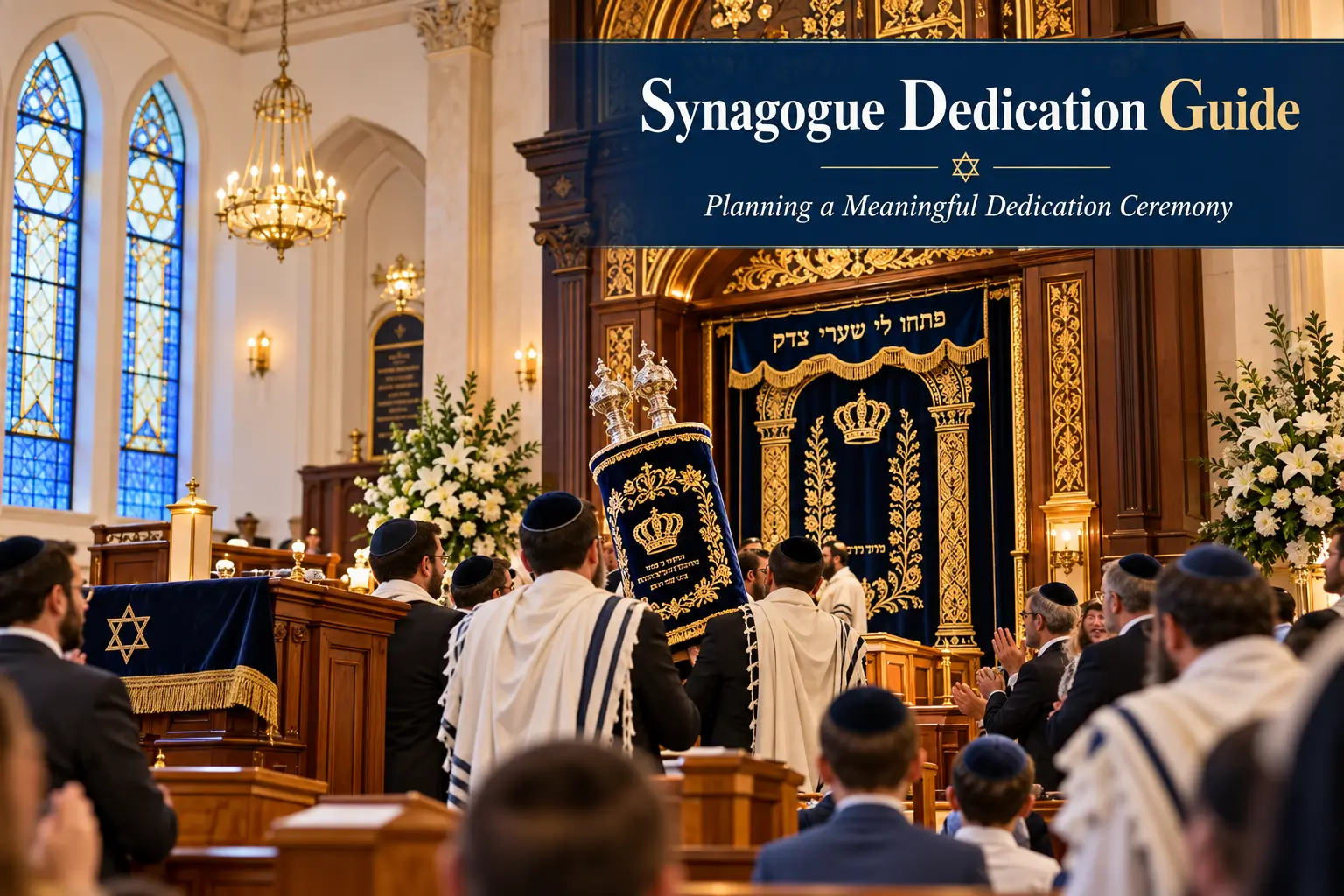
A synagogue dedication is a significant milestone in the life of a Jewish community. It may mark the opening of a new synagogue, the completion of a renovation, the installation of a Holy Ark, or the introduction of a newly commissioned Sefer Torah. Beyond the formal ceremony, a dedication recognizes the communal commitment, generosity, and continuity of Jewish life that make a place of prayer possible.
Planning such an occasion requires more than arranging a program and inviting guests. The congregation must consider the synagogue’s sacred spaces, the appropriate handling of ritual objects, the community’s customs, and the practical needs of worshippers. A well-organized Synagogue Dedication Guide helps synagogue leaders coordinate these details while preserving the dignity and religious significance of the occasion.
Because customs differ among Ashkenazic, Sephardic, Chabad, and other Jewish communities, the rabbi and appropriate communal authorities should guide decisions about prayers, ceremony, and Halachic requirements. The following guide covers the principal planning considerations, from preparing the building to selecting the Judaica that will serve the congregation for years to come.
1. Understand the Purpose of the Synagogue Dedication
Before setting a date or selecting ceremonial items, establish what the dedication is intended to commemorate.
Dedication of a New Synagogue
Opening a new synagogue brings together architectural preparation, communal organization, and the establishment of a place for regular prayer and Torah study. The congregation may wish to recognize donors, builders, community founders, and those who helped establish the institution.
Renovation or Expansion
A renovated synagogue may require a dedication or rededication to mark the completion of improvements to the sanctuary, Holy Ark, Bimah, lighting, accessibility, or communal facilities. The program should reflect the actual scope of the work rather than treating every renovation as an identical occasion.
Dedication of a Sefer Torah
A Torah dedication is a distinct occasion that may take place alongside the opening of a synagogue or as a separate communal event. When a new Sefer Torah is commissioned, the congregation should coordinate the writing, completion, inspection, transportation, and ceremonial arrangements with qualified religious authorities and the Sofer involved.
These occasions may overlap, but their practical and religious requirements are not interchangeable. Clarifying the purpose early helps determine the schedule, budget, participants, and Judaica required.
2. Consult the Rabbi and Communal Leadership
The rabbi should be involved from the earliest planning stage. Synagogue dedications can involve questions concerning prayer, the use of sacred spaces, the introduction of ritual objects, and community-specific Minhagim.
A planning committee may coordinate logistics, but it should not independently determine Halachic matters.
Discuss the following with the rabbi and synagogue leadership:
- The appropriate format and order of the dedication program.
- Which prayers, readings, or customary practices are suitable for the occasion.
- Whether the event includes a Sefer Torah dedication or the introduction of other sacred objects.
- Who will lead prayers, read from the Torah, or address the congregation.
- How ritual objects should be handled, transported, and installed.
- Which communal customs should guide the ceremony.
A Synagogue Dedication Guide should support these discussions rather than prescribe one ceremony for every community. Practices can differ according to local tradition, the nature of the occasion, and the guidance of the congregation’s religious leadership.
3. Prepare the Sanctuary and Sacred Spaces
The physical preparation of the synagogue deserves careful attention. The sanctuary should be ready for worship, with appropriate arrangements for the Torah, prayer, seating, and movement of the congregation.
The Holy Ark and Parochet
The Aron Kodesh is a central feature of the synagogue. Confirm that the Holy Ark is ready for its intended use and that its interior, doors, and surrounding area have been prepared appropriately.
A Parochet, or Holy Ark curtain, contributes to the dignity and appearance of the Ark. When selecting one, consider its dimensions, materials, design, and compatibility with the synagogue’s existing interior.
Explore the Parochets – Holy Ark Curtain collection when planning the furnishings for a new or renovated sanctuary. Confirm measurements and installation requirements before ordering.
The Bimah and Torah Reading Area
The Bimah should be arranged to accommodate the congregation’s Torah-reading practices. Consider the layout, accessibility, and safe placement of the Sefer Torah and related accessories.
A suitable Bima Cover can help define the reading area and coordinate the sanctuary’s visual presentation. Its dimensions and construction should suit the Bimah and the way it is used during services.
Seating, Lighting, and Accessibility
Check that the sanctuary can accommodate the expected attendance. Ensure that lighting is suitable for prayer and Torah reading, walkways remain clear, and older attendees and people with mobility needs can access the appropriate areas.
Complete these checks before the ceremony rather than relying on last-minute adjustments.
4. Select the Judaica Needed for the Synagogue
A new synagogue may require several ritual objects and furnishings. Prioritize items according to religious requirements, intended use, existing inventory, and budget.
Sefer Torah and Torah Accessories
If the congregation is commissioning or acquiring a Sefer Torah, consult qualified religious authorities regarding its suitability and the arrangements required before use. A Torah scroll’s status cannot be established by appearance alone.
SeferTorah.Net’s Torah Scrolls collection is a relevant starting point for exploring available options. Work with the appropriate experts when assessing a scroll and planning its preparation for communal use.
Other accessories may include:
- Torah Mantles: Protective coverings selected to suit the scroll and the congregation’s customs.
- Torah Crowns: Ornaments placed on the Torah rollers according to the community’s practice.
- Rimonim: Decorative finials fitted to the Torah rollers.
- Torah Breastplates: Ornaments placed on the front of a Torah mantle in communities that use them.
- Yads – Torah Pointers: Pointers used to follow the text during Torah reading.
The selection should reflect the synagogue’s needs, established traditions, and compatibility between individual items.
Shtenders and Other Furnishings
Shtenders, or book holders, may be useful for prayer leaders, Torah readers, and study areas. Choose furnishings that suit the intended users, room dimensions, and frequency of use.
A coordinated design can help create a consistent sanctuary, but visual uniformity should not take priority over suitability, safe use, or the congregation’s established customs.
5. Plan a Torah Dedication Within the Event
When a Sefer Torah dedication forms part of the synagogue opening, the arrangements require particular coordination.
The congregation should establish a schedule with the Sofer, rabbi, organizers, and any other appropriate participants. The precise process depends on the circumstances and communal tradition.
Planning considerations include:
- Confirm the scroll’s status. Arrange appropriate review and guidance before the scroll is introduced for communal use.
- Coordinate the ceremony. The rabbi should determine the appropriate religious elements and order of proceedings.
- Prepare the route and venue. Consider crowd movement, weather, transportation, and the safe handling of the scroll.
- Arrange suitable accessories. Confirm that the Torah mantle, rollers, and other items are appropriate for the scroll and the congregation’s practice.
- Communicate with attendees. Explain the schedule and any practical arrangements in advance.
If the Torah is still being completed, do not assume that the ceremony can proceed in the same way as one involving a scroll that has already been prepared for use. The rabbi and Sofer should advise on the appropriate arrangements.
6. Organize the Ceremony and Guest Experience
A dedication brings together worshippers, families, donors, community leaders, and visitors. A clear schedule helps the occasion remain dignified and manageable.
Depending on the event and the rabbi’s guidance, the program may include:
- Welcome and opening remarks.
- Prayers or readings selected by the religious leadership.
- Recognition of donors and community contributors.
- A Torah-related ceremony, if appropriate.
- Remarks from the rabbi or community representatives.
- A communal meal or reception.
Not every event requires every element. The program should reflect the occasion and the congregation’s traditions.
Assign responsibility for guest reception, seating, sound equipment, photography, catering, and cleanup. If photographs or video are planned, communicate the arrangements in advance and respect the congregation’s policies and participants’ needs.
7. Establish a Realistic Budget and Timeline
A dedication budget should cover both the ceremony and the long-term requirements of the synagogue.
Potential costs include building preparation, furnishings, Judaica, transportation, printing, catering, accessibility improvements, and contingency funds. If the event includes a new Sefer Torah, its commissioning and related arrangements should be budgeted separately and carefully.
Use a written checklist with a responsible person and deadline for each task. Major furnishings and custom-made ritual objects may require longer lead times than ordinary event supplies.
A practical planning sequence is:
- Early planning: Define the purpose, appoint the committee, consult the rabbi, and establish the budget.
- Procurement stage: Confirm measurements, identify required Judaica, obtain quotations, and place orders.
- Preparation stage: Finalize the program, confirm participants, inspect furnishings, and arrange logistics.
- Final checks: Test lighting and sound, prepare seating, confirm deliveries, and review the event schedule.
- After the event: Store equipment, record donations, review outstanding work, and establish maintenance responsibilities.
The schedule should be adjusted to the project’s scale. A major construction project or commissioned Sefer Torah may require substantially more preparation than a modest sanctuary renovation.
8. Recognize Donors Without Losing the Purpose of the Occasion
Synagogue dedications often involve substantial contributions from individuals and families. Recognition can express gratitude while preserving the communal character of the event.
Consider acknowledgments in the printed program, a suitable dedication plaque, or a formal expression of thanks. Consult the rabbi and leadership before deciding how names, inscriptions, and memorial dedications will appear in the synagogue.
Where Judaica is being dedicated in memory or in honor of someone, confirm the wording, placement, and long-term maintenance of any inscription. The item should remain suitable for its intended ritual use and the synagogue’s traditions.
The principle of Hidur Mitzvah, beautifying the performance of a mitzvah, is relevant to how Jewish communities approach the presentation of ritual objects. It should not, however, be used as a reason to exceed the congregation’s means or neglect essential needs.
9. Build a Long-Term Care Plan for Synagogue Judaica
The dedication marks the beginning of a synagogue’s ongoing responsibility to care for its sacred objects and furnishings.
Create an inventory recording each item’s description, dimensions, material, location, acquisition details, and recommended care. Assign responsibility for periodic inspections and safe storage.
For example:
- Inspect Torah mantles and other textiles for damage, loose stitching, or unsuitable storage conditions.
- Handle silver ornaments carefully and follow the manufacturer’s cleaning guidance.
- Check furnishings for stability and wear.
- Keep relevant product documentation and repair information.
- Seek qualified advice when an item’s condition or suitability for ritual use is uncertain.
For a Sefer Torah, questions of inspection, repair, or kosher status should be referred to an appropriately qualified Sofer or Halachic authority. Routine maintenance of the surrounding furnishings should never be confused with determining whether a sacred scroll is fit for use.
10. Choose Synagogue Judaica Through SeferTorah.Net
Selecting furnishings and ritual accessories is an important part of preparing a synagogue for communal life. The right choices depend on the sanctuary’s dimensions, the congregation’s traditions, the materials required, and the intended frequency of use.
SeferTorah.Net offers categories relevant to synagogue planning, including Torah Scrolls, Torah Mantles, Torah Ornaments, Rimonim, Torah Crowns, Torah Breastplates, Yads – Torah Pointers, Parochets, and Bima Covers.
When considering a purchase, verify dimensions, construction, finish, compatibility, and care requirements. For coordinated projects, it is useful to identify the main furnishings first and then select complementary items that fit the space and the congregation’s needs.
Browse the SeferTorah.Net store to explore available Judaica and synagogue accessories. For custom or coordinated selections, prepare a list of requirements and confirm product specifications before placing an order.
The goal is not simply to furnish a room. It is to prepare a place where prayer, Torah reading, learning, and communal life can continue with dignity.
Frequently Asked Questions About Synagogue Dedication Guide
1. What is a synagogue dedication?
A synagogue dedication marks the opening of a new synagogue, the completion of a significant renovation, or another milestone in the development of a Jewish communal space. The ceremony may include prayers, remarks, acknowledgments, and other elements selected by the rabbi and community leadership.
2. How do you plan a synagogue dedication ceremony?
Begin by defining the purpose of the event and consulting the rabbi. Establish a budget, appoint a planning committee, prepare the sanctuary, arrange the necessary Judaica, confirm participants, and create a practical schedule. Religious elements should be determined according to the congregation’s customs and appropriate Halachic guidance.
3. What Judaica is needed for a new synagogue?
Requirements depend on the congregation’s practices and existing inventory. Common items may include a Sefer Torah, Torah mantles, Torah rollers, a Parochet, a Bima Cover, and relevant Torah ornaments. Some communities also require Shtenders and other furnishings. Confirm religious requirements with the rabbi before purchasing.
4. What is the difference between a synagogue dedication and a Torah dedication?
A synagogue dedication marks a milestone involving the communal prayer space. A Torah dedication specifically concerns the introduction or commissioning of a Sefer Torah. Both may take place at the same event, but a Torah dedication involves additional considerations relating to the scroll, its preparation, and its appropriate use.
5. Who should oversee the religious aspects of a synagogue dedication?
The congregation’s rabbi should guide the religious program and consult other qualified authorities when needed. A planning committee can coordinate the venue, schedule, purchases, and guest arrangements, while Halachic questions should be referred to appropriate religious authorities.
6. How far in advance should a synagogue dedication be planned?
The timeline depends on the scale of the project. A modest rededication may require less preparation than a new synagogue, a major renovation, or a commissioned Sefer Torah. Begin early enough to complete construction, confirm custom-made furnishings, coordinate religious arrangements, and manage invitations without unnecessary pressure.
7. How should a synagogue choose Torah ornaments?
Consider the congregation’s Minhag, the type and dimensions of the Torah rollers, the ornament’s construction, and how it will be handled during services. Torah crowns, Rimonim, and Torah breastplates have different forms and uses. Confirm compatibility and customary practice before ordering.
8. Can a synagogue dedicate Judaica in someone’s honor or memory?
Many communities recognize donors or dedicate furnishings and ritual objects in someone’s honor or memory. The wording, placement, and form of recognition should be agreed upon with synagogue leadership and should respect the congregation’s customs and policies.
9. How should synagogue Judaica be maintained after the dedication?
Maintain an inventory, follow manufacturer care instructions, store items appropriately, and inspect textiles, metalwork, and furnishings periodically. For a Sefer Torah’s condition or kosher status, consult a qualified Sofer or Halachic authority rather than relying on ordinary visual inspection.
10. Where can a synagogue purchase Judaica for a dedication?
Synagogue leaders can explore SeferTorah.Net for Torah Scrolls, Torah Mantles, Torah Crowns, Rimonim, Torah Breastplates, Yads, Parochets, Bima Covers, and related Judaica. Before purchasing, confirm dimensions, material specifications, compatibility, availability, and delivery timing.
Conclusion
A synagogue dedication represents a meaningful step in the life of a Jewish community. Careful planning helps ensure that the building is ready, sacred objects are selected appropriately, the ceremony reflects the congregation’s traditions, and practical arrangements support everyone attending.
Use this Synagogue Dedication Guide as a framework for coordinating the project, while relying on the rabbi and qualified specialists for religious and Halachic decisions. From preparing the Holy Ark and Bimah to selecting Torah mantles, ornaments, and other furnishings, each decision should serve the synagogue’s purpose and long-term needs.
With thoughtful preparation and ongoing care, a dedication can establish a strong foundation for generations of prayer, Torah study, and communal life.