


How Much Does a Sefer Torah Cost?

A Sefer Torah is among the most treasured sacred objects in Jewish life. Unlike mass-produced religious books, every kosher Torah Scroll is handwritten letter by letter by a qualified Sofer STa”M, following centuries-old Halachic requirements that govern every aspect of its preparation. The writing process demands exceptional skill, concentration, and yirat shamayim, ensuring that each Torah Scroll is suitable for public Torah reading and fulfills the mitzvah according to Jewish law.
For individuals, synagogues, schools, and Jewish organizations considering the purchase of a Torah Scroll, one of the first questions is naturally:
How Much Does a Sefer Torah Cost?
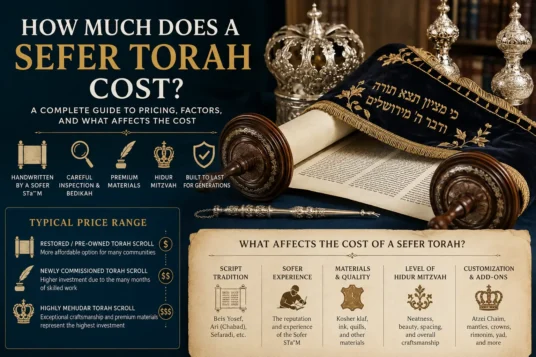
The answer is more complex than a single price. The cost of a Sefer Torah varies according to numerous factors, including the script tradition, the experience of the sofer, the level of hidur mitzvah, the quality of the parchment and ink, the amount of decorative work, and whether the scroll is newly commissioned or previously owned and restored.
Understanding these differences allows buyers to make informed decisions that balance budget, communal needs, and long-term value.
Why Does a Sefer Torah Cost So Much?
Unlike many religious artifacts, a Torah Scroll cannot be manufactured by machine. Every one of the 304,805 Hebrew letters must be written by hand with complete precision using traditional materials prepared lishmah—for the specific purpose of writing a Sefer Torah.
A single missing letter, cracked letter, improperly formed character, or spacing issue may render the Torah Scroll pasul (invalid) until corrected by a qualified sofer.
The process typically includes:
- Preparing kosher klaf (parchment)
- Writing every letter by hand
- Careful adherence to Halachic requirements
- Multiple rounds of manual inspection
- Computer-assisted bedikah b’machshev to identify potential textual issues
- Final review by experienced STa”M professionals
Depending on the complexity of the commission, writing a new Sefer Torah may require approximately one year of dedicated work. This extraordinary investment of time, craftsmanship, and religious responsibility is one of the primary reasons a kosher Torah Scroll represents a significant financial commitment.
The Primary Factors That Influence Sefer Torah Pricing
No two Torah Scrolls are exactly alike. While buyers often compare prices, knowledgeable communities understand that the true value lies in the quality of the writing, the reliability of the sofer, and the scroll’s long-term Halachic integrity.
Several important factors influence the overall cost.
Script Tradition (Ketav)
Different Jewish communities follow different scribal traditions.
These include:
- Ketav Beis Yosef, commonly used by Ashkenazic communities.
- Ketav Ari (Arizal), widely used by Chabad and many Hasidic communities.
- Ketav Sefaradi, written according to Sephardic STa”M traditions.
Each script requires specialized training, and experienced sofrim often dedicate years to mastering a particular writing tradition. Community minhag therefore plays an important role when commissioning a Torah Scroll.
Readers interested in the differences between these traditions can explore our Torah Scrolls collection, where we present examples of the major script styles available.
Experience of the Sofer
Not every sofer has the same level of experience.
A sofer who has written dozens of Torah Scrolls over many years generally commands a higher fee than someone beginning his professional career.
Buyers often consider:
- Years of STa”M experience
- Reputation within the Jewish community
- Accuracy and consistency of writing
- Recognition by respected rabbinic authorities
- Commitment to ongoing Halachic standards
Since a Torah Scroll may serve a congregation for generations, many communities view the reputation of the sofer as one of the most important considerations.
Quality of Materials
The materials used throughout the writing process also affect pricing.
These include:
- Kosher parchment (klaf)
- Traditional STa”M ink
- Quills and writing instruments
- Stitching materials
- Wooden rollers (Atzei Chaim)
The preparation of these materials follows strict Halachic guidelines, and higher-grade materials contribute to both the longevity and appearance of the completed Torah Scroll.
Level of Hidur Mitzvah
Jewish tradition encourages hidur mitzvah—beautifying the performance of a mitzvah whenever possible.
For a Sefer Torah, this may include:
- Exceptionally consistent lettering
- Elegant spacing throughout the scroll
- Superior parchment preparation
- Distinguished calligraphic quality
- Greater visual harmony across all columns
While every kosher Torah Scroll fulfills the mitzvah, many congregations choose to invest in enhanced craftsmanship that reflects the central role of the Torah within communal worship.
New Torah Scroll vs. Restored Torah Scroll
One of the most significant pricing considerations is whether to commission a brand-new Torah Scroll or purchase a carefully restored existing scroll.
A newly commissioned Sefer Torah offers complete customization, allowing buyers to select their preferred script tradition, writing style, dedication opportunities, and other specifications from the very beginning of the project.
A professionally restored Torah Scroll, however, may represent an excellent alternative for communities seeking a meaningful Torah at a more accessible cost. Restoration can include replacing damaged sections, correcting invalid letters, repairing stitching, and conducting a complete Halachic inspection to ensure the scroll is suitable for continued public use.
For many congregations, both options deserve careful consideration depending on budget, intended use, and communal priorities.
Typical Price Ranges for a Sefer Torah
Because every Torah Scroll is individually handwritten, pricing is best understood as a range rather than a fixed amount. Factors such as the script tradition, the reputation of the Sofer STa”M, the level of craftsmanship, and whether the scroll is newly commissioned or restored all contribute to the final investment.
Generally, buyers can expect:
- Restored or pre-owned Torah Scrolls to provide a more economical option for congregations with limited budgets.
- Newly commissioned Torah Scrolls to represent a greater investment due to the many months of skilled work involved.
- Highly mehudar Torah Scrolls, written by renowned sofrim using exceptional materials and meticulous craftsmanship, to command the highest prices.
Rather than focusing solely on cost, experienced buyers often evaluate the Torah Scroll’s long-term Halachic reliability, craftsmanship, and suitability for their community’s minhag.
Additional Items That May Affect Your Budget
Purchasing a Torah Scroll often involves more than acquiring the scroll itself. Many synagogues and families also choose complementary items that protect, beautify, and honor the Torah during public reading.
Depending on your needs, you may also consider:
- Torah Mantles to protect and adorn the scroll.
- Torah Crowns and Rimonim that reflect the dignity of the Sefer Torah.
- Torah Breastplates (Hoshen) for ceremonial decoration.
- Torah Pointers (Yad) used during Torah reading.
- Atzei Chaim (Torah Rollers) where applicable.
- Protective storage and transportation accessories.
Selecting these items together helps create a coordinated presentation while fulfilling the principle of hidur mitzvah.
Commissioning a New Sefer Torah
For many Jewish communities, commissioning a new Torah Scroll is a once-in-a-generation milestone. Beyond acquiring a sacred object, the project often becomes a meaningful communal experience that strengthens Jewish identity and participation.
Many Torah projects include opportunities for:
- Family dedications
- Memorial inscriptions
- Bar Mitzvah participation
- Community writing ceremonies
- Synagogue fundraising initiatives
- Educational programs centered around the mitzvah of writing a Torah Scroll
Because the writing process extends over many months, families and congregations frequently participate throughout the project, culminating in a joyful Hachnasat Sefer Torah celebration.
How to Choose the Right Torah Scroll
Price should never be the only consideration when selecting a Sefer Torah.
Experienced buyers typically evaluate several important factors:
Community Tradition
The Torah Scroll should reflect the minhag of the congregation, whether Ashkenazic, Sephardic, Chabad, or another established Jewish tradition.
Intended Use
A Torah Scroll used daily in an active synagogue may have different requirements than one intended for a school, private chapel, or collector.
Halachic Standards
Always ensure the scroll has been written and inspected according to accepted STa”M standards by qualified sofrim.
Future Maintenance
Like all sacred STa”M writings, a Torah Scroll requires periodic inspection. Proper storage, handling, and routine bedikah help preserve its kosher status for many years.
Why Purchase a Torah Scroll Through SeferTorah.Net?
Purchasing a Sefer Torah is not a routine transaction—it is an important Halachic decision that deserves knowledgeable guidance.
At SeferTorah.Net, we work closely with communities, rabbis, schools, and private buyers to help them identify the Torah Scroll most appropriate for their tradition, intended use, and budget. In addition to our available inventory, we can often source additional Torah Scrolls and discuss custom writing projects that may not yet appear on our website.
Our collection includes:
- New Torah Scrolls
- Carefully restored Torah Scrolls
- Ketav Beis Yosef, Ketav Ari, and Ketav Sefaradi traditions
- Torah ornaments and synagogue accessories
- Torah mantles, breastplates, crowns, and Torah Pointers
- Guidance for synagogue dedications and community Torah projects
Whether you are purchasing your first Sefer Torah or adding another scroll to an established congregation, our team is available to answer questions and provide informed recommendations based on decades of experience in Judaica and STa”M.
By exploring our Torah Scrolls, Torah Ornaments, Torah Mantles, Torah Crowns, Rimonim, and Torah Pointers collections, you can also find the complementary items needed to honor and preserve your Torah for generations.
Expert Advice Before Making Your Decision
Communities often spend months planning the purchase of a Sefer Torah, and with good reason. A carefully chosen scroll can serve thousands of Torah readings over many decades while becoming the spiritual centerpiece of synagogue life.
Before making your decision, consider speaking with your Rav, discussing your community’s specific minhag, and working with an experienced Judaica specialist who understands the practical and Halachic considerations involved. Investing time in these discussions helps ensure that your Sefer Torah will continue to inspire future generations while meeting the highest standards of Jewish tradition.
Frequently Asked Questions
1. How much does a Sefer Torah cost?
The cost of a Sefer Torah varies depending on numerous factors, including whether the scroll is newly commissioned or restored, the script tradition (Ketav Beis Yosef, Ketav Ari, or Ketav Sefaradi), the experience of the Sofer STa”M, the quality of the parchment and ink, and the overall level of hidur mitzvah. Because every Torah Scroll is handwritten, each project is individually priced. We encourage buyers to contact SeferTorah.Net to discuss their specific requirements and receive personalized guidance.
2. Why is a handwritten Sefer Torah so expensive?
Writing a kosher Sefer Torah is one of the most demanding forms of Jewish scribal work. Every one of the 304,805 letters must be written by hand according to strict Halachic requirements. The process requires months of dedicated work by a qualified Sofer STa”M, followed by detailed manual inspection and bedikah b’machshev (computer-assisted checking) to ensure the Torah Scroll is suitable for public reading.
3. Is a restored Torah Scroll a good alternative to a new one?
Yes. A professionally restored Torah Scroll can be an excellent choice for synagogues and communities seeking a meaningful and more economical option. Before being offered for use, restored scrolls should undergo thorough Halachic inspection, necessary repairs, and verification by qualified sofrim to confirm their kosher status.
4. Which script tradition should I choose?
The appropriate script depends on your community’s minhag. Ashkenazic congregations commonly use Ketav Beis Yosef, many Chabad and Hasidic communities prefer Ketav Ari, while Sephardic communities traditionally use Ketav Sefaradi. If you are uncertain, consult your Rav or speak with our experienced team for guidance.
5. How long does it take to write a Sefer Torah?
A newly commissioned Sefer Torah generally requires approximately one year to complete, although the exact timeline depends on the sofer’s schedule, the complexity of the project, and any custom dedication arrangements. Because every letter is handwritten lishmah, the process cannot be rushed without compromising the standards required by Halacha.
6. How often should a Torah Scroll be inspected?
Like all sacred STa”M writings, a Torah Scroll should undergo periodic bedikah by a qualified sofer. Regular inspections help identify worn letters, damaged stitching, fading ink, or other issues that may affect the scroll’s kosher status. Proper storage and careful handling also contribute significantly to its long-term preservation.
7. Can a synagogue commission a custom Torah Scroll?
Absolutely. Many congregations choose to commission a Torah Scroll specifically for a synagogue dedication, anniversary, memorial, or educational project. Custom commissions often include opportunities for community participation, dedication inscriptions, and ceremonial writing events that make the project especially meaningful.
8. What other items should I purchase with a Sefer Torah?
Many buyers also select complementary synagogue items such as Torah Mantles, Torah Crowns, Rimonim, Torah Breastplates (Hoshen), Torah Pointers (Yad), and other Torah ornaments. These accessories protect the Torah Scroll while expressing kavod haTorah and the principle of hidur mitzvah.
9. How do I know if a Torah Scroll is kosher?
A kosher Sefer Torah must be handwritten by a qualified Sofer STa”M using approved materials prepared according to Halacha. It should also undergo careful manual review together with modern bedikah b’machshev to verify textual accuracy. Purchasing from an experienced Judaica specialist helps ensure these standards have been met.
10. Can SeferTorah.Net help me choose the right Torah Scroll?
Yes. Our team works with synagogues, schools, rabbis, collectors, and private buyers to identify the Torah Scroll best suited to their tradition, intended use, and budget. Whether you are purchasing your first Torah Scroll, replacing an existing one, or commissioning a new writing project, we are happy to provide knowledgeable guidance throughout the process.
Conclusion
Understanding how much a Sefer Torah costs involves much more than comparing prices. Every Torah Scroll reflects months of sacred work, generations of Jewish scribal tradition, and unwavering commitment to Halacha, STa”M craftsmanship, and the sanctity of the Torah itself. Factors such as script tradition, the experience of the sofer, the quality of materials, and the level of hidur mitzvah all contribute to the value of a Torah Scroll that may serve a Jewish community for generations.
Whether you are exploring the purchase of a newly commissioned Torah Scroll, considering a carefully restored scroll, or planning a synagogue dedication project, making an informed decision begins with expert guidance. At SeferTorah.Net, we are committed to helping congregations, schools, and private buyers navigate every stage of the process with confidence and respect for Jewish tradition.
Browse our collections of Torah Scrolls, Torah Ornaments, Torah Mantles, Torah Crowns, Rimonim, and Torah Pointers, or contact our team to discuss your specific requirements. We are always happy to help you find or commission a Sefer Torah that reflects your community’s minhag, fulfills the highest Halachic standards, and becomes a lasting source of inspiration for generations to come.