


Wooden vs Silver Torah Rollers: Which Is Better?

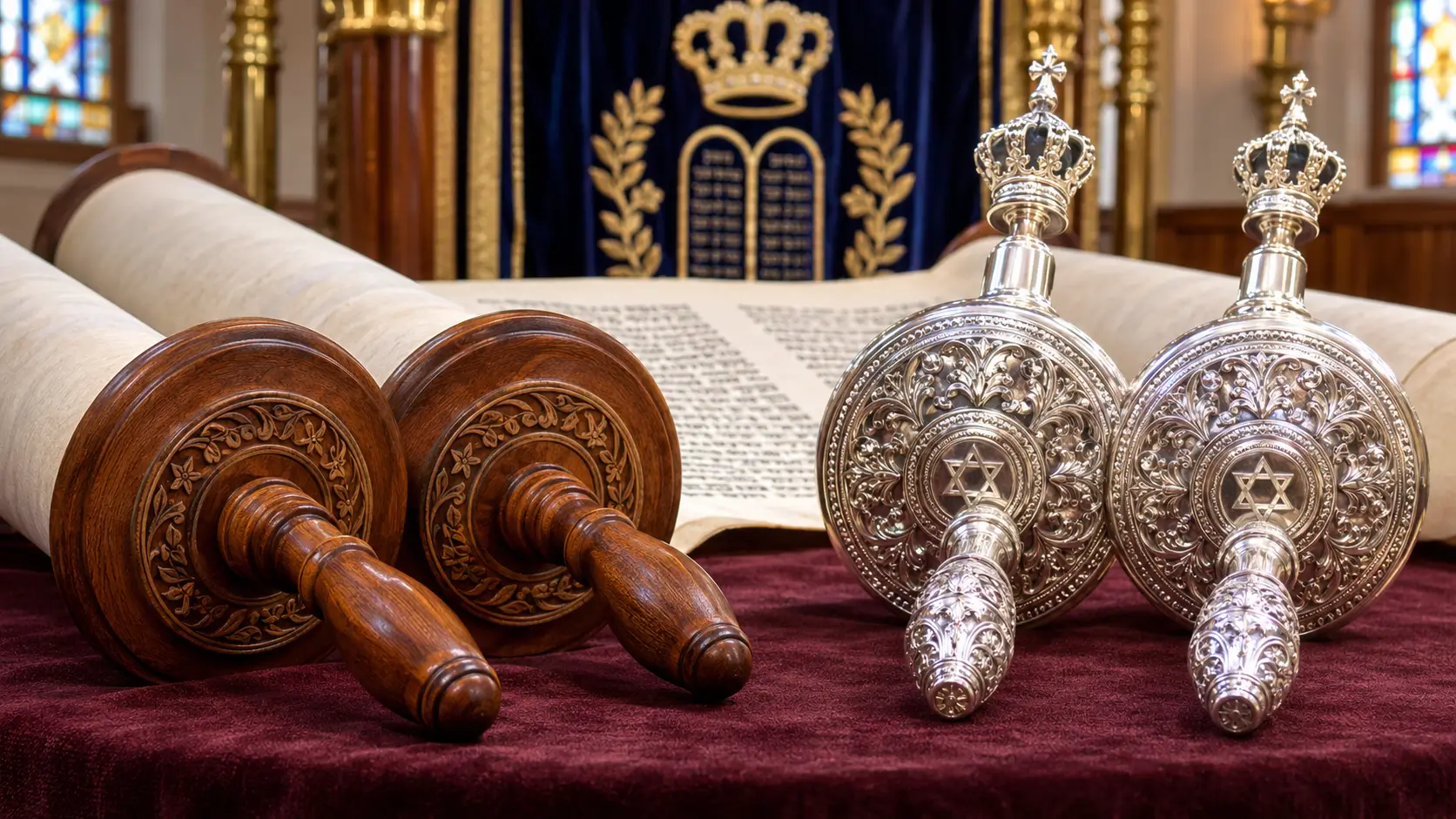
A Sefer Torah is handled with care and reverence throughout its use in the synagogue. Every part of its construction and presentation has a purpose, including the two rollers known as Atzei Chayim. These handles allow the scroll to be opened, closed, and positioned for public reading while helping prevent unnecessary handling of the parchment.
When choosing new rollers, synagogue leaders and Torah owners often compare wooden designs with silver or silver-ornamented options. The question, “Wooden vs Silver Torah Rollers: Which Is Better?”, is not simply about appearance. It involves construction, balance, handling, durability, community custom, and the principle of Hidur Mitzvah—beautifying a mitzvah.
The most important distinction is that many products described as silver Torah rollers are not made entirely of silver. They often combine a solid wood structure with sterling silver or silver-plated decorative elements. Understanding that difference makes it easier to choose rollers that are both practical and appropriate for the Sefer Torah.
What Are Atzei Chayim Torah Rollers?
Atzei Chayim (עצי חיים), commonly translated as “Trees of Life,” are the two shafts attached to the ends of a Torah scroll. The parchment is rolled around them, and the shafts extend beyond the top and bottom edges so that the scroll can be held and turned during Torah reading.
Each roller serves a practical purpose. One side supports the portion already read, while the other allows the reader to advance to the next section. The rollers also provide a way to handle the scroll without touching the parchment directly with bare hands.
Although the traditional name refers to wooden rollers, contemporary Atzei Chayim may incorporate different materials and decorative finishes. A design may have a wood core, silver plates, ornamental crowns, or sterling silver spindles. The construction of the complete pair matters more than the material named in a product description.
Wooden vs Silver Torah Rollers: Understanding the Difference
Before comparing the two options, it is important to define what the terms usually mean.
Traditional Wooden Torah Rollers
Wooden Atzei Chayim are a longstanding and familiar design in many Ashkenazic communities. They may be made from hardwood and finished in light, dark, or natural tones. Their appearance can be simple and understated, or they may include decorative plates and engraved details.
Wood provides a practical structural foundation. The weight, density, finish, and dimensions of the wood all influence how the rollers feel when the Torah is opened and closed. A well-fitted wooden pair should be balanced for the particular scroll rather than selected only by its appearance.
Wooden rollers can also be combined with metal fittings or protective components. Therefore, choosing a wooden design does not mean choosing an entirely undecorated product.
Silver and Silver-Decorated Torah Rollers
Silver Torah rollers are often selected for their decorative character and their connection to the honor given to the Sefer Torah. Depending on the model, silver may appear as plates, crowns, spindles, handles, or other ornamental details.
Some designs combine a solid wood body with .925 sterling silver components. Others may use silver plating or different metal finishes. These are not interchangeable descriptions: sterling silver, silver-plated metal, and silver-colored finishes have different material compositions and values.
A wood-and-silver design can combine the structural qualities of wood with the appearance of finely worked silver. For example, SeferTorah.Net offers a dark wood roller design with an ornate silver plate and optional .925 sterling silver spindle and crown selections. Sefer Torah
The buyer should always confirm which parts are solid silver, which are plated, and which are made from another material before comparing prices.
Is Silver Better According to Jewish Tradition?
The choice of material should be considered in the context of Kavod HaTorah—the honor due to the Torah—and Hidur Mitzvah, the principle of beautifying a mitzvah.
The name Atzei Chayim reflects the traditional wooden form, but it does not mean that every component must remain exclusively wood. Chabad’s discussion of the Torah rollers explains that the poles need not be made specifically of wood and that beautifying them with silver is praiseworthy.
This distinction is important. Silver decoration can be an expression of Hidur Mitzvah, but it should not be confused with a universal requirement that every Sefer Torah have silver rollers.
Jewish communities also maintain different traditions in how a Sefer Torah is housed and presented. Many Ashkenazic congregations use a scroll with Atzei Chayim and a mantle, while many Sephardic and Mizrahi communities traditionally use an upright Torah case, known as a Tik. Local custom should be respected when selecting or replacing Torah fittings.
For a synagogue considering a significant change to an existing Sefer Torah, it is sensible to consult its rabbi or Sofer before proceeding.
Wooden vs Silver Torah Rollers: Practical Comparison
The right choice depends on how the rollers are constructed and how they will be used. The following comparison highlights the main considerations.
| Consideration | Wooden Rollers | Silver or Wood-and-Silver Rollers |
|---|---|---|
| Appearance | Traditional, simple, and understated | More decorative and ceremonial |
| Construction | Commonly a wood structure | Often wood with silver components |
| Weight | Depends on the wood and dimensions | Depends on the amount and type of metal used |
| Cost | Often more economical | Usually higher when sterling silver or extensive ornamentation is used |
| Customization | Finishes and some decorative details | May offer silver plates, crowns, spindles, and engraving |
| Maintenance | Protect from moisture, impact, and surface damage | Requires care for both the wood and metal finishes |
Neither material automatically guarantees better handling or longer service. A poorly balanced silver-decorated pair may be less comfortable than a well-made wooden pair. Similarly, an inexpensive wooden design may not be suitable for a particularly large or heavy scroll.
The actual dimensions, workmanship, construction, and fit should guide the decision.
Durability, Weight, and Handling: What Should You Consider?
1. The Weight of the Complete Pair
The weight of Atzei Chayim affects how a Sefer Torah is handled. A heavier design may feel substantial, but additional weight is not automatically an advantage. The scroll’s dimensions and weight should be considered together with the rollers.
Metal ornaments can add weight, particularly when substantial silver components are used. However, the final weight depends on the design, the wood core, and the amount of metal incorporated.
For a Torah used frequently in public services, comfortable handling and balanced construction deserve particular attention.
2. Smooth and Secure Rolling
The rollers must allow the parchment to move smoothly without unnecessary strain. Their alignment, shaft construction, attachment, and overall fit are important.
A decorative design should never be selected at the expense of practical function. If the rollers are being replaced, the existing scroll should be measured and assessed by someone familiar with Torah scroll construction.
3. Protection of the Klaf
The klaf is the parchment on which the Torah text is written. Its preservation is essential. Some modern roller designs include protective features intended to reduce the risk of the parchment becoming caught, rubbing against fittings, or suffering avoidable damage.
A protective feature should be assessed by its actual construction and compatibility with the scroll. Do not assume that every wooden or silver model includes the same protection.
4. Long-Term Care
Wood should be protected from excessive moisture, direct heat, and accidental impact. Silver components may require appropriate cleaning to manage tarnishing, but abrasive products or aggressive polishing should be avoided unless the manufacturer or a qualified Judaica conservator confirms that they are suitable.
Care should be taken not to allow cleaning agents, loose metal fittings, or polishing cloths to come into contact with the Torah parchment.
How to Choose the Right Torah Rollers for Your Sefer Torah
A thoughtful purchase begins with the scroll itself, not the catalogue photograph. Consider the following points before ordering.
Measure the klaf. Confirm the height of the parchment and the required roller dimensions. Do not rely on the dimensions of another synagogue’s Torah, even if the scroll appears similar.
Consider the scroll’s weight and handling requirements. A larger scroll may require a different balance and construction from a smaller one. Ask about the finished weight and the roller’s suitability for the specific Sefer Torah.
Confirm the materials. If a product is described as silver, ask whether it uses .925 sterling silver, silver plating, or another finish. Confirm which parts contain the stated material.
Review the construction. Check the shaft, plates, spindle, crown, joining mechanism, and any protective components. Ask how the rollers are assembled and whether they are designed for the intended use.
Consider synagogue custom. The style should complement the congregation’s existing Torah ornaments and established practice. A coordinated appearance can be desirable, but it should not override practical requirements.
Ask about fitting and installation. Atzei Chayim are attached to the Torah scroll. Replacing them is not simply a matter of exchanging decorative handles. A qualified Sofer or experienced professional should assess the scroll and carry out the work appropriately.
Explore Atzei Chayim Torah Rollers at SeferTorah.Net
Choosing Torah rollers is an opportunity to bring together practical craftsmanship and the dignity of the Sefer Torah. Whether your synagogue prefers the traditional appearance of wooden rollers or the added ornamentation of silver-accented designs, the right selection should suit the scroll’s dimensions, handling requirements, and community custom.
SeferTorah.Net offers a collection of Atzei Chayim Torah Rollers, including dark wood and light wood options. Certain designs also feature silver plates, decorative spindle choices, optional memorial plates, and custom dedication engraving.
For example, the Torah Rollers – D91 Plate with Different Spindle Options combines a dark wood structure with an ornate silver plate. The listed options include different spindle and crown selections, optional memorial plates, and klaf-height choices. Buyers can review the specifications and provide the scroll measurements when selecting a suitable configuration. Sefer Torah
You can also explore the full Atzei Chayim Torah Rollers collection to compare available styles.
If you are replacing existing rollers, preparing a newly commissioned Sefer Torah, or selecting a dedication gift for a synagogue, contact SeferTorah.Net for assistance in identifying a suitable design. Providing the klaf measurements and details about the intended use will help make the selection more accurate.
Frequently Asked Questions
1. Are wooden or silver Torah rollers better?
Neither is automatically better. Wooden rollers offer a traditional appearance and practical construction, while silver-decorated rollers add ornamental detail and may express Hidur Mitzvah. The best option depends on the scroll’s size, weight, handling requirements, synagogue custom, and the quality of the specific design.
2. Are silver Torah rollers made entirely of silver?
Not necessarily. Many designs combine a solid wood core with sterling silver or silver-plated decorative components. Some may have silver plates, crowns, or spindles while retaining wooden shafts. Always check the product specifications to confirm the exact materials.
3. Does Halacha require Torah rollers to be made of wood?
The traditional Atzei Chayim are wooden shafts, but the material is not universally restricted to wood. Chabad’s explanation of the Torah rollers notes that the poles need not be specifically wooden and that silver embellishment can be a praiseworthy way to beautify them. Specific community practices should still be respected. chabad.org
4. Do silver Torah rollers protect the Sefer Torah better?
Not simply because they contain silver. Protection depends on the complete design, the fit, the alignment, and any protective features incorporated into the rollers. A well-fitted wooden pair may protect a scroll just as effectively as a silver-decorated pair.
5. Are wooden Torah rollers lighter than silver ones?
They often can be, but this depends on the materials and construction. A wood-and-silver design may contain substantial metal components, while a carefully constructed wooden design may be relatively lightweight. Ask for the finished weight if handling is a major consideration.
6. What does .925 sterling silver mean on Torah rollers?
The designation .925 means that the silver alloy contains 92.5% pure silver, with the remaining percentage consisting of other metals, commonly copper. When a Torah roller is advertised with .925 sterling silver components, confirm which specific parts are made from that alloy.
7. Can I replace the wooden rollers on an existing Sefer Torah with silver ones?
In many cases, replacement or upgrading is possible, but the scroll’s dimensions, construction, and existing attachments must be assessed. The work should be arranged through a qualified Sofer or an experienced professional who understands how Atzei Chayim are attached to the parchment.
8. How do I know what size Torah rollers to order?
Start by measuring the height of the klaf, rather than estimating from the external appearance of the scroll. The roller dimensions should provide suitable clearance and comfortable handling. If you are unsure how to measure, ask the supplier or your Sofer for guidance before ordering.
9. Can Torah rollers be personalized with a memorial dedication?
Many decorative designs offer engraving or memorial plates. These may be used to commemorate a loved one, recognize a family donation, or mark a synagogue dedication. Confirm the available engraving area, language, spelling, and placement before approving the design.
10. How should I clean and maintain silver-decorated Torah rollers?
Use care when cleaning both the wood and metal components. Avoid harsh chemicals, abrasive polishing materials, and excessive moisture. Follow the manufacturer’s care instructions, and keep all cleaning products away from the parchment. For valuable or delicate silverwork, consult a qualified Judaica conservator.
Conclusion: Choosing Between Wooden and Silver Torah Rollers
The choice between wooden and silver Torah rollers is ultimately a decision about function, tradition, craftsmanship, and personal or communal preference. Traditional wooden Atzei Chayim remain a practical and dignified choice. Silver and wood combinations offer another way to beautify the Sefer Torah while retaining a functional wooden structure.
Rather than judging a pair by appearance or material alone, consider its construction, weight, balance, measurements, protective features, and suitability for the specific scroll. Above all, the rollers should serve the Torah respectfully and support its careful handling during reading and storage.
Explore the Atzei Chayim Torah Rollers collection at SeferTorah.Net to compare available designs and find an option suited to your Sefer Torah and synagogue tradition.