


How to Buy Authentic Judaica Online: A Practical Guide

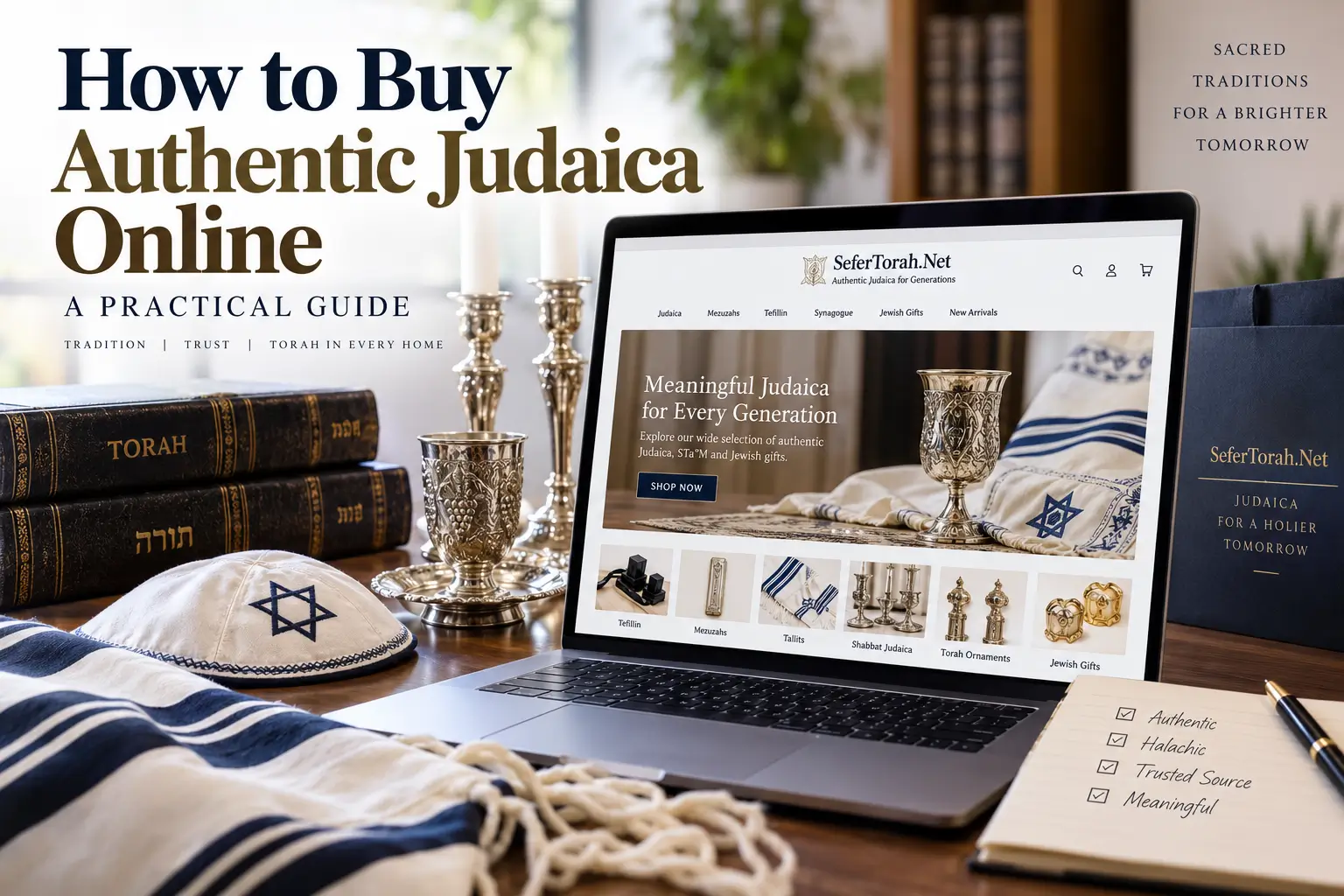
Introduction
Learning how to buy authentic Judaica online requires more than comparing photographs and prices. Judaica encompasses a wide range of objects used in Jewish religious life, from ritual items such as Mezuzah scrolls and Tefillin to Shabbat tableware, wedding Judaica, Torah ornaments, and ceremonial gifts.
For some items, authenticity is primarily a question of craftsmanship, materials, and traditional design. For others, especially STa”M items such as a Sefer Torah, Mezuzah, or Tefillin, authenticity also involves Halachic requirements, the qualifications of the Sofer, the writing tradition, and the integrity of the parchment and writing.
Buying online can provide access to an extensive selection, but it also places greater responsibility on the buyer. A reliable Judaica purchase should be based on understanding what the item is, how it was made, what standards apply to it, and who is offering it.
What Does “Authentic Judaica” Actually Mean?
The word “authentic” can mean different things depending on the Judaica being purchased.
A Kiddush cup, candlestick, Challah board, or Torah ornament may be evaluated according to its materials, workmanship, design, provenance, and suitability for its intended use. A handmade silver item, for example, can be distinguished by the quality of its metalwork, engraving, chasing, or other traditional techniques.
STa”M objects require a different level of scrutiny. A Mezuzah scroll is not authentic merely because it contains Hebrew writing. Its status depends on details such as the parchment, ink, writing, letters, spacing, and the qualifications and practices of the Sofer.
Similarly, Tefillin involve several components, including the batim, parshiyot, and retzuot, each of which has its own requirements.
Therefore, before purchasing Judaica online, first determine whether you are buying:
- A ritual object with specific Halachic requirements
- A decorative or ceremonial Judaica item
- A synagogue furnishing or Torah ornament
- A traditional Jewish gift
- A handwritten STa”M item
The standard of verification should match the nature of the object.
How to Evaluate a Judaica Website Before Buying
One of the most important principles in learning how to buy authentic Judaica online is to evaluate the seller—not only the product.
Look for a Judaica retailer that clearly explains its products and provides meaningful information about materials, craftsmanship, traditions, and intended use.
Look for Specific Product Information
A trustworthy product description should answer practical questions rather than relying exclusively on promotional language.
Depending on the item, look for:
- Materials used
- Dimensions
- Manufacturing or craftsmanship details
- Writing tradition, where applicable
- Origin or artisan information
- Care instructions
- Halachic information when relevant
- Product photographs showing actual details
For STa”M products, information about the Sofer, Ktav, parchment, checking process, and applicable standards can be particularly important.
If a seller makes broad claims about an item’s religious status but provides no meaningful explanation, that should encourage further questions before purchasing.
Understand the Difference Between Decorative and Halachic Judaica
Not every Judaica item requires the same type of authentication.
A decorative Mezuzah case, for example, can be selected primarily according to design, material, size, and craftsmanship. The scroll placed inside it is a separate matter and carries its own Halachic requirements.
The same principle applies to Torah accessories. A Torah pointer, mantle, crown, or breastplate can be evaluated according to craftsmanship, materials, traditional design, and suitability for the Sefer Torah.
By contrast, a Sefer Torah Scroll is a sacred STa”M item whose status cannot be established by appearance alone.
This distinction is essential when shopping online because an attractive photograph cannot demonstrate every quality that matters.
Choosing Authentic Judaica by Category
Different Judaica categories require different buying considerations.
Tallit and Tzitzit
When purchasing a Tallit or Tzitzit – Arbah Kanfot, consider the garment’s material, construction, size, and the standards according to which the tzitzit were made.
For Tallit accessories, such as an Atarah or Tallit bag, craftsmanship and compatibility with the garment become important considerations.
Shabbat Judaica
Items such as Kiddush Cups, Challah Covers, Challah Boards & Trays, Candlesticks, Havdalah Sets & Candles, and other Shabbat table accessories combine religious significance with craftsmanship.
When choosing these items, consider:
- Material
- Durability
- Traditional design
- Practical use
- Construction
- Cleaning and maintenance requirements
A well-made Judaica item should serve its intended purpose while respecting the traditional setting in which it is used.
Mezuzahs
A Mezuzah purchase should be approached as two related but distinct purchases: the Mezuzah scroll and the Mezuzah case.
For the case, evaluate material, construction, dimensions, and suitability for its location.
For the scroll, questions concerning the Sofer, Ktav, parchment, and checking are much more important.
Buyers may encounter different writing traditions, including Ketav Ari, Ketav Bet Yosef, Ketav Sefaradi, and Ketav Alter Rebbe. The appropriate choice can depend on one’s community and Minhag.
Tefillin
Tefillin deserve particular attention because their Halachic status depends on multiple components.
When buying Tefillin, consider the Tefillin Sets, Batim, Tefillin Parchments, and Retzuot as distinct elements of the set.
Traditions such as Bet Yosef and Arizal may be relevant depending on the buyer’s Minhag.
For someone purchasing Tefillin for a Bar Mitzvah, it is especially important to obtain guidance appropriate to the boy’s family and community rather than selecting solely according to appearance or price.
Torah Judaica
Torah-related products include Torah Mantles, Rimonim, Torah Crowns, Torah Breastplates, Torah Pointers, and Atzei Chayim Torah Rollers.
These objects contribute to Kavod HaTorah and may also be selected for synagogue dedications, commemorations, or gifts.
Here, craftsmanship, proportion, materials, traditional design, and compatibility with the existing Sefer Torah should all be considered.
Why Materials and Craftsmanship Matter
Authentic Judaica is often distinguished by details that are difficult to appreciate from a small online photograph.
Silver Judaica, for example, may involve techniques such as engraving, hand chasing, embossing, or other forms of metalwork. Handmade objects can also display characteristics that differ from mass-produced pieces.
This does not mean that every machine-made item is unsuitable. Rather, buyers should understand what they are purchasing and how it was produced.
When comparing similar products, ask:
- What material is actually being used?
- Is the item handmade, machine-made, or a combination?
- Are measurements clearly provided?
- Is the construction appropriate for regular use?
- Does the design follow a recognized Jewish tradition?
- Is the product intended for ritual use, decorative use, or both?
These questions provide a much more meaningful basis for comparison than price alone.
Halachic Considerations When Buying STa”M Online
For STa”M, online shopping requires particular care.
STa”M refers to Sefer Torah, Tefillin, and Mezuzot. These items are governed by detailed Halachic requirements, and the appearance of a finished product cannot establish its status.
A buyer should understand the relevant writing tradition and, when necessary, consult a qualified Rabbi or knowledgeable Sofer regarding the appropriate standard.
For example, a Mezuzah may be written according to different accepted traditions. Tefillin may similarly follow different Ktav traditions. The appropriate choice is not simply a matter of which product looks best online.
The concept of Lishmah is also fundamental to STa”M writing. Such matters demonstrate why authentic religious articles should be sourced from sellers who can provide meaningful information about the item’s production and standards.
How to Avoid Common Mistakes When Buying Judaica Online
Several mistakes are easy to make when shopping from photographs.
Choosing Based Only on Price
The cheapest product is not necessarily the best value, particularly when craftsmanship, materials, or Halachic considerations are involved.
Assuming Appearance Proves Authenticity
A beautifully photographed object can still leave important questions unanswered.
Ignoring Your Minhag
For items involving different writing traditions or communal practices, determine what is appropriate for your family before ordering.
Not Checking Dimensions
Cases, bags, Torah accessories, and ceremonial objects may need to fit existing items. Always check measurements.
Failing to Ask Questions
A reputable Judaica seller should be able to provide useful information about the product rather than leaving the buyer to guess.
Shop Authentic Judaica at SeferTorah.Net
At SeferTorah.Net, shoppers can explore Judaica for personal use, Jewish celebrations, Shabbat, synagogue settings, and Torah-related needs.
Our selection includes Tallit and Tefillin accessories, Mezuzah cases and scrolls, Shabbat Judaica, wedding Judaica, Torah ornaments, synagogue items, Tefillin, and Sefer Torah-related products.
Whether you are purchasing a Judaica gift, preparing for a Bar Mitzvah, furnishing a synagogue, or looking for a sacred STa”M item, the goal should be to choose an item appropriate to its purpose, tradition, and level of religious significance.
Browse our Judaica collection to compare traditional and contemporary items, or explore our Mezuzahs and Tefillin Sets & Accessories when your purchase involves STa”M.
Frequently Asked Questions
1. How can I tell if Judaica is authentic?
Start by identifying the type of Judaica. For decorative and ceremonial objects, examine materials, craftsmanship, construction, and traditional design. For STa”M, authentication requires attention to Halachic standards, writing tradition, parchment, and the qualifications and practices of the Sofer.
2. Is it safe to buy Judaica online?
Yes, provided you purchase from a knowledgeable and transparent Judaica seller. Review product specifications, materials, relevant Halachic information, seller credentials, and return or support policies before purchasing.
3. What should I look for when buying a Mezuzah online?
Separate the Mezuzah case from the scroll. The case can be evaluated by material, design, size, and construction. The scroll requires much more careful consideration of the Sofer, Ktav, parchment, writing, and checking.
4. How do I choose authentic Tefillin online?
First determine the appropriate Minhag and Ktav for the buyer. Then consider the Batim, Parshiyot, Retzuot, writing standards, and checking process. For a significant purchase, guidance from a qualified Rabbi or knowledgeable Sofer is advisable.
5. Does handmade Judaica mean it is more authentic?
Not necessarily. Handmade craftsmanship can be valuable, particularly for traditional metalwork and decorative Judaica, but authenticity depends on the nature and intended use of the object. For STa”M, Halachic requirements are more important than whether the item is described as handmade.
6. What does STa”M mean?
STa”M is an acronym for Sefer Torah, Tefillin, and Mezuzot. These sacred objects involve specific Halachic requirements concerning their writing, materials, and production.
7. Should I consider my Jewish tradition when buying Judaica?
Yes, especially for items where different Minhagim or writing traditions are relevant. Ashkenazic, Sephardic, Chabad, and other communities may follow different established practices.
8. What is Hidur Mitzvah in Judaica?
Hidur Mitzvah refers to enhancing the performance of a mitzvah through an appropriate level of beauty and care. In Judaica, this can influence the selection of objects used for mitzvot, although Halachic suitability remains fundamental.
9. How should I compare Judaica products online?
Compare the actual characteristics of the products: materials, dimensions, craftsmanship, intended use, tradition, and relevant religious standards. Avoid comparing products solely by price or appearance.
10. Where can I buy authentic Judaica online?
Choose a Judaica retailer that provides clear product information, understands Jewish religious objects, and can answer questions about craftsmanship and, where applicable, Halachic standards. SeferTorah.Net offers a broad selection of Judaica and STa”M-related products for individual, family, and synagogue needs.
Conclusion
Knowing how to buy authentic Judaica online means learning to look beyond photographs and marketing descriptions. The right purchase begins with understanding the object’s purpose, its traditional and Halachic context, the materials used, and the expertise behind its production.
For ordinary ceremonial Judaica, craftsmanship and materials deserve careful consideration. For STa”M, the standard is considerably more demanding and should include attention to the Sofer, Ktav, parchment, writing, and applicable Halachic requirements.
Whether you are purchasing for your home, a Bar Mitzvah, a wedding, or a synagogue, informed buying helps ensure that your Judaica reflects both tradition and Kavod HaTorah.