


How to Choose a Torah Pointer (Yad): A Practical Judaica Guide

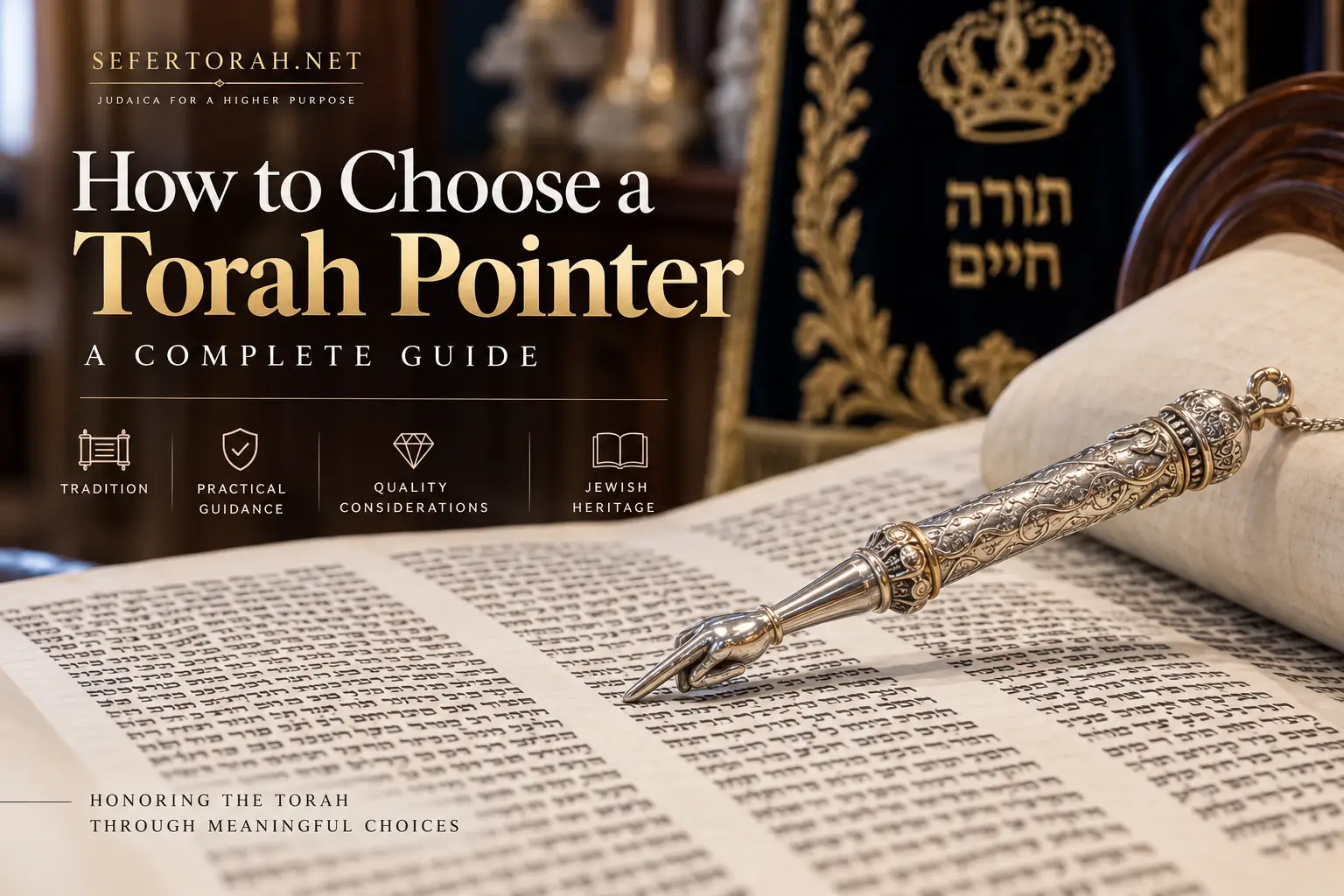
A Torah pointer, commonly called a Yad, is a small but important accessory used during the public reading of a Sefer Torah. Its purpose is practical: the reader uses the pointer to follow the text without touching the parchment directly. Yet choosing a Yad involves more than selecting an attractive piece of Judaica.
For a synagogue, Torah dedication, Bar Mitzvah, or Judaica gift, the right Torah pointer should be considered in light of kavod haTorah, usability, craftsmanship, durability, and the traditions of the community in which it will be used.
The following guide explains how to choose a Torah pointer, including the materials, construction, size, handle design, decorative details, and practical considerations that are worth examining before purchasing one.
What Is a Torah Pointer (Yad)?
The Hebrew word Yad means “hand.” A Torah pointer is traditionally shaped with a hand or finger at its end, directing the reader’s place on the Torah text.
During Torah reading, the Yad allows the reader to follow the words while avoiding unnecessary contact between the reader’s hand and the klaf, the parchment of the Torah scroll. The pointer therefore serves a practical function while also forming part of the collection of objects associated with the honor and dignity of the Sefer Torah.
A Yad is not itself a component of the Torah scroll, nor does it have the same halachic status as the parchment, ink, or writing of the Sefer Torah. Nevertheless, the objects used in connection with a Sefer Torah are traditionally treated with appropriate kavod haTorah.
This distinction is important when choosing one. The question is not simply whether a Yad looks beautiful, but whether it is well made, functional, appropriate for regular Torah reading, and suitable for the setting in which it will be used.
How to Choose a Torah Pointer: The Most Important Factors
There is no single design that every synagogue must use. Communities and families have different customs, aesthetic preferences, and budgets. However, several practical considerations should guide the selection.
1. Consider the Material
Torah pointers are made from a variety of materials, including:
- Sterling silver
- Silver-plated metals
- Nickel
- Gold or gold-finished materials
- Aluminum
- Other decorative metals
Material affects weight, appearance, durability, maintenance, and price.
A sterling silver Torah pointer, for example, can provide a substantial and traditional appearance and may be particularly appropriate for a synagogue or dedication. Silver also has a long history in Jewish ceremonial art.
A lighter metal such as aluminum may be easier to handle for some readers. The important consideration is not simply the material itself, but how the finished Yad performs in actual use.
2. Pay Attention to Weight and Balance
A Torah pointer should be comfortable to hold.
A Yad that is excessively heavy can become tiring during a long Torah reading. Conversely, a very lightweight pointer may feel less substantial or may be more susceptible to bending if poorly constructed.
Balance matters as much as overall weight. A well-designed Yad should sit comfortably in the hand and allow the reader to guide the pointer accurately across the text.
For a synagogue purchasing a Yad for frequent communal use, this practical consideration deserves particular attention.
3. Examine the Pointer’s Length
Torah pointers are available in different lengths.
A longer Yad can provide additional reach and may be convenient when reading from a larger Sefer Torah. A shorter pointer may be easier to control and store.
The appropriate length depends partly on:
- The size of the Torah scroll
- The reading environment
- The reader’s preference
- Whether the Yad will be used primarily by adults or younger readers
- How the Yad will be stored with other Torah ornaments
There is no need to choose the longest available Yad simply because it is larger. Proportion and usability are more important than size alone.
The Importance of the Handle
The handle is one of the most noticeable parts of a Torah pointer, but it also affects usability.
Traditional Yad designs may incorporate decorative elements, engraved surfaces, textured metalwork, gemstones, or architectural motifs. Some are relatively simple, while others are highly ornamental.
When evaluating a decorative Yad, ask:
- Is the handle comfortable to hold?
- Are the decorative elements securely attached?
- Does the design interfere with handling?
- Is the surface likely to become uncomfortable during prolonged use?
- Is the Yad sufficiently durable for regular synagogue use?
A ceremonial object can be richly decorated while remaining practical. The best designs successfully combine beauty with function.
Torah Pointer Craftsmanship and Handwork
One of the major distinctions among Yad designs is the quality and character of the metalwork.
Some Torah pointers feature hand chasing, engraving, embossing, hammered finishes, or other traditional decorative techniques. These techniques can give a Yad a distinctive surface and visual character.
A hand-chased silver Yad, for example, may display patterns created through repeated controlled work on the metal surface. Hammered aluminum has a different visual and tactile character, with deliberate variations in the surface created through hammering.
When comparing products, do not evaluate craftsmanship merely by how elaborate the decoration appears.
Look instead at:
- Precision of the decorative work
- Clean finishing
- Structural integrity
- Quality of joints and attachments
- Security of gemstones or decorative components
- Finish consistency
- Comfort in the hand
These details are particularly important when the Yad will be used regularly rather than displayed occasionally.
Traditional Design vs Contemporary Design
Torah pointers range from understated traditional designs to highly ornate ceremonial pieces.
Some feature classic Jewish motifs such as:
- Jerusalem imagery
- The Hoshen
- Crowns
- Floral patterns
- Biblical motifs
- Geometric ornamentation
- Hebrew inscriptions
Others have a more restrained appearance, allowing the metalwork itself to provide the decoration.
The choice between traditional and contemporary design is primarily a matter of community preference, intended use, and personal taste. A synagogue may wish to coordinate its Yad with existing Torah ornaments, while an individual purchaser may prefer a design connected to Jerusalem or another meaningful Jewish motif.
Choosing a Yad for a Synagogue
A synagogue should approach a Torah pointer purchase differently from an individual buying a Judaica gift.
For regular communal use, prioritize:
Durability
The Yad may be handled frequently by different readers. Construction should therefore withstand repeated use.
Ease of Handling
Readers should be able to hold and move it comfortably without excessive weight or awkward proportions.
Compatibility
Consider whether the Yad complements the synagogue’s existing Torah crown, breastplate, rimonim, mantle, and other Torah ornaments.
Storage
The synagogue should have an appropriate place to keep the pointer when it is not being used.
Community Tradition
If the synagogue follows a particular minhag or has established preferences regarding ceremonial Judaica, those considerations should be respected.
Choosing a Torah Pointer as a Gift
A Yad can also be an especially meaningful Judaica gift.
It may be appropriate for:
- A Bar Mitzvah
- A synagogue dedication
- A Torah dedication
- A family commemorative gift
- A wedding or anniversary
- A community fundraising or memorial project
For a gift, the design often carries additional significance.
A Jerusalem Torah Yad pointer, for example, may be meaningful to someone with a strong connection to Yerushalayim. A Yad featuring the Hoshen motif may appeal to someone interested in the symbolism and history of the Kohen Gadol’s breastplate.
For a dedication, personalization may also be appropriate depending on the purchaser’s wishes and the intended setting.
Silver, Gold, Nickel, or Aluminum: Which Should You Choose?
There is no universal answer.
The right material depends on the intended use and priorities.
Sterling silver may be preferred for its traditional ceremonial character and substantial appearance.
Gold or gold-finished designs can provide a distinctive presentation for an especially formal dedication or gift.
Nickel can offer a durable metal construction with a polished decorative appearance.
Aluminum can provide a lighter option and can be finished using techniques such as hammering.
Rather than treating one material as inherently “better,” consider function, craftsmanship, maintenance, design, and the context in which the Yad will be used.
Choosing a Torah Pointer from SeferTorah.Net
When selecting a Yad, it is useful to compare designs according to their actual characteristics rather than choosing solely from photographs.
SeferTorah.Net offers Torah pointers in a range of styles and materials, including silver, gold, nickel, aluminum, hand-chased, hammered, and Jerusalem-inspired designs.
Explore Torah Pointers at SeferTorah.Net
For buyers furnishing a synagogue or selecting a dedication piece, compare the pointer’s dimensions, material, craftsmanship, decorative style, and intended frequency of use. If you are purchasing a Yad as part of a larger Torah presentation, it can also be worthwhile to consider how it will relate visually to the synagogue’s existing Torah ornaments.
The goal is not simply to acquire an attractive Judaica object. It is to choose a useful and dignified accessory that serves the Torah reading and fits appropriately within the community’s sacred setting.
Common Mistakes When Buying a Torah Pointer
Several simple mistakes can be avoided with careful consideration.
Choosing Only by Appearance
A beautiful Yad may not necessarily be comfortable or durable. Examine construction and usability as well as decoration.
Ignoring Dimensions
A pointer that is disproportionately large or small for the intended Sefer Torah may be inconvenient.
Overlooking Weight
A heavy ceremonial Yad may be impressive but uncomfortable for frequent Torah reading.
Not Considering Existing Judaica
A new Yad does not have to match every Torah ornament exactly, but its style should make sense within the synagogue’s overall ceremonial presentation.
Assuming More Decoration Means Better Craftsmanship
Intricate decoration is not automatically evidence of superior workmanship. Look at the precision and construction of the piece.
FAQ: Choosing a Torah Pointer
What should I look for when choosing a Torah pointer?
Focus on material, craftsmanship, length, weight, balance, handle comfort, durability, and design. For synagogue use, practical handling and durability should receive particular attention.
What material is best for a Torah pointer?
There is no single material that is best for every purchaser. Sterling silver, nickel, gold-finished metals, and aluminum can all serve different purposes. The intended use and quality of construction are more important than the material name alone.
How long should a Torah pointer be?
The appropriate length depends on the Torah scroll, reading environment, and reader preference. A Yad should provide sufficient reach without becoming awkward to control.
Is a silver Yad better than an aluminum Yad?
Not necessarily. Silver may offer a more traditional ceremonial appearance, while aluminum can offer a lighter construction and distinctive hammered finishes. The appropriate choice depends on intended use and personal preference.
Can a Torah pointer be used with any Sefer Torah?
Generally, a properly made Yad can be used as a Torah-reading pointer, but practical considerations such as length, weight, and handling should be considered for the particular scroll and reading environment.
Is a Torah pointer required by Halacha?
The Yad is primarily a practical accessory used to follow the Torah text without touching the parchment. Its use and particular design should not be confused with the halachic requirements governing the Sefer Torah itself.
Is a Torah pointer a good Bar Mitzvah gift?
Yes. A Yad can be a meaningful Judaica gift connected directly with Torah reading. A design with personal or family significance can make the gift particularly appropriate.
What is a hand-chased Torah pointer?
A hand-chased Yad is decorated using a traditional metalworking technique in which patterns and details are worked into the surface of the metal. The result can have a distinctive handcrafted appearance.
Should a synagogue match its Yad with its other Torah ornaments?
Matching is not necessarily required, but coordination can create a more unified ceremonial presentation. Consider the Torah crown, breastplate, rimonim, mantle, and other existing Judaica when selecting a new Yad.
Where can I buy a Torah pointer?
Torah pointers are available from Judaica specialists offering different materials, designs, and craftsmanship. Buyers should compare the construction, dimensions, materials, and intended use before making a purchase.
Conclusion
Knowing how to choose a Torah pointer means looking beyond decoration. A Yad should be considered as both a functional tool for Torah reading and an object associated with the kavod haTorah of the synagogue and community.
Material, weight, length, balance, craftsmanship, handle design, durability, and aesthetic tradition all have a role in making the right choice. For a synagogue, practical daily use may be the primary concern; for a dedication or Bar Mitzvah gift, symbolism and craftsmanship may carry greater importance.
Whether you are looking for a traditional silver Yad, an ornate nickel pointer, a Jerusalem-inspired design, or a lighter hammered-metal option, choose according to the purpose, setting, and traditions of the community.
A well-chosen Torah pointer combines practical function, thoughtful craftsmanship, and appropriate respect for the Sefer Torah.