


How to Protect Outdoor Mezuzot From Weather and Moisture

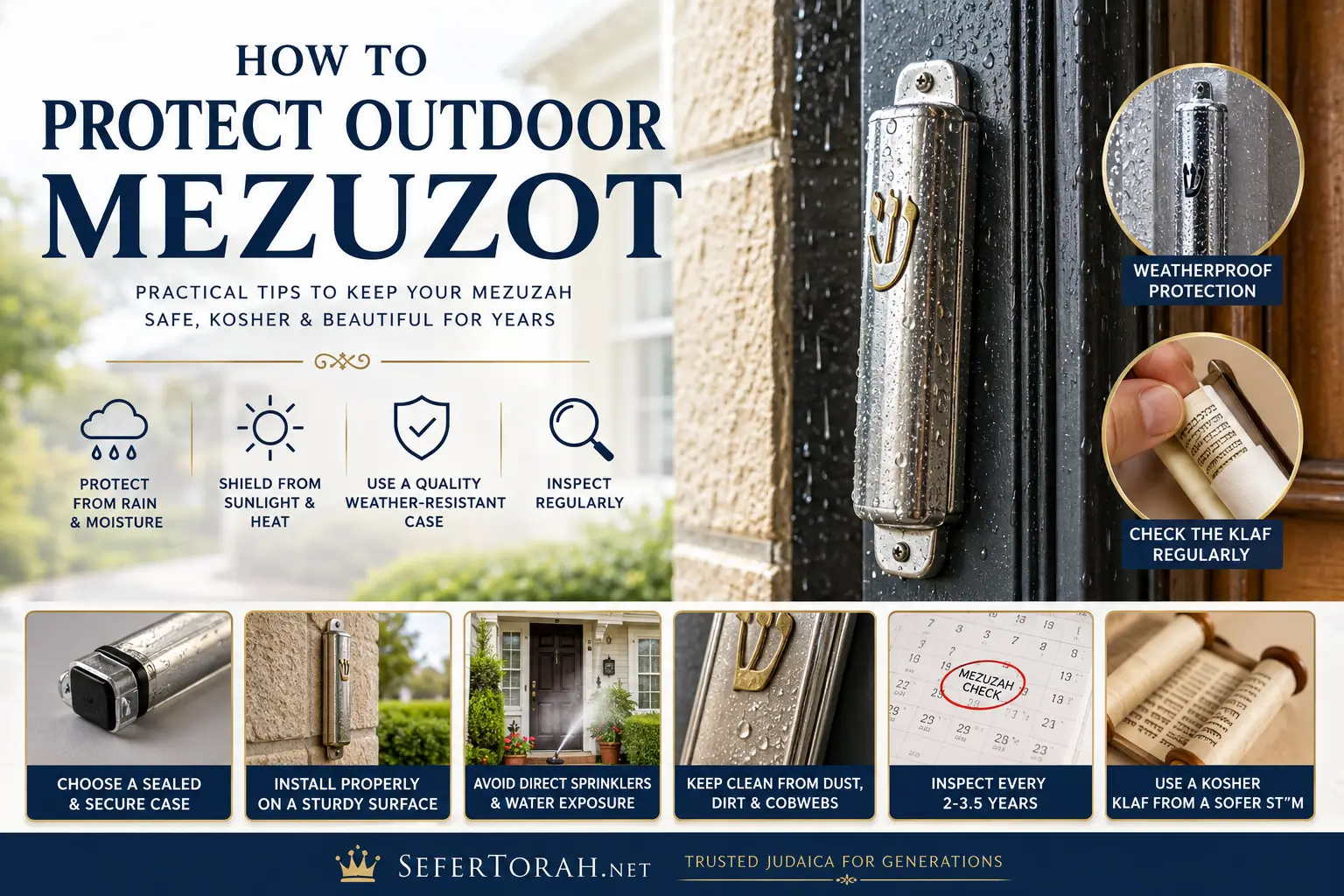
A Mezuzah placed on an exterior doorway faces conditions that an indoor Mezuzah does not. Rain, humidity, direct sunlight, temperature changes, irrigation systems, condensation, and repeated exposure to the elements can eventually affect both the Mezuzah case and the handwritten parchment scroll, or klaf, inside it.
For this reason, knowing how to protect outdoor Mezuzot is not simply a matter of preserving the appearance of a decorative case. The purpose of the case is to protect the sacred scroll and help prevent environmental exposure from damaging the writing. Halachic sources specifically recognize the need for protection where a Mezuzah is exposed to heat, rain, or humidity, and regular inspection is especially important for Mezuzot subject to harsh conditions.
At SeferTorah.Net, our Mezuzah collection includes protective cases intended for different environments, materials, and scroll sizes. Understanding the difference between an indoor decorative case and a weather-resistant outdoor case is an important part of choosing the appropriate protection for your doorway.
Why Outdoor Mezuzot Require Additional Protection
A Mezuzah scroll is handwritten on parchment by a qualified Sofer STa”M according to detailed halachic requirements. The ink and parchment are not ordinary printed materials, and damage to even individual letters can affect the kosher status of the scroll.
Outdoor exposure introduces several potential risks.
Rain and Water
Direct rain is one of the most obvious concerns. Water can enter through an inadequately sealed case, from an exposed opening, or through the area where the case meets the doorpost. Moisture can damage the parchment and eventually affect the ink.
A proper outdoor case should therefore provide meaningful protection against water rather than simply serving as a decorative shell. Sources discussing Mezuzah care specifically recommend well-closed protective cases where rain or moisture could otherwise reach the scroll.
Humidity and Condensation
Water does not have to come directly from rainfall to become a problem. Humid climates, damp walls, and condensation can also expose a Mezuzah to moisture over time.
This is particularly relevant for exterior doorposts that are partially sheltered but still exposed to changing temperatures. A case that protects the scroll from direct rain but allows moisture to accumulate around the parchment may not provide the level of protection an exterior installation requires.
Direct Sunlight
Sunlight creates another consideration. Continuous exposure to direct sunlight can contribute to deterioration of the parchment and writing. Halachic guidance recommends protecting a Mezuzah from direct sunlight with an appropriate covering or opaque casing when necessary.
For an exterior doorway receiving strong afternoon sun, the choice of case should therefore consider not only rain resistance but also how well the scroll is shielded from prolonged exposure.
Choose a Weather-Resistant Outdoor Mezuzah Case
One of the most important steps in learning how to protect outdoor Mezuzot is choosing a case appropriate for the environment.
An outdoor Mezuzah case should be selected based on:
- resistance to rain and moisture
- protection from direct sunlight
- secure closure
- appropriate size for the klaf
- durability of the mounting system
- suitability for the particular doorway
- ability to protect the scroll without compromising its proper placement
A decorative case may be attractive, but appearance alone does not determine whether it is appropriate for an exposed exterior installation.
For particularly exposed entrances, a waterproof Mezuzah case can provide an important additional layer of protection. SeferTorah.Net offers weather-resistant options, including waterproof metal and other protective cases designed for outdoor use.
Internal Link Opportunity: Link “waterproof Mezuzah cases” to the relevant Mezuzah Cases category.
Match the Case to the Size of the Mezuzah Scroll
Outdoor protection begins with proper fit.
Mezuzah scrolls are available in different sizes, and the internal dimensions of a case must accommodate the actual klaf rather than simply matching the case’s external measurement. A case that is too small can place unnecessary pressure on the scroll, while an improperly sized case may fail to secure the parchment adequately.
When purchasing a case separately from a Mezuzah scroll, confirm the size of the klaf and compare it with the case’s usable internal dimensions.
This is especially important when purchasing mehudar Mezuzot, larger scrolls, or replacing an existing case while keeping the original klaf.
Protect the Mezuzah From Direct Sunlight
If an outdoor Mezuzah receives direct sunlight for substantial periods of the day, additional protection may be appropriate.
The concern is not merely cosmetic. Prolonged exposure to sunlight can contribute to deterioration of the parchment and writing. Halachic sources specifically mention protecting Mezuzot exposed to direct sunlight, including the use of an opaque casing when necessary.
Therefore, when choosing between transparent and opaque outdoor cases, consider the actual location of the doorpost.
A shaded entrance under a deep porch is very different from a south- or west-facing doorway exposed to strong sunlight throughout the afternoon.
Do Not Assume a Waterproof Case Eliminates the Need for Inspection
A common mistake is to assume that once a Mezuzah has been placed inside a waterproof case, the scroll no longer requires inspection.
That is not the case.
A Mezuzah remains a handwritten parchment document whose kosher status can be affected by environmental conditions and ordinary deterioration. The Shulchan Aruch establishes a regular inspection schedule for Mezuzot on private property, and authoritative halachic guidance explains that Mezuzot exposed to harsher conditions may require more frequent attention.
The inspection must involve opening the Mezuzah and examining the writing itself. Looking at the outside of the case or simply confirming that the parchment appears dry is not an adequate substitute for professional checking.
For an outdoor Mezuzah exposed to direct sun, rain, sprinklers, or other unusual conditions, consult a qualified Sofer regarding an appropriate inspection schedule.
Check the Case After Installation
Outdoor Mezuzah protection is an ongoing responsibility.
Periodically examine the case and its mounting points for:
- cracks
- loose components
- broken seals
- water intrusion
- corrosion
- damaged mounting hardware
- gaps around the scroll chamber
- signs of condensation
A case can provide excellent protection when new but become less effective after years of exposure to weather.
The same principle applies to the attachment method. If the case becomes loose, shifts position, or begins separating from the doorpost, it should be addressed rather than left exposed to repeated movement and moisture.
Keep Sprinklers and Irrigation Away From the Mezuzah
Rain is not the only source of outdoor water exposure.
Garden sprinklers, irrigation systems, pressure washing, and other sources of repeated water spray can expose an exterior Mezuzah to considerably more moisture than ordinary weather.
If possible, position irrigation so that water does not repeatedly strike the Mezuzah case. This is especially important for entrances near gardens, lawns, or automated sprinkler systems.
Halachic discussions concerning Mezuzah inspection specifically recognize unusual environmental exposure, including sprinkler systems, as a reason that additional care may be warranted.
Outdoor Mezuzah Protection for Different Types of Entrances
Not every exterior entrance has the same environmental conditions.
Front Door
A covered front entrance may require less protection than a doorway fully exposed to rain and sunlight. Nevertheless, a properly closed protective case remains important.
Side or Back Door
These entrances are often more exposed to weather, irrigation, and moisture from surrounding landscaping. A weather-resistant case can be particularly valuable.
Garage Entrance
Garage doorposts can experience temperature changes, dust, moisture, and vehicle-related exposure. Choose a case that protects the scroll while remaining securely attached to the frame.
Apartment or Building Entrance
Exterior apartment entrances may be exposed to rain, wind, snow, or strong sunlight depending on the building’s design. Consider the actual exposure rather than assuming every exterior doorway requires the same case.
When Should an Outdoor Mezuzah Be Checked?
For Mezuzot on private property, the standard halachic schedule is twice every seven years, or approximately every three and a half years. However, Mezuzot exposed to unusually harsh environmental conditions may warrant more frequent inspection.
A qualified Sofer should inspect the actual parchment and writing.
Consider seeking an inspection sooner if:
- the case has leaked
- the Mezuzah was exposed to heavy rain
- the case was damaged
- the scroll may have been exposed to direct moisture
- the Mezuzah receives intense sunlight
- nearby painting or construction may have affected it
- the case has become loose or opened
- there is any concern about the condition of the klaf
If you are uncertain, ask a competent Rav or Sofer rather than relying on visual inspection alone.
Choosing Outdoor Mezuzah Products From SeferTorah.Net
Protecting an outdoor Mezuzah begins with choosing the right combination of kosher klaf and protective case.
At SeferTorah.Net, you can explore Mezuzah cases in different materials, styles, sizes, and levels of weather protection. For exposed entrances, look specifically for cases designed to protect the scroll from rain and moisture.
For example, our waterproof Mezuzah case options are intended for outdoor environments and can provide an additional barrier against water exposure. When selecting a case, always verify the appropriate size for your Mezuzah scroll.
Internal Link Opportunities:
- Mezuzah Scrolls
- Mezuzah Cases
- Waterproof Mezuzah Cases
- Metal Mezuzah Cases
- Kosher Mezuzot
- Mezuzah Accessories
If you are unsure which case is appropriate for your particular doorway, contact SeferTorah.Net with the size of your klaf and a description of the installation location. For halachic questions concerning placement or inspection, consult your Rav or a qualified Sofer.
Frequently Asked Questions About Protecting Outdoor Mezuzot
What is the best way to protect an outdoor Mezuzah?
The most important step is to use a properly fitted, securely closed case appropriate for exterior exposure. The case should protect the klaf from rain, humidity, and direct sunlight where applicable. Outdoor Mezuzot should also be inspected periodically by a qualified Sofer.
Can a Mezuzah case be used outdoors?
Yes, but not every decorative Mezuzah case is necessarily appropriate for an exposed exterior location. Look for a case specifically identified as weather-resistant or waterproof and confirm that it properly fits the size of your klaf.
Are waterproof Mezuzah cases necessary?
They can be particularly important when a Mezuzah is directly exposed to rain or other sources of water. A waterproof case provides additional protection against moisture that could otherwise damage the parchment and writing.
How does sunlight damage an outdoor Mezuzah?
Prolonged direct sunlight can contribute to deterioration of the parchment and ink. When a Mezuzah receives significant direct sunlight, an appropriate protective or opaque casing may be advisable.
How often should an outdoor Mezuzah be checked?
Mezuzot on private property are generally checked twice every seven years. However, unusually exposed Mezuzot may need more frequent inspection because weather and environmental conditions can accelerate deterioration.
Can I tell if my Mezuzah is kosher without opening the case?
No. The condition of the outside of the case does not establish whether the handwritten parchment remains kosher. A qualified Sofer needs to examine the klaf and its letters.
What should I do if rain gets inside my Mezuzah case?
If the parchment may have been exposed to moisture, do not assume that it remains kosher. Contact a qualified Sofer for guidance and inspection as soon as practical.
Can I use a decorative metal Mezuzah case outdoors?
Some metal cases are specifically designed for outdoor use, while others are primarily decorative. Check the manufacturer’s specifications regarding weather resistance, sealing, size, and intended environment before installing one outdoors.
Should an outdoor Mezuzah be protected from sprinklers?
Yes. Repeated direct exposure to sprinkler or irrigation water can create an environmental risk similar to repeated rain exposure. Where possible, adjust sprinklers so they do not spray directly onto the Mezuzah.
Does a waterproof case mean the Mezuzah never needs checking?
No. A protective case reduces environmental exposure but does not eliminate the need for periodic professional inspection. The klaf remains a handwritten sacred document and should be checked according to applicable halachic requirements and the conditions of its installation.
Conclusion
Knowing how to protect outdoor Mezuzot requires more than choosing an attractive case. The goal is to preserve the handwritten klaf from the environmental conditions that can compromise its condition, while maintaining the dignity and proper care of the mitzvah.
For exterior doorways, consider rain exposure, humidity, direct sunlight, irrigation, case construction, proper sizing, and secure installation. Most importantly, remember that even a well-protected Mezuzah should be periodically examined by a qualified Sofer.
A properly selected outdoor Mezuzah case is therefore not merely an accessory. It is part of the practical care given to a sacred parchment that accompanies Jewish life at the entrance to the home.
Explore SeferTorah.Net’s collection of kosher Mezuzot and protective Mezuzah cases to find options suited to your doorway, scroll size, and environment.