


How Often Should a Torah Scroll Be Checked?

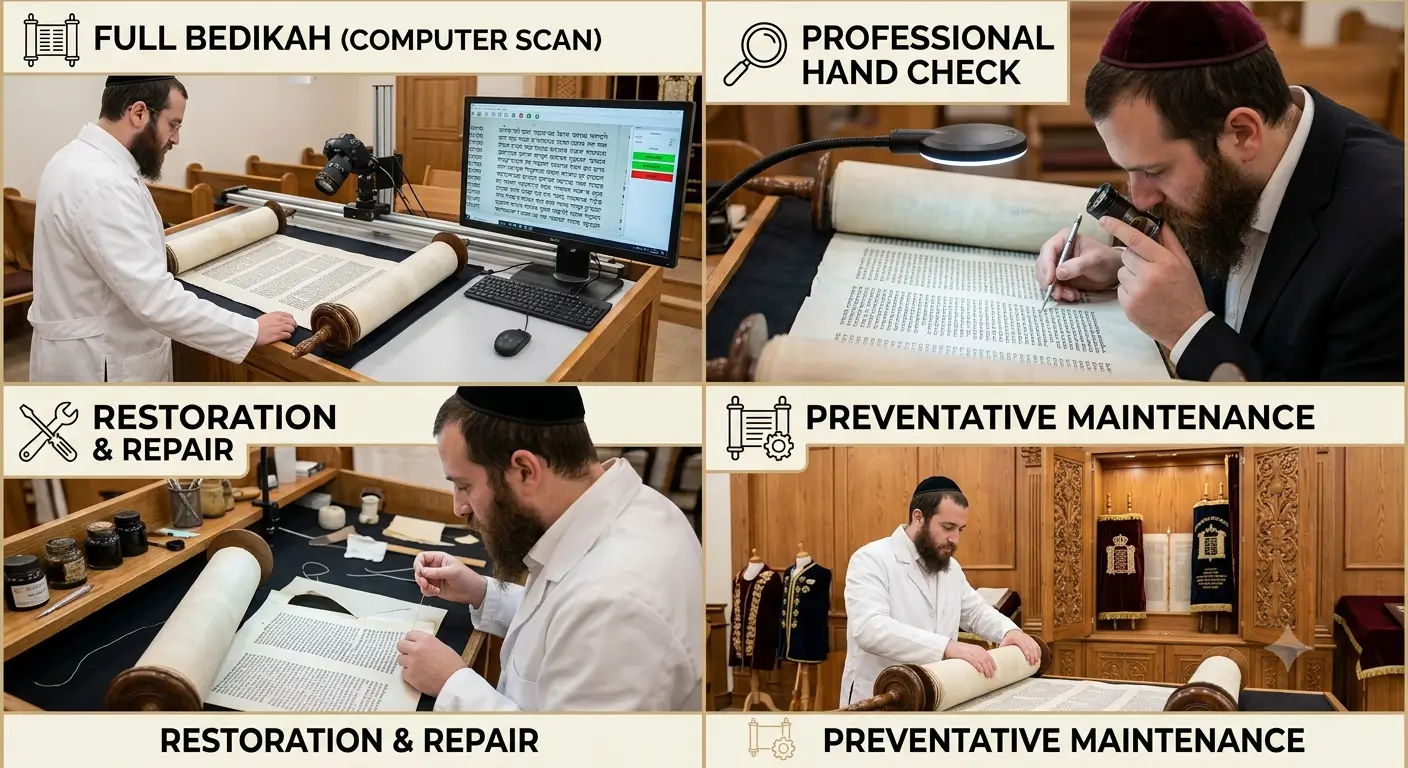
A Sefer Torah is the holiest handwritten text in Jewish life. Every letter is written individually by a qualified Sofer STa”M, following precise Halachic requirements that have remained unchanged for generations. Because the Torah scroll is read publicly week after week and often handled during services, its condition naturally changes over time. Even when treated with great care, environmental conditions, age, and regular use can gradually affect its kosher status.
This raises an important question for synagogue leaders, rabbis, Torah collectors, and Jewish communities alike: How Often Should a Torah Scroll Be Checked?
The answer depends on several factors, including how frequently the scroll is used, where it is stored, its age, and whether it has been exposed to conditions that could compromise the parchment or lettering. Regular inspection is not merely preventative maintenance—it is an essential part of preserving the sanctity of the Torah and ensuring that every public Torah reading is performed from a kosher Sefer Torah.
In this guide, we explain the traditional approach to Torah scroll inspection, what a qualified Sofer STa”M examines during a bedikah, the signs that indicate a Torah should be checked immediately, and how proper care can preserve a Torah scroll for generations.
Why Regular Torah Scroll Inspection Matters
Unlike printed books, a Sefer Torah is entirely handwritten on klaf using specially prepared kosher ink applied lishmah—for the specific purpose of writing a Torah scroll. Every one of the more than 300,000 Hebrew letters must meet exact Halachic standards. Even a minor defect in a single letter may affect the scroll’s kosher status until corrected.
Over time, several factors can impact the condition of a Torah scroll, including:
- Natural aging of the parchment
- Changes in humidity and temperature
- Fading or cracking of the ink
- Wear caused by rolling and unrolling the scroll
- Improper handling or storage
- Physical damage during transport or use
Many of these issues develop gradually and may not be visible during public Torah readings. Regular inspection allows potential concerns to be identified before they become significant Halachic problems.
What Does Halacha Say About Checking a Torah Scroll?
Jewish law places tremendous importance on maintaining the ongoing kashrut of a Sefer Torah. While different rabbinic authorities discuss inspection schedules in varying contexts, there is broad agreement that Torah scrolls should be examined periodically and whenever circumstances raise concern about their condition.
Many communities establish regular inspection intervals, particularly for scrolls used frequently for public Torah readings. Synagogues with multiple Torah scrolls often rotate their usage while scheduling inspections to ensure every scroll remains in proper condition.
In addition to scheduled examinations, Halacha recognizes several situations that warrant immediate inspection. These include exposure to water, excessive humidity, fire or smoke damage, accidental drops, visible deterioration of the lettering, or any event that could affect the integrity of the parchment or ink.
Ultimately, the responsibility for determining when a Torah scroll should be checked rests with the synagogue leadership in consultation with a qualified Sofer STa”M or competent rabbinic authority.
What Happens During a Torah Scroll Inspection?
A professional Torah scroll inspection—known as a bedikah—is a meticulous process requiring considerable expertise in the laws of STa”M. It is far more comprehensive than simply looking for damaged pages.
During an inspection, the sofer carefully examines numerous aspects of the scroll, including:
Letter Formation
Each Hebrew letter must retain its prescribed Halachic form. A sofer evaluates whether letters remain complete, properly shaped, and distinguishable from neighboring letters.
Ink Condition
The ink is inspected for fading, cracking, flaking, or separation from the parchment. Even slight deterioration can affect the readability and Halachic validity of certain letters.
Spacing Between Letters
Proper spacing is fundamental in Torah writing. If adjacent letters begin touching because of ink spread or deterioration, words may become invalid until corrected.
Parchment Integrity
The klaf is checked for tears, holes, excessive dryness, mold, or damage caused by moisture or insects. The condition of the parchment directly affects the longevity of the Torah scroll.
Stitching and Construction
The sofer also examines the seams joining individual sheets of parchment, ensuring they remain securely stitched and structurally sound.
A thorough inspection evaluates the Torah as a complete sacred object rather than focusing only on isolated defects.
Manual Inspection and Computer-Assisted Bedikah
Modern Torah inspections often combine traditional expertise with advanced technology.
A qualified Sofer STa”M performs the essential Halachic examination, applying years of training and judgment that no software can replace. However, many inspections today also include bedikah b’machshev—computer-assisted scanning designed to identify potential issues such as missing letters, incorrect spacing, duplicated words, or certain scribal inconsistencies.
Computer analysis offers an additional layer of verification, but it is not a substitute for the experienced eye of a knowledgeable sofer. Software cannot determine every Halachic issue involving letter formation, intention during writing (lishmah), or subtle questions of scribal practice.
For this reason, many respected STa”M professionals consider the combination of careful manual examination and computer-assisted checking to represent the most comprehensive approach to Torah scroll inspection.
Signs Your Torah Scroll Should Be Checked Immediately
Although regular inspections are recommended, certain situations require prompt evaluation regardless of the normal inspection schedule.
Arrange for a qualified sofer to examine the Torah if you notice:
- Cracked or faded Hebrew lettering
- Torn or damaged parchment
- Water exposure or excessive humidity
- Mold, mildew, or discoloration
- Ink that appears to be peeling
- Sections that become difficult to read
- Damage caused during transport
- A Torah scroll that has been dropped
- Loose stitching between parchment panels
- Any visible deterioration affecting the writing
Early detection often allows minor corrections before more extensive restoration becomes necessary.
How Frequently Should Different Torah Scrolls Be Checked?
Although there is no single inspection schedule that applies to every Sefer Torah, the frequency of bedikah should reflect how the scroll is used, its age, and the environment in which it is kept. A Torah scroll that is read several times each week experiences different levels of wear than one reserved for special occasions or ceremonial use.
Frequently Used Synagogue Torah Scrolls
A Torah scroll that serves as the primary scroll for regular Shabbat, Yom Tov, Monday, and Thursday readings should be monitored carefully. Regular rolling, lifting, dressing, and public reading naturally place greater stress on the parchment, stitching, and lettering. Many synagogue communities establish routine inspection schedules to ensure that these scrolls remain in excellent Halachic condition.
Torah Scrolls Used Occasionally
Some congregations maintain several Torah scrolls, rotating them throughout the year or reserving particular scrolls for festivals, High Holy Days, or commemorative occasions. Although these scrolls experience less physical wear, they should still receive periodic inspection. Long periods in storage do not eliminate the possibility of environmental damage caused by humidity, dryness, insects, or natural aging.
Antique and Historic Torah Scrolls
Older Torah scrolls deserve particular attention. Even when beautifully preserved, parchment and ink naturally age over decades or centuries. Antique scrolls often require more careful monitoring because small cracks, faded letters, weakened stitching, or brittle parchment can develop gradually. An experienced Sofer STa”M can determine whether restoration, repair, or continued preservation is appropriate while maintaining the Torah’s Halachic integrity.
Factors That Influence Inspection Frequency
Several practical factors determine how often a Torah scroll should be examined.
Frequency of Public Reading
The more frequently a Sefer Torah is used, the greater the opportunity for normal wear. Constant rolling and handling gradually affect both the parchment and the lettering.
Environmental Conditions
Humidity, excessive dryness, rapid temperature changes, and direct sunlight can all accelerate deterioration. Synagogues located in coastal regions or areas with significant seasonal climate variation should pay particular attention to storage conditions.
Storage Practices
A Torah stored upright in a properly maintained Aron Kodesh, protected by a quality mantle and appropriate Torah ornaments, generally experiences less unnecessary stress than one stored or transported improperly.
Previous Repairs
A Torah scroll that has undergone restoration should continue to be monitored. Areas that were previously repaired deserve periodic evaluation to ensure they remain stable over time.
Transportation
Torah scrolls transported between synagogues, schools, or special events are naturally exposed to additional handling. Protective cases and careful transport practices help reduce unnecessary risk, but an inspection is advisable if a scroll experiences any significant impact during travel.
Caring for a Torah Scroll Between Inspections
Routine care plays an important role in preserving the long-term condition of a Sefer Torah.
Communities should ensure that Torah scrolls are stored in a clean, climate-controlled environment where excessive humidity and direct sunlight are avoided. During public readings, the scroll should always be handled respectfully by individuals familiar with proper synagogue practice.
Using a Torah Pointer (Yad) instead of direct contact with the parchment helps preserve both the ink and the klaf while expressing kavod haTorah. Likewise, properly fitted Torah mantles, crowns, breastplates, and storage accessories provide both protection and dignity to the scroll.
Even with excellent daily care, however, regular professional inspection remains essential. Preventative maintenance is always preferable to extensive restoration after damage has occurred.
Expert Guidance from SeferTorah.Net
Whether you are responsible for a synagogue Torah, a newly commissioned Sefer Torah, or a treasured family scroll, understanding how often a Torah Scroll should be checked is an important part of preserving one of Judaism’s most sacred possessions.
At SeferTorah.Net, we support synagogues, schools, collectors, and Jewish communities with an extensive selection of Torah Scrolls, used Torah Scrolls, Torah mantles, Torah pointers (Yads), Torah crowns, rimonim, breastplates, and other synagogue essentials. Our team understands the standards of STa”M, community customs, and the importance of maintaining Torah scrolls with dignity and care.
If you are considering purchasing a Torah scroll, restoring an existing scroll, or selecting complementary Torah ornaments, we are happy to help guide you toward solutions that reflect your synagogue’s tradition, budget, and long-term needs.
Frequently Asked Questions
1. How often should a Torah Scroll be checked?
A Torah scroll should be inspected periodically by a qualified Sofer STa”M, with the inspection schedule depending on its frequency of use, age, storage conditions, and overall condition. Additional inspections are recommended whenever damage or unusual circumstances occur.
2. Who is qualified to inspect a Torah Scroll?
Only an experienced Sofer STa”M with expertise in the laws governing Torah scrolls should perform a complete bedikah.
3. What happens during a Torah Scroll inspection?
The sofer examines the parchment, lettering, ink, spacing, stitching, and overall Halachic condition of the Sefer Torah to identify any issues requiring correction.
4. Can a computer determine if a Torah Scroll is kosher?
Computer-assisted bedikah b’machshev is an excellent diagnostic tool, but it complements rather than replaces the expertise and Halachic judgment of a qualified sofer.
5. Should a Torah Scroll be checked after being dropped?
Yes. Any Torah scroll that has been dropped or subjected to significant physical impact should be examined promptly to confirm that no damage has occurred.
6. Can an old Torah Scroll be restored?
In many cases, yes. Restoration depends on the condition of the parchment, lettering, and previous repairs. An experienced sofer can recommend the most appropriate course of action.
7. What causes Torah Scrolls to deteriorate?
Natural aging, humidity, temperature fluctuations, repeated handling, improper storage, water exposure, and environmental conditions can all contribute to deterioration over time.
8. Does a Torah Scroll that is rarely used still need inspection?
Yes. Even scrolls kept primarily in storage should receive periodic examination, as parchment and ink continue to age regardless of how frequently the Torah is read.
9. How can I help preserve my Torah Scroll?
Proper storage, careful handling, use of a Torah Pointer (Yad), protective Torah mantles, and regular professional inspections all contribute to preserving a Torah scroll for future generations.
10. Where can I find expert guidance on Torah Scrolls and synagogue accessories?
SeferTorah.Net offers guidance on Torah Scrolls, Torah restoration, Torah ornaments, synagogue supplies, and other STa”M-related products to help communities care for these sacred items.
Conclusion
Understanding how often a Torah Scroll should be checked is an essential responsibility for every synagogue and Torah owner. While no single inspection schedule fits every Sefer Torah, regular professional evaluations by a qualified Sofer STa”M, combined with careful daily handling and proper storage, help preserve both the physical condition and Halachic integrity of the scroll.
A well-maintained Torah scroll can faithfully serve generations of Jewish communities, connecting each public Torah reading to an unbroken tradition that stretches back centuries. Through timely inspections, appropriate care, and informed guidance, communities ensure that every Sefer Torah continues to be read with confidence, reverence, and kavod haTorah.